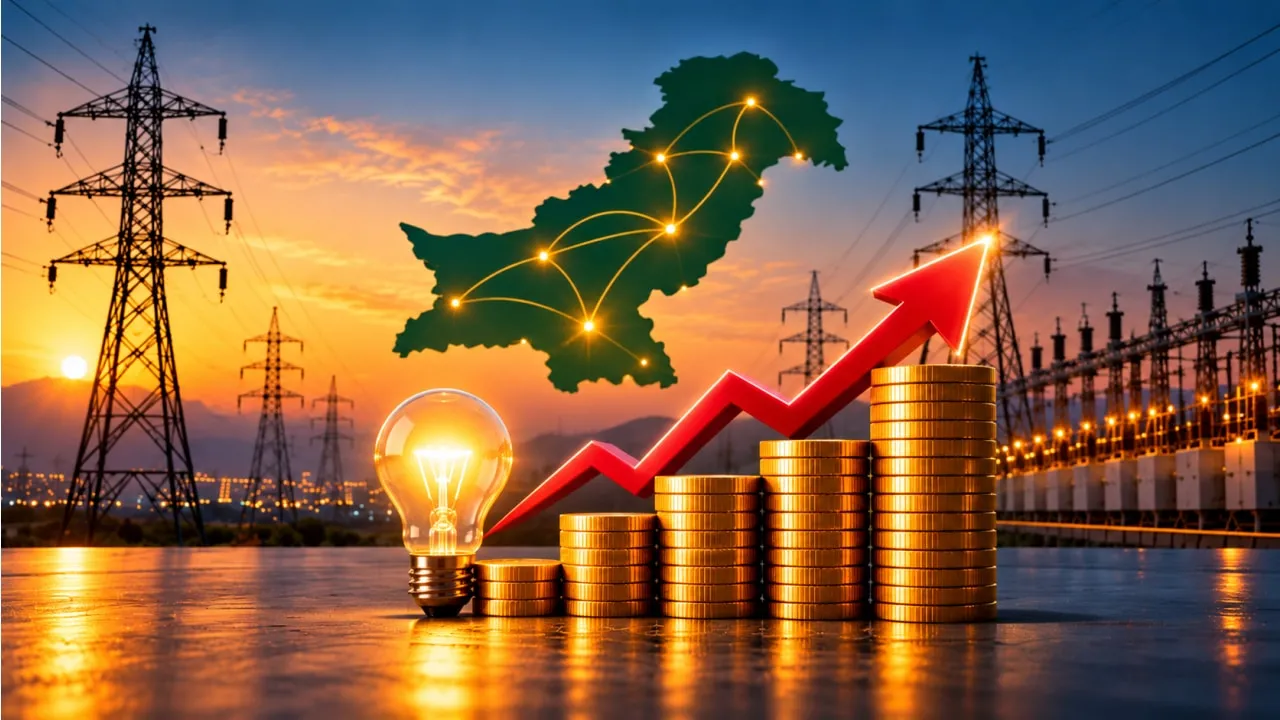
Pakistan faces a critical turning point in how it generates and distributes electricity, with warnings emerging that the construction of new power facilities must be carefully vetted. The Independent System and Market Operator (ISMO) issued a stark warning against building more power plants without first verifying actual national need. The rapid expansion of rooftop solar energy, shifting electricity consumption habits, and unpredictable future demand mean that new generation facilities could sit idle for large parts of the day. Despite sitting unused, consumers would still be forced to cover their fixed costs through their monthly electricity bills.
This warning forms the core of an integrated System Plan for 2026 to 2036, developed in coordination with the National Grid Company of Pakistan. The report highlights that the traditional approach to energy planning is no longer fit for purpose as the country grapples with decentralized generation. Instead of simply adding more generation units, Pakistan requires a sophisticated system to manage power from diverse sources, store surplus solar energy, and deliver power reliably when consumers demand it most.
How Rooftop Solar Is Transforming Electricity Demand in Pakistan
The transition toward renewable energy is accelerating rapidly across residential and commercial sectors, fundamentally altering the load profile of the national grid. The integrated plan estimates that overall electricity demand will grow by an average of 3 percent every year until 2036. However, electricity supplied through the national utility grid is projected to increase by a mere 1.75 percent annually. This divergence occurs because millions of households and businesses are increasingly generating their own electricity using rooftop solar panels.
Despite this shift in daytime consumption, peak demand on the grid is expected to climb significantly, rising from 26,768 megawatts in FY2025 to 35,127 megawatts by FY2036. This creates a severe structural challenge for grid operators. During daylight hours, solar installations drastically reduce the volume of electricity that consumers purchase from traditional power companies. Yet, immediately after sunset, solar generation drops to zero while consumer demand spikes as people return home, turn on appliances, and cool their properties.
Consequently, the country must maintain a vast fleet of backup power plants to satisfy this evening peak, even if those facilities operate far below capacity during daylight hours. This unused capacity directly drives up utility expenses. Power generation companies collect fixed payments to maintain their infrastructure, regardless of whether their plants generate electricity. When fewer total units of electricity are sold through the grid, these fixed costs are distributed across a smaller volume of power sales. The result is a sharp increase in the capacity charges that everyday consumers must pay for every unit of electricity they consume.
What Pakistan Plans to Build Through 2036
To address these financial and operational hurdles, ISMO has outlined a structured blueprint for capacity expansion under its main demand forecast. Total installed power generation capacity is projected to increase from approximately 39,141 megawatts in FY2026 to 52,527 megawatts by FY2036. This projected expansion incorporates 8,664 megawatts of projects that have already received commitments and another 7,942 megawatts selected through rigorous system planning processes. Simultaneously, approximately 3,219 megawatts of older, less efficient power capacity is scheduled for retirement.
In a notable shift away from traditional energy sources, ISMO has deliberately excluded any new power plants running on fossil fuels or imported fuels across all three examined demand scenarios. Instead, the expansion strategy prioritizes hydropower, nuclear energy, solar, and wind power, backed by modern battery storage systems. The estimated present value of generation expansion costs under the main scenario stands at $44.2 billion. Financial specialists emphasize that this figure serves as a long-term planning estimate rather than an immediate bill, and the strategy does not legally compel the government to purchase electricity from every listed project.
The Role of Battery Storage in Solving Evening Shortages
To bridge the gap between daytime solar abundance and evening power deficits, ISMO proposes a massive integration of utility-scale battery systems. The plan outlines the addition of 1,740 megawatts of battery storage capacity by FY2036. This rollout includes 1,000 megawatts dedicated specifically to the national grid, which the plan dictates should be installed in two distinct phases culminating by March 2029. Advanced battery installations possess the capability to capture surplus solar electricity during peak daylight generation and discharge it rapidly when evening demand peaks and solar output ceases.
Beyond battery deployment, the comprehensive strategy calls for substantial upgrades to the country's transmission infrastructure. Strengthening high-voltage lines will allow power to move efficiently to high-demand zones. The blueprint also demands stronger interconnections between the national grid and K-Electric, alongside targeted reliability improvements for supply systems in regional hubs such as Gwadar and Makran. Furthermore, the report advises the implementation of demand-side management programs, such as time-based tariffs that reward consumers for shifting their energy use outside peak hours, and stricter energy efficiency codes for buildings to curb heavy summer cooling loads.
Evaluating the Financial Risks of Overbuilding Capacity
Long-term energy forecasting requires accounting for multiple economic trajectories, prompting ISMO to model three distinct demand scenarios: low, medium, and high. Under a low-demand trajectory, peak electricity demand would reach 32,965 megawatts by FY2036, while a high-demand trajectory could drive peak load to 43,765 megawatts. This wide divergence underscores why capital-intensive power projects require cautious timing and flexible execution. If actual demand grows at a slower pace than anticipated, newly constructed plants will remain severely underused, forcing consumers to shoulder even heavier financial burdens through inflated capacity payments.
Financial projections indicate that ongoing and planned transmission projects will require an estimated investment of $9.176 billion. Furthermore, ISMO cautions that bureaucratic or logistical delays in major hydropower and transmission developments could inflate expenses and trigger localized delivery failures, even if total installed generation capacity appears adequate on paper. The agency strongly recommends continuous auditing of project expenditures, rigorous tracking of real-time electricity consumption, and strict avoidance of premature financial commitments.
The overarching message of the ISMO framework is that Pakistan must modernize its administrative approach to electricity rather than reflexively constructing new generation assets. As an increasing number of citizens and businesses generate independent solar power, the nation requires intelligent storage solutions, robust transmission networks, and dynamic demand strategies. Only through these measures can the government guarantee reliable electricity access without imposing unsustainable financial penalties on utility customers.