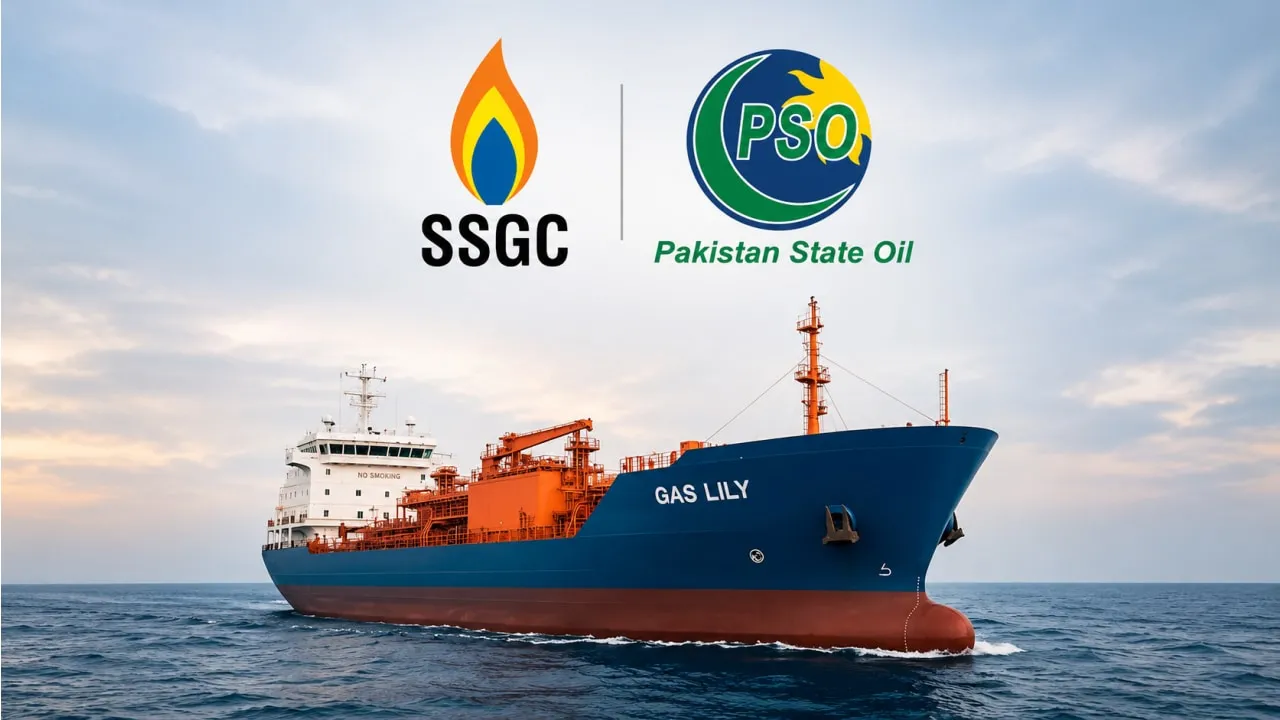
Pakistan's state owned oil and gas companies, Sui Southern Gas LPG Limited (SLL) and Pakistan State Oil (PSO), are facing a potential Rs. 1 billion hit from a costly LPG import as buyers refuse to lift the product at prices well above prevailing market rates.
With much of the shipment still awaiting unloading, mounting terminal charges and the risk of additional vessel penalties are adding to the financial exposure.
The 20,000 tonne cargo, imported from Abu Dhabi, arrived at Karachi's Port Qasim on November 18, 2026, becoming the first major shipment under the federal cabinet's revised LPG import and pricing policy issued on November 3. SLL holds 15,000 metric tons of the consignment, while PSO accounts for the remaining 5,000 metric tons.
Why the Imported LPG Is More Expensive Than Local Supplies
According to shipping details at Port Qasim Authority and Customs, the cargo was procured at a cost and freight (CnF) rate of $1,235 per metric ton, comprising the Saudi Aramco Contract Price (CP) and a premium of $485 per metric ton.
This has pushed the landed cost to approximately Rs. 465,000 per metric ton, compared with local market prices that have fallen below Rs. 400,000 per metric ton.
The size of the vessel prevented the importer from docking it at its own terminal, forcing the shipment to be diverted to EVTL. This arrangement added a handling charge of $38 per metric ton. Of SLL's 15,000 metric ton allocation, only 6,000 metric tons have been discharged, while the remaining 9,000 metric tons are awaiting unloading because of insufficient storage capacity, also known as ullage, at the terminal.
The delay could further increase costs if unloading extends beyond 10 days, as the vessel would become liable for additional daily demurrage charges. These port and shipping expenses would ultimately be passed on to customers, adding to the financial pressure surrounding the expensive import.
Background to the Revised LPG Import Policy
On November 3, 2026, Pakistan's federal cabinet approved a new LPG import and pricing framework aimed at stabilising supply during winter months and reducing dependence on volatile spot markets. The policy authorises state firms to import up to 30,000 tonnes annually at pre-negotiated contract prices, with the expectation that the cargo will be sold at market-linked rates to keep end-user prices affordable.
Historically, Pakistan has relied on a mix of domestic gas, imported LPG, and a modest share of refinery-derived LPG. Seasonal spikes in demand, especially from the colder northern provinces, have often prompted the government to intervene with bulk imports to avoid shortages.
How the Import Process Works
State firms negotiate a contract price with international suppliers, add freight and insurance costs, and then secure a berth at a Pakistani port. Once the vessel arrives, the cargo is off-loaded, stored at a terminal, and allocated to registered buyers based on prior commitments and payment status.
If a terminal lacks sufficient storage, the cargo may be moved to an auxiliary facility, as happened with the EVTL berth. Each movement incurs handling fees, and any delay beyond the agreed lay-time triggers demurrage - a daily penalty paid to the ship owner.
Impact on Buyers and End-Users
PSO has set its LPG price at Rs. 509.86 per kilogram, excluding freight charges where applicable. Open market prices are currently ranging between Rs. 500 and Rs. 550 per kilogram amid supply constraints, low Sui gas pressure and seasonal demand.
Because the landed cost of the imported cargo is Rs. 465,000 per metric ton (approximately Rs. 465 per kilogram), buyers would have to pay a premium of at least Rs. 45 per kilogram to cover the import price. Many commercial customers have declined to purchase at that level, preferring cheaper domestic supplies.
For households, the price differential translates into higher cooking-fuel bills if the state firms pass the cost through. Rural and low-income consumers, who already face limited access to LPG, could see reduced availability as firms prioritize buyers who honour payments.
SLL's Shift in Allocation Priorities
In a letter to its customers, SLL warned that future product allocations will prioritise buyers who honour their commercial commitments during difficult market conditions. The company said several customers either failed to respond to product offers, withdrew from written commitments, or did not lift confirmed quantities despite making payments.
SLL said it had imported the cargo in compliance with government directives to ensure LPG availability and support national socioeconomic objectives.
However, the company complained that some buyers approach it when market prices rise and profit margins improve but withdraw from commitments when prices decline and market conditions become less favourable.
SLL said it maintains records of commercial offers, written commitments, payments, product lifting and instances of non-fulfilment. The company praised customers who continued purchasing substantial quantities, made timely payments and honoured their commitments despite unfavourable market conditions. It said these customers would receive preference in future allocations, while buyers who repeatedly withdraw from confirmed arrangements should not expect the same priority.
What the Financial Exposure Means for the State Firms
The combined cost of the cargo, handling, and potential demurrage could exceed Rs. 1 billion if the remaining 9,000 metric tons remain idle for more than two weeks. Both SLL and PSO are state-owned, meaning the loss would ultimately be absorbed by the federal budget or passed on to taxpayers.
Analysts note that a prolonged standoff could force the firms to sell the cargo at a discount, further eroding margins. Alternatively, the government could intervene with a subsidy to bridge the price gap, a move that would add to fiscal pressure at a time when public finances are already stretched.
Both companies have indicated that they are monitoring the situation closely and will engage with the Ministry of Energy to seek a resolution that avoids waste of the imported product.
What to Watch for Next
Key upcoming dates include the end of the 10-day demurrage window, after which daily penalties will increase. The Ministry of Energy is expected to issue a clarification on whether additional subsidies or price adjustments will be permitted under the November 3 policy.
Stakeholders should also watch for any court filings from buyers alleging unfair allocation practices, as well as any public statements from the cabinet on possible revisions to the LPG pricing formula.
Until a resolution is reached, the cargo is likely to remain at EVTL, incurring further storage and handling costs while the market searches for a price point that aligns with buyer expectations.