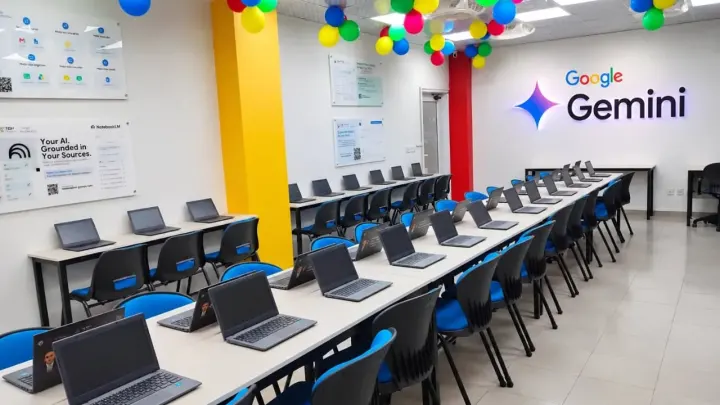
DuckDuckGo is actively pitching its privacy-focused search engine to educational institutions after Google created a strategic opening in the education technology sector. On Tuesday, Google informed schools that they could disable Gemini, but stated that turning off its other artificial intelligence features would also remove access to Google Search.
This policy update by Google has triggered immediate pushback from competitors and privacy advocates alike. DuckDuckGo, a company known for limiting data collection and prioritizing user privacy, recognized an opportunity to enter the education market where Google has maintained a massive historical presence.
Forcing AI on school children: how a monopolist behaves when they think people are powerless.
— Kamyl Bazbaz (@KamylBazbaz) November 3, 2026
Prove Google wrong. https://t.co/Ta6ibmFdb9
How Google Dominates the Education Technology Market
Google has spent years embedding its hardware and software deep into classrooms around the world. According to figures Google has published in previous years, there are around 50 million Chromebooks in schools, used by students and educators, and its Google Classroom platform serves over 150 million users globally.
This extensive integration gives Google immense influence over daily classroom activities and student workflows. Educational institutions rely heavily on Google accounts for homework submission, collaboration, and research, making the choice of default search tools a critical administrative decision.
DuckDuckGo Responds to Google Policy Change
Following the policy announcement, leadership at DuckDuckGo moved quickly to offer an alternative to concerned educators. On X, DuckDuckGo's founder and CEO, Gabriel Weinberg, pointed to the company's online documentation, explaining how schools can switch their default search engine to DuckDuckGo's service instead, adding, get in touch for help.
Meanwhile, DuckDuckGo's chief public affairs officer, Kamyl Bazbaz, issued a stronger statement, writing, forcing AI on school children: how a monopolist behaves when they think people are powerless. Prove Google wrong.
In an email to reporters, DuckDuckGo chastised Google for its decision, adding that Google could easily turn off Search's AI features for schools if it wanted to.
We want to clarify what we announced today about our education services. Today’s announcements give schools more choice, not less. Here’s what we announced:
— News from Google (@NewsFromGoogle) November 3, 2026
– Gemini, Gemini Notebook, and Search will be OFF 🔴 by default. This is based on K-12 schools asking for more control…
The Broader Debate Over Artificial Intelligence in Schools
The company's comments come as the American public is weighing how much AI they want to allow into their lives. As recent elections indicate, many citizens do not want AI data centers built in their towns, but using AI at work and school has become a common practice and requires a more nuanced discussion.
Knowing that educators have struggled with AI, Google developed technology called Guided Learning that is meant to help kids learn by walking through problem-solving steps rather than just providing them with an answer. But educators are still asking for tools that let them remove AI from the learning process altogether.
Google Defends Its Educational AI Integration
After the backlash on Tuesday, Google defended its decision, saying it was just responding to schools' feedback. It said that Gemini, Gemini Notebook, and Search would be off by default, and schools could choose to enable them individually.
The problem, of course, is that Google Search now heavily uses artificial intelligence, through AI Overviews and a conversational AI mode that answers users' queries. Because core search functionality is now intertwined with automated generation, schools cannot separate standard web browsing from automated text synthesis under the current system architecture.
How DuckDuckGo Handles Artificial Intelligence Features
DuckDuckGo isn't anti-artificial intelligence, to be clear. The alternative provider offers its own set of AI features, including a chat interface called Duck.ai, and an AI search assistant.
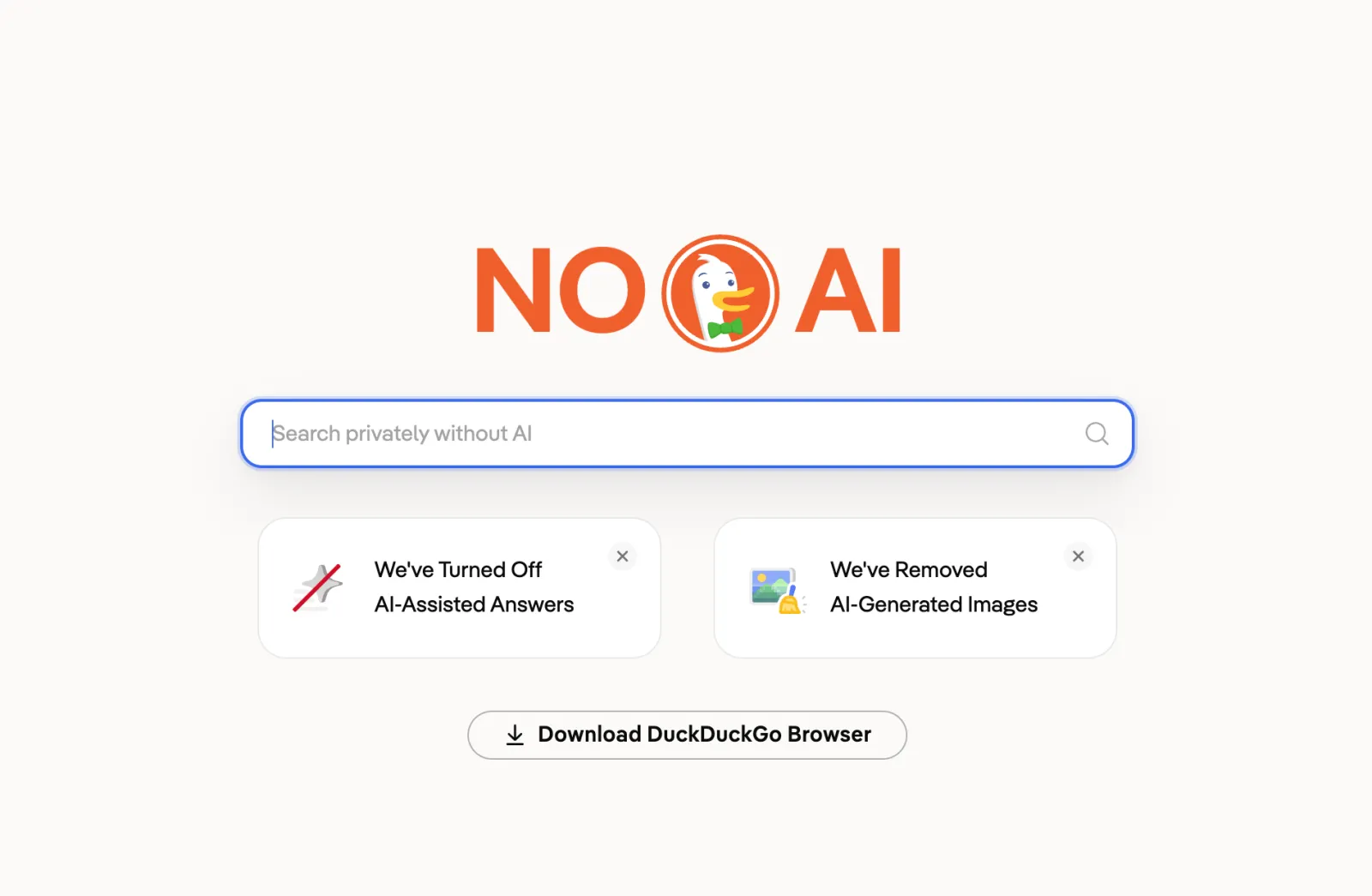
However, unlike Google, it provides options to disable these features in both its search and browser settings, the company says. It also offers a dedicated website, noai.duckduckgo.com, where AI-assisted answers, AI-generated images, and AI feature suggestions are all turned off.
That flexibility may be driving demand for its services, as the company reported earlier this year that its app installs were up 30% as users rejected being force-fed Google's AI Search.