Petrol Price in Pakistan Today and Fuel Rate Reductions
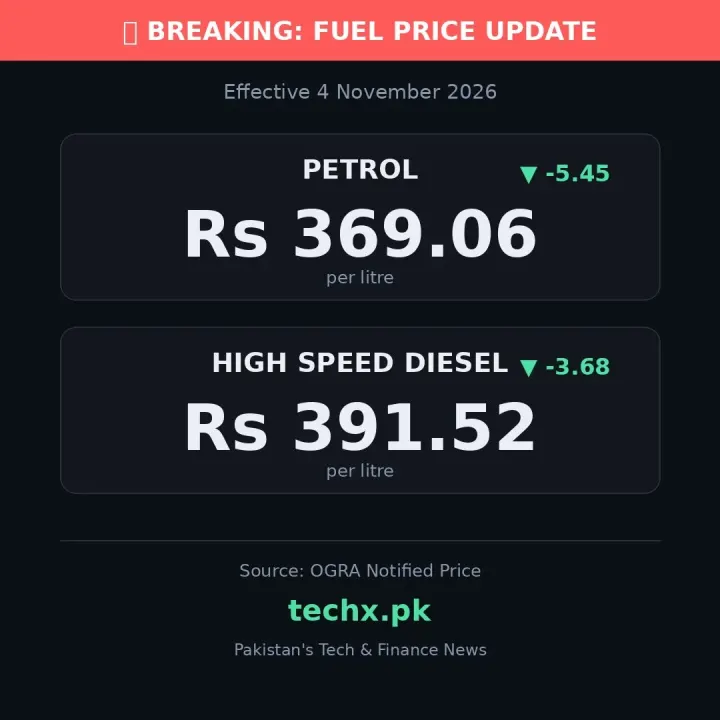
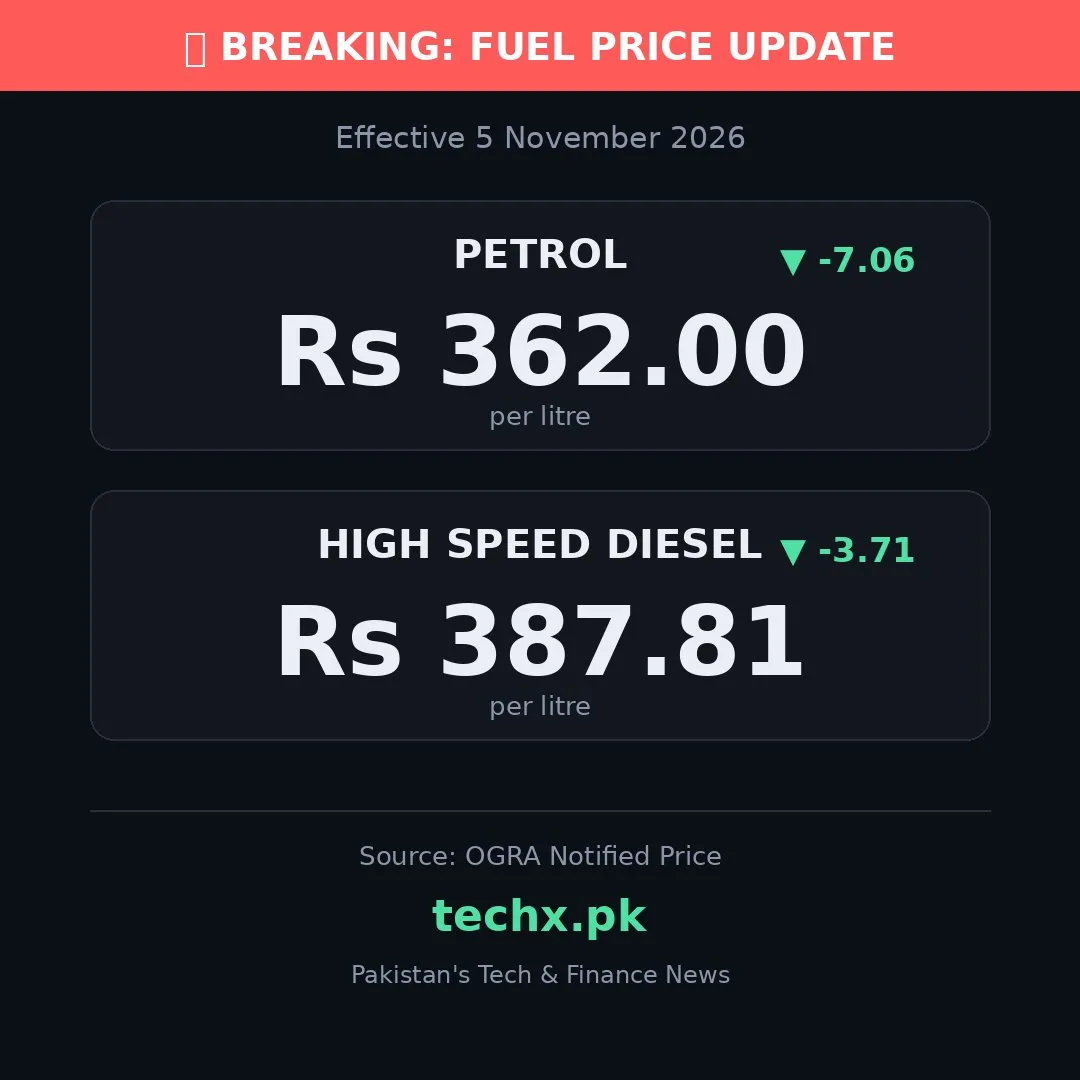
Petrol price in Pakistan today has dropped by Rs 7.06 per litre, bringing some relief to consumers across the country. OGRA fuel prices effective 05 November 2026 also bring a cut of Rs 3.71 on High Speed Diesel. This revision marks a notable moment for motorists, public transport operators, and business owners who rely heavily on petroleum products for daily transit and freight operations.
The announcement arrived through official channels, detailing the exact downward adjustments for the two most widely consumed transport fuels in the country. Citizens filling their tanks on 05 November 2026 will immediately notice the lower figures at fuel stations nationwide. Such fortnightly adjustments dictate household budgets and commercial logistics alike.
New Petrol and Diesel Prices in Pakistan
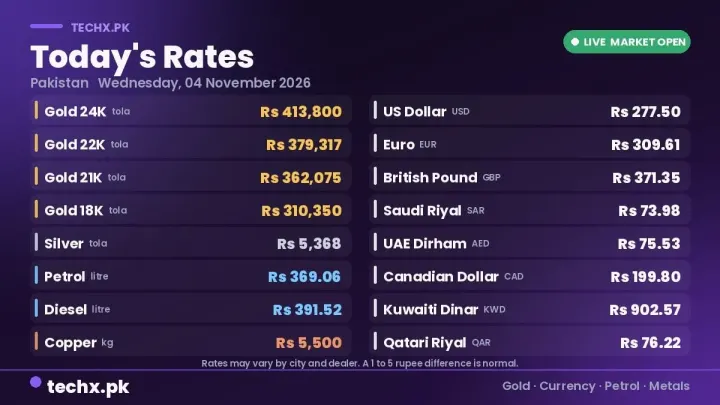
Here is a full breakdown of the new petrol price and diesel price in Pakistan announced under the latest OGRA fuel prices revision effective 05 November 2026. Petrol, officially categorized as Super, moves to a new rate of Rs 362.00 per litre following the reduction of Rs 7.06. Meanwhile, High Speed Diesel drops by Rs 3.71 to settle at a new rate of Rs 387.81 per litre.
These figures apply uniformly at pumps regulated under the current pricing framework. Drivers filling automobiles, motorcycles, and commercial vehicles will settle accounts based on these newly updated tariffs. Filling a standard vehicle tank now requires slightly less capital than it did during the preceding fortnightly cycle.
Why Did Fuel Prices Change?
OGRA reviews fuel prices on a fortnightly basis, taking into account global crude oil market trends and the Pakistani rupee exchange rate. When international oil prices soften or the rupee holds steady, the government can pass on savings to consumers through reduced pump prices. This latest round of cuts reflects those movements in the global energy market.
The mechanics of domestic petroleum pricing involve complex calculations tied to import parities, petroleum levy rates, and general sales tax percentages. Regulatory bodies monitor barrel costs across international trading hubs to determine whether domestic adjustments are warranted. The current downward trend stems directly from softer international quotations observed during the preceding observation window.
What It Means for You
With the diesel price in Pakistan falling by Rs 3.71 and petrol by Rs 7.06, daily commuters, rickshaw drivers, and motorcyclists will see a small but real reduction at the pump starting 05 November 2026. Transport and freight costs may also ease slightly, which could take some pressure off everyday grocery and goods prices for Pakistani households.
Lower diesel rates carry particular weight for the agricultural and logistics sectors. Tractors used in farming operations and trucks hauling merchandise across provincial boundaries consume significant volumes of diesel. When diesel expenses decrease, the cost of moving goods from farms to urban markets experiences downward pressure, which can stabilize retail inflation rates over time.
Understanding the Role of Regulatory Bodies in Energy Pricing
The Oil and Gas Regulatory Authority operates as the central agency tasked with overseeing petroleum sector pricing in Pakistan. Established to ensure transparent oversight of oil and gas operations, the authority calculates consumer rates every fortnight. These calculations integrate landed costs incurred by oil marketing companies during importation.
Government ministries review the calculations submitted by the regulatory body before authorizing final notifications. Tax components, including petroleum levies adjusted to manage federal revenue needs, are factored into the final numbers displayed at fuel stations. Understanding this administrative workflow helps consumers interpret why rates fluctuate twice every month.
Historical Context of Fuel Price Fluctuations in Pakistan
Over recent years, energy costs in the country have experienced severe volatility driven by international geopolitical events and currency adjustments. Domestic consumers have witnessed periods of steep escalation followed by modest corrections. The current reduction offers a temporary respite after months of heavy financial burdens carried by working-class families.
Historical data indicates that petroleum adjustments directly influence urban transport fares and electricity generation costs where furnace oil or diesel backup systems operate. Whenever regulatory authorities announce cuts, public transport associations face calls from commuters to reduce passenger fares accordingly. Monitoring these secondary effects remains an essential part of assessing the true economic impact of fuel price revisions.
Practical Guidelines for Motorists and Fleet Operators
Motorists seeking to maximize savings following the 05 November 2026 price update should adopt efficient driving practices. Maintaining proper tyre pressure, reducing unnecessary vehicle idling, and servicing engines regularly help optimize fuel consumption. Fleet operators can use route planning software to minimize mileage and reduce overall fuel expenditure.
Consumers should also verify that fuel stations apply the correct rates corresponding to the official notification. Regulatory compliance teams monitor pumps to prevent overcharging or adulteration of petroleum products. Reporting discrepancies to consumer protection cells ensures that drivers receive the full benefit of authorized price reductions.