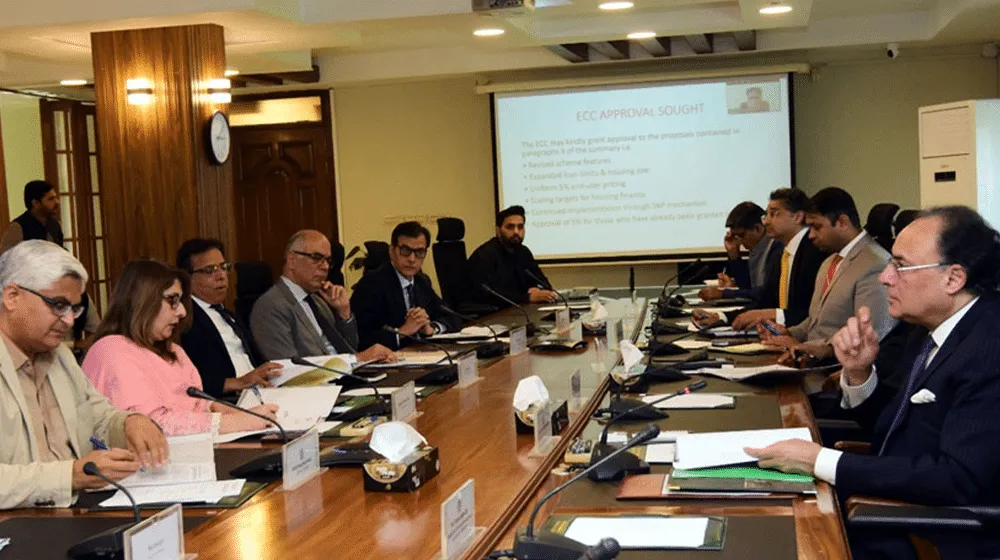
The Economic Coordination Committee (ECC) of the Cabinet will consider six proposals involving supplementary grants and other financial allocations at its meeting on November 20.
What Is on the Agenda for the November 20 ECC Meeting?
The meeting agenda lists six distinct items. First, a technical supplementary grant of Rs. 100 million is proposed for the Minorities Welfare Fund for the current fiscal year 2026-27. Second, another Rs. 100 million supplementary grant is slated for the Interior Division's Other Expenditure budget. Third, the committee will revisit a prior decision on the use of Rs. 500 million out of the Rs. 2 billion released for the Danish Schools Authority. Fourth, a technical supplementary grant is to settle the outstanding guaranteed throughput claim of Pak-Arab Pipeline Company Limited (PAPCO). Fifth, the agenda includes a review of any additional supplementary grants that may have been submitted by other ministries. Sixth, the ECC will address procedural matters to ensure all relevant divisions have their secretaries or principal accounting officers present.
Why These Funding Proposals Matter
Each proposal touches a different sector of public policy. The Minorities Welfare Fund supports education, health and social assistance programs for religious and ethnic minorities. An extra Rs. 100 million could expand scholarship schemes, community health clinics and legal aid services that have been constrained by budget shortfalls.
The Interior Division's Other Expenditure budget covers a wide range of internal security and administrative costs, from police equipment to disaster-response logistics. The proposed Rs. 100 million supplement is intended to address unforeseen expenses that arose after the original budget was approved, ensuring that critical operations are not delayed.
The Danish Schools Authority, a body that oversees schools following the Danish curriculum in Pakistan, received a Rs. 2 billion allocation earlier this year. The ECC's reconsideration of the Rs. 500 million earmarked from that pool suggests a need to re-allocate resources, possibly to address infrastructure gaps or to fund teacher training programmes that were under-funded.
PAPCO, a joint venture that transports natural gas from the Sui gas fields to the Arabian Sea, has an outstanding guaranteed throughput claim. Settling this claim with a technical supplementary grant helps maintain the pipeline's financial health and ensures continued gas supply to downstream users.
How the ECC Works and Who Leads It
The Economic Coordination Committee is a senior inter-ministerial body that reviews and approves supplementary grants, re-allocations and major fiscal adjustments. Its decisions are binding on all ministries and are required to be reflected in the annual budget documents submitted to the Parliament.
The meeting on November 20 will be chaired by Finance Minister Muhammad Aurangzeb at 10:00 am in the Finance Division building in Islamabad. The Finance Minister's role is to ensure that each proposal aligns with macro-economic targets, such as inflation control, fiscal deficit limits and debt sustainability.
All relevant government divisions have been directed to ensure the presence of their respective secretaries or principal accounting officers during the discussions. This requirement guarantees that technical details, such as cash flow projections and compliance with Treasury Rules, are examined in real time.
Background on Supplementary Grants and Technical Grants
In Pakistan's public finance system, a supplementary grant is an additional allocation of funds beyond the original budget estimate, usually required when unforeseen expenses arise or when project scopes expand. A technical supplementary grant, as mentioned for the Minorities Welfare Fund and PAPCO, is a specific type of grant that addresses technical or contractual obligations, often tied to performance guarantees or infrastructure commitments.
These grants are subject to Treasury approval and must be recorded in the Consolidated Fund of Pakistan. The Treasury's Manual of Financial Procedures outlines the criteria for approval, which include demonstrable need, impact assessment and adherence to fiscal rules.
Impact on Stakeholders
For minority communities, the additional Rs. 100 million could translate into more scholarships for university-bound students, expanded health outreach in remote areas, and stronger legal assistance for cases of discrimination. NGOs working in minority rights are likely to receive increased funding for program implementation.
The Interior Division's grant will directly affect police forces, disaster-response teams and administrative offices that rely on timely funding for equipment procurement, training exercises and emergency preparedness. A shortfall in this budget could delay critical security operations.
Schools under the Danish Schools Authority may see improvements in classroom infrastructure, updated teaching materials and enhanced teacher training, benefitting students who follow the Danish curriculum.
PAPCO's claim settlement will preserve the financial credibility of the pipeline project, ensuring that gas exporters and downstream industries continue to receive reliable supplies without interruption.
What Comes Next After the ECC Meeting
Once the ECC approves the proposals, each ministry will prepare an amendment to its budget submission, which must be signed off by the Finance Ministry and then forwarded to the Ministry of Finance's Expenditure Wing for final clearance. The approved supplementary grants will be entered into the public accounts and reflected in the next Treasury Circular.
If any proposal is rejected or sent back for revision, the respective ministry will be required to submit a revised justification, possibly including cost-benefit analysis or alternative funding sources. The ECC meeting minutes will be published within seven days, providing transparency to Parliament and the public.
Practical Takeaways for Readers
- Minority welfare programs may receive a boost of Rs. 100 million, potentially expanding services in education and health.
- The Interior Division's budget will be supplemented by Rs. 100 million to cover unforeseen security and administrative costs.
- Re-allocation of Rs. 500 million from the Danish Schools Authority fund could affect school infrastructure projects.
- PAPCO's guaranteed throughput claim will be settled, ensuring continued gas pipeline operations.
- All decisions will be chaired by Finance Minister Muhammad Aurangzeb and require the presence of senior officials from each ministry.
Stakeholders, including NGOs, school administrators, security agencies and energy companies, should monitor the ECC's official release for final figures and implementation timelines.





