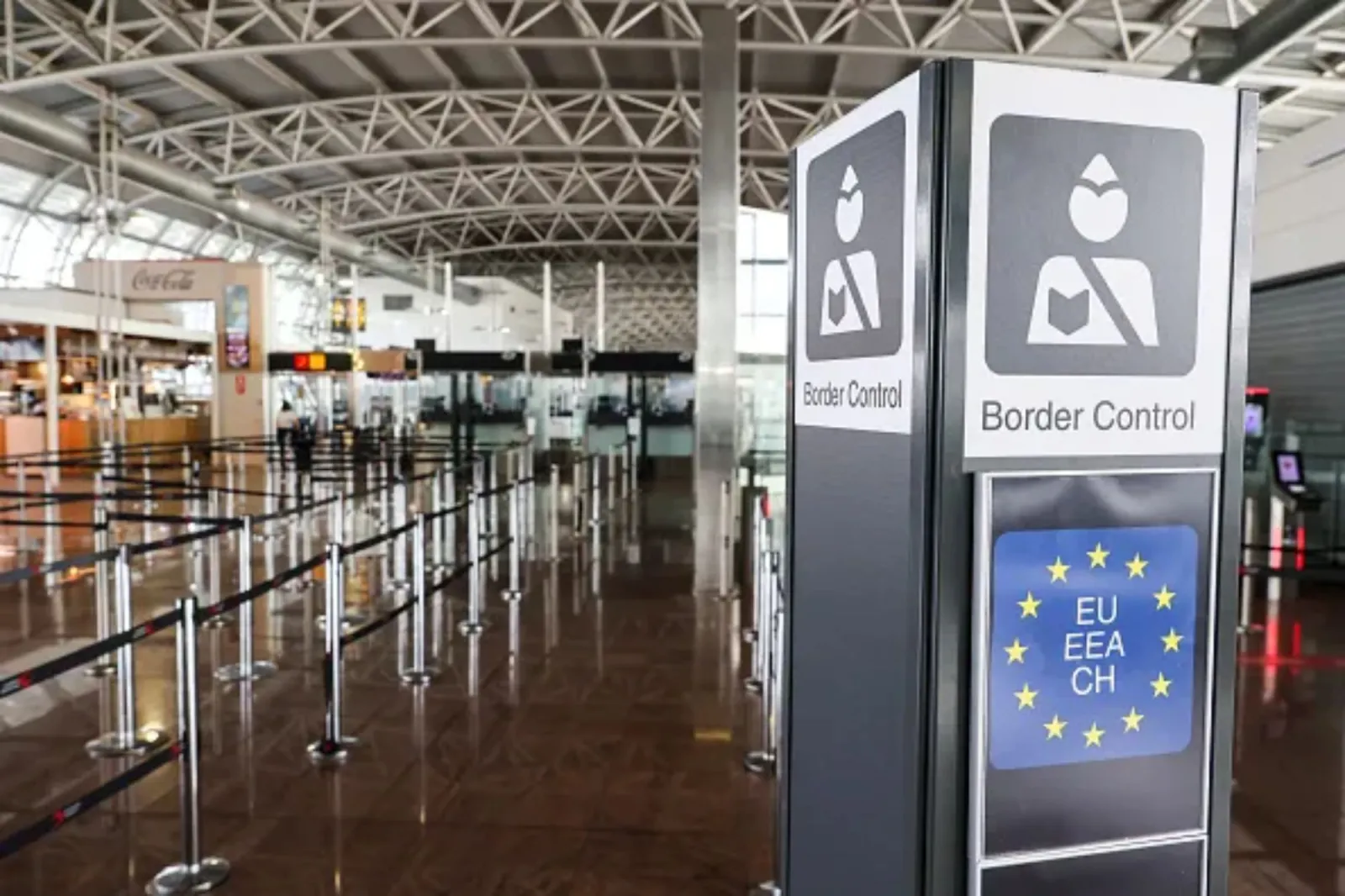
British holidaymakers travelling to Europe are facing an unexpected threat at border checkpoints as computer errors falsely brand innocent travellers as illegal overstayers. After enduring lengthy queues at European airports while registering with the new Entry/Exit System, holidaymakers hoped for smoother journeys. Instead, technical glitches are failing to log when British citizens return to the United Kingdom, leading to severe accusations of overstaying the permitted Schengen Area limits.
Under current post-Brexit regulations, British citizens are restricted to spending a maximum of 90 days within any rolling 180-day period across participating European nations. When automated entry systems or border terminals fail to register a departure, the digital ledger assumes the traveller is still inside the bloc. This administrative flaw accumulates phantom days rapidly, exposing unsuspecting tourists to the threat of formal entry bans, immediate deportation, and monetary penalties reaching up to €10,000 or £8,300.
How the EU Entry/Exit System Glitch Traps British Holidaymakers
The automated Entry/Exit System was fully rolled out on April 10, 2026, designed to modernise border crossings by replacing traditional passport stamps with biometric fingerprint and facial scans. When a passenger arrives at an international destination, the equipment logs their entry, and a corresponding scan is intended to record their exit. However, operational pressures frequently undermine this digital architecture. To combat severe congestion and lengthy airport queues, authorities occasionally turn off the electronic processing machines entirely, leaving border personnel to rely on manual procedures that fail to sync correctly with the central database.
A recent trip to Sweden exposed this flaw for one traveller who was stopped at the border and informed of an overstay totalling 145 days. The digital record indicated that the passenger was still in France, stemming from an unrecorded exit after taking the Eurostar to Paris back in March. Entering Sweden in early November pushed the calculated total to 235 consecutive days, far exceeding the legal allowance. Fortunately, an understanding border control officer at Stockholm Arlanda Airport accepted a verbal explanation of a two-day stay and manually corrected the online file within moments, averting a potential fine and immediate repatriation.
High-Profile Victims and Real-World Deportation Cases
The administrative errors are not isolated incidents and have impacted numerous high-profile figures and ordinary citizens alike. Noted author Jojo Moyes faced threats of financial penalties and travel restrictions following her return journey from a five-day trip to Marseille in October. Border officials informed her that she was classified as an overstayer because her departure from Portugal in May had never been registered in the digital ledger. Despite spending only 23 days in Europe over the preceding six months, the unrecorded exit meant the electronic clock had continued running continuously.
A similar ordeal affected a professional traveller arriving in Finland after visiting Rome. Border control officers stopped her upon arrival, stating her active file showed she was still in Italy because her departure had not been captured despite a successful initial registration. After roughly 45 minutes of administrative checks, staff acknowledged the technical fault and granted entry. More severely, Mrs Paula Pugh experienced immediate deportation from Italy shortly after arriving for a family holiday. Despite completing only three short visits to Spain and one to France totalling 22 days, the system missed her final departure from the Schengen zone. Police placed her on a return flight the same day and handed her passport directly to the aircraft captain for the duration of the trip.
Steps to Check Your Records and Prevent Border Issues
Travellers concerned that their departure from the European Union's Schengen Area has not been logged correctly can take proactive measures before their next journey. The European Commission provides an online tool designed to verify remaining permitted days under the current regulations. Users must input specific passport details alongside their planned destination to calculate their exact allowance, though this platform does not account for stays recorded prior to April 10, 2026. Spotting a discrepancy requires direct communication with the designated Data Controller for the specific country where the initial logging failure occurred.
Resolving an incorrect digital record involves submitting a formal email to the relevant national authority. This communication must include a clear scan of the traveller's passport alongside definitive proof of exit, such as a flight boarding pass, train ticket, or bus voucher proving departure from the Schengen territory. Recognising these widespread technical shortcomings, the Foreign, Commonwealth and Development Office updated its official guidance for British citizens. Officials now advise tourists to carry physical documentation confirming their travel timelines and to approach border guards proactively to request corrections when crossing international checkpoints.
Understanding the Scope of the Entry/Exit System
The digital monitoring framework applies across a wide geographic footprint encompassing 29 distinct European nations. Holidaymakers planning trips to Austria, Belgium, Bulgaria, Croatia, the Czech Republic, Denmark, Estonia, Finland, France, Germany, Greece, Hungary, Iceland, Italy, Latvia, Liechtenstein, Lithuania, Luxembourg, Malta, the Netherlands, Norway, Poland, Portugal, Romania, Slovakia, Slovenia, Spain, Sweden, and Switzerland must navigate these automated checks. While the technology aims to streamline security protocols, the persistent risk of missing exit data highlights the necessity for travellers to maintain meticulous personal records of their European itineraries.