Testing Artificial Intelligence for Political Speeches
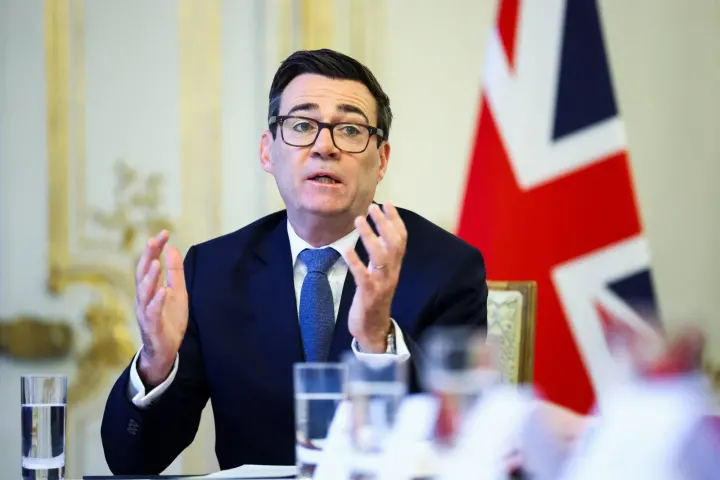
Following an incident where a government aide was discovered using the artificial intelligence tool ChatGPT to modify a draft speech for the Prime Minister, a writer decided to test the technology independently. The experiment involved prompting the application to write an emotional argument for rejoining the European Union in the style of Andy Burnham. This exercise highlights the growing intersection of artificial intelligence and political rhetoric in modern media discussions.
The resulting text mimics the cadence, thematic elements, and rhetorical style associated with prominent British political figures. By analyzing how artificial intelligence structures persuasive arguments about complex geopolitical topics, observers gain insight into the capabilities and limitations of modern language models. The generated text touches on familiar themes of sovereignty, national identity, and generational impact.
The Economic and Social Impact of Leaving the European Union
The generated speech begins by addressing the central promises made during the referendum campaign regarding borders, laws, and the economy. It questions whether the outcome has genuinely improved the lives, security, and prosperity of citizens a decade later. Small business owners face increased complexity and expense when trading with European nations, while ordinary families navigate persistent cost of living pressures.
Communities that felt left behind prior to the referendum are acknowledged within the text. The prompt response notes that voters were driven by a desire for change and hope for public services, but argues that the reality fell short of expectations. Citizens are encouraged to reflect honestly on whether standing alone has delivered the anticipated national renewal.
Patriotism and International Cooperation
A significant portion of the generated address redefines the concept of patriotism. Rather than isolating a nation behind closed borders, true patriotism is framed as a willingness to acknowledge missteps and seek cooperative relationships with neighboring countries. Historical context is introduced by referencing the devastation of twentieth-century European conflicts and the subsequent ambition to build lasting peace through integration.
The text concedes that the European Union is bureaucratic and imperfect, comparing institutional flaws to maintaining a home rather than abandoning it. Cooperation is presented as a strength rather than a weakness, arguing that global challenges such as economic uncertainty, climate change, and security threats require close alliances rather than strategic detachment.
Consequences for the Younger Generation
Particular emphasis is placed on the impact of past political decisions on younger demographics who did not participate in the referendum. The artificial intelligence formulation highlights the loss of automatic rights to live, study, and work across member states without navigating complex immigration frameworks. Opportunities taken for granted by older generations are described as restricted for current youth.
The narrative argues against prioritizing political pride over the future prospects of children and grandchildren. According to the generated text, refusing to reconsider past choices out of stubbornness constitutes a greater betrayal than changing course when evidence demands it. The dialogue urges society to focus on creating an expansive environment filled with possibilities rather than perpetuating old divisions.
Pathways and Challenges of Rejoining
Addressing the practicalities of reversing course, the speech acknowledges that returning to the economic bloc would present considerable challenges. Difficult negotiations, compromises, and obligations would accompany any formal application to rejoin. Furthermore, the text clarifies that membership would not instantly resolve domestic issues like public healthcare funding or regional decline.
Despite these hurdles, the argument concludes that integration offers a superior framework for economic growth, trade facilitation, and international influence. Citizens are invited to imagine a nation that stops looking backward and instead engages confidently with continental neighbors, ensuring young people across Manchester, Middlesbrough, Birmingham, Belfast, and beyond can achieve their full potential.