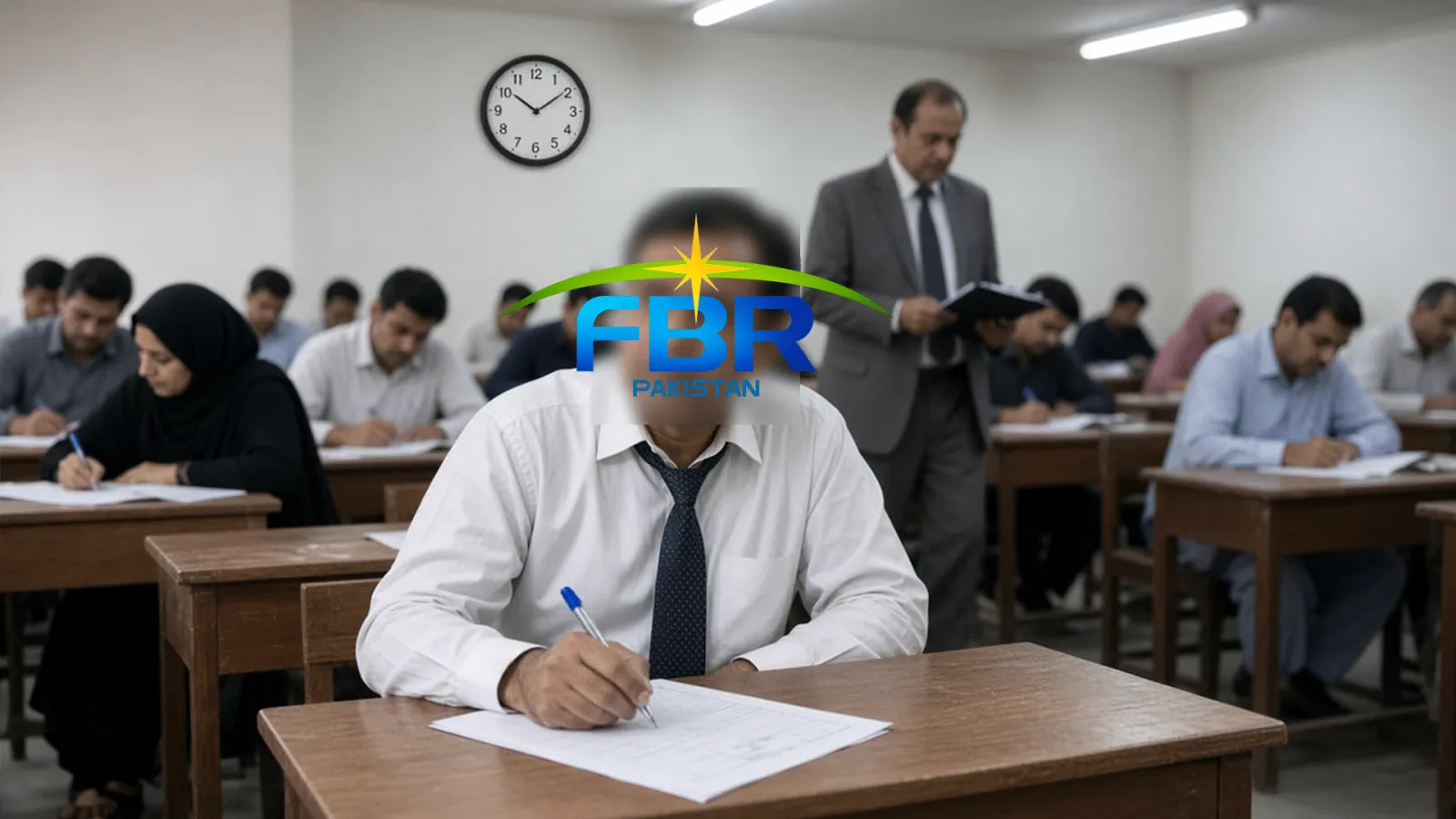
Understanding the Recent FBR Tax Officer Assessments
Only four Federal Board of Revenue officers demonstrated the ability to independently handle both sales tax and income tax cases, according to reported results of recent assessments conducted to evaluate tax officials technical knowledge. These evaluations were initiated to gauge the operational readiness and legal comprehension of personnel currently serving within the tax apparatus.
FBR Chairman Rashid Langrial recently conducted tests to assess officers understanding of the two tax systems. According to results compiled by the FBR and leaked to the media, only 15 of 150 officers could independently pass sales tax orders, while 14 of 143 could do so for income tax cases.
Of the 139 officers who appeared in both assessments, only four demonstrated the ability to independently handle cases involving both taxes. Meanwhile, 65 officers in sales tax and 72 in income tax could prepare notices or orders but could not independently pass them.
Detailed Breakdown of Test Scores and Legal Competency
The assessment found that only 15 of the 150 sales tax officers could independently issue legally valid orders under their own signatures. In income tax, only 14 of the 143 officers met the required standard. No sales tax officer reached the 60 percent benchmark, while only four income tax officers scored 60 percent or higher.
Average scores stood at 26.4 percent in sales tax and 33.3 percent in income tax. Meanwhile, 47 sales tax officers and 16 income tax officers scored below 20 percent, pointing to weaknesses in their understanding of tax laws and legal procedures.
The assessment also exposed gaps in the review process. Only 21 sales tax officers and 28 income tax officers could effectively examine the legal aspects of orders prepared by other officials. Just eight officers could review orders in both tax categories.
FBR Capacity to Split Tax Operations Under Question
The results raise questions about the technical capacity of the tax administration, particularly as the FBR moves to separate sales tax and federal excise administration from income tax within the Inland Revenue Service.
FBR recently reverses a 17-year-old integration merging sales tax, federal excise, and direct tax administrations one structure. FBR has transferred 54 officers to the new setup, with dedicated sales tax units scheduled to become operational in phases from December 2026. With only four officers demonstrating the ability to independently handle both tax categories, the restructuring raises questions about the availability of experienced personnel to manage the transition effectively.
The assessments come amid broader concerns over Pakistan is tax collection system, which has undergone several rounds of reforms but has struggled to significantly improve the country is tax to GDP ratio.
Background on Pakistan Tax Administration Reforms
The Federal Board of Revenue has historically operated as the supreme tax collection agency of the state, responsible for formulating fiscal policies and administering federal taxes. Over the past two decades, the institution has witnessed numerous structural overhauls aimed at broadening the national tax base and enhancing compliance among businesses and individuals.
Integrating sales tax, federal excise, and direct taxes into a single administrative structure seventeen years ago was originally intended to streamline operations and reduce compliance costs for taxpayers. However, critics and international financial monitors frequently argued that the merged setup diluted specialization, leaving officers spread too thin across disparate legal frameworks.
The decision to reverse this integration and create specialized directorates reflects a strategic pivot back toward functional specialization. Despite this clear policy direction, the empirical findings of the recent tests highlight a stark human resource deficit that threatens to complicate institutional reorganization.
Operational Challenges and Legal Verification Hurdles
Handling complex tax litigation and statutory interpretation requires a high degree of legal acumen. When officers lack the fundamental ability to issue legally binding orders independently, bottlenecks inevitably form across regional tax offices. Taxpayers often face prolonged delays as routine file movements require secondary approvals from higher authorities who are similarly overburdened.
Furthermore, the review mechanism within the tax machinery is designed to act as a quality control safeguard against erroneous assessments and arbitrary enforcement. With only 21 sales tax officers and 28 income tax officers demonstrating the capacity to properly vet subordinate work, the internal checks and balances system faces severe operational strain.
This lack of internal technical depth increases the likelihood of legal challenges in appellate tribunals and higher courts. Poorly drafted notices and legally flawed orders are routinely overturned on technical grounds, resulting in lost revenue for the national exchequer and unnecessary harassment for compliant taxpayers.
Implications for Future Tax Collection Goals
Pakistan continues to grapple with persistently low tax-to-GDP ratios compared to regional peers, forcing successive governments to rely heavily on stabilization programs and external borrowing. Expanding documentation and capturing the informal economy depend entirely on the competence and integrity of field officers interacting with commercial entities.
As the administration transitions toward phased operational independence for sales tax units leading up to December 2026, bridging the skills gap remains an urgent priority. Intensive training programs, rigorous performance evaluations, and merit-based promotions are essential tools required to overhaul institutional capacity.
Without addressing the foundational deficiencies exposed by Chairman Rashid Langrial is assessments, structural reorganization alone risks reproducing existing administrative failures within new bureaucratic boundaries. Observers and stakeholders will monitor how the directorate addresses these training shortfalls in the coming months.





