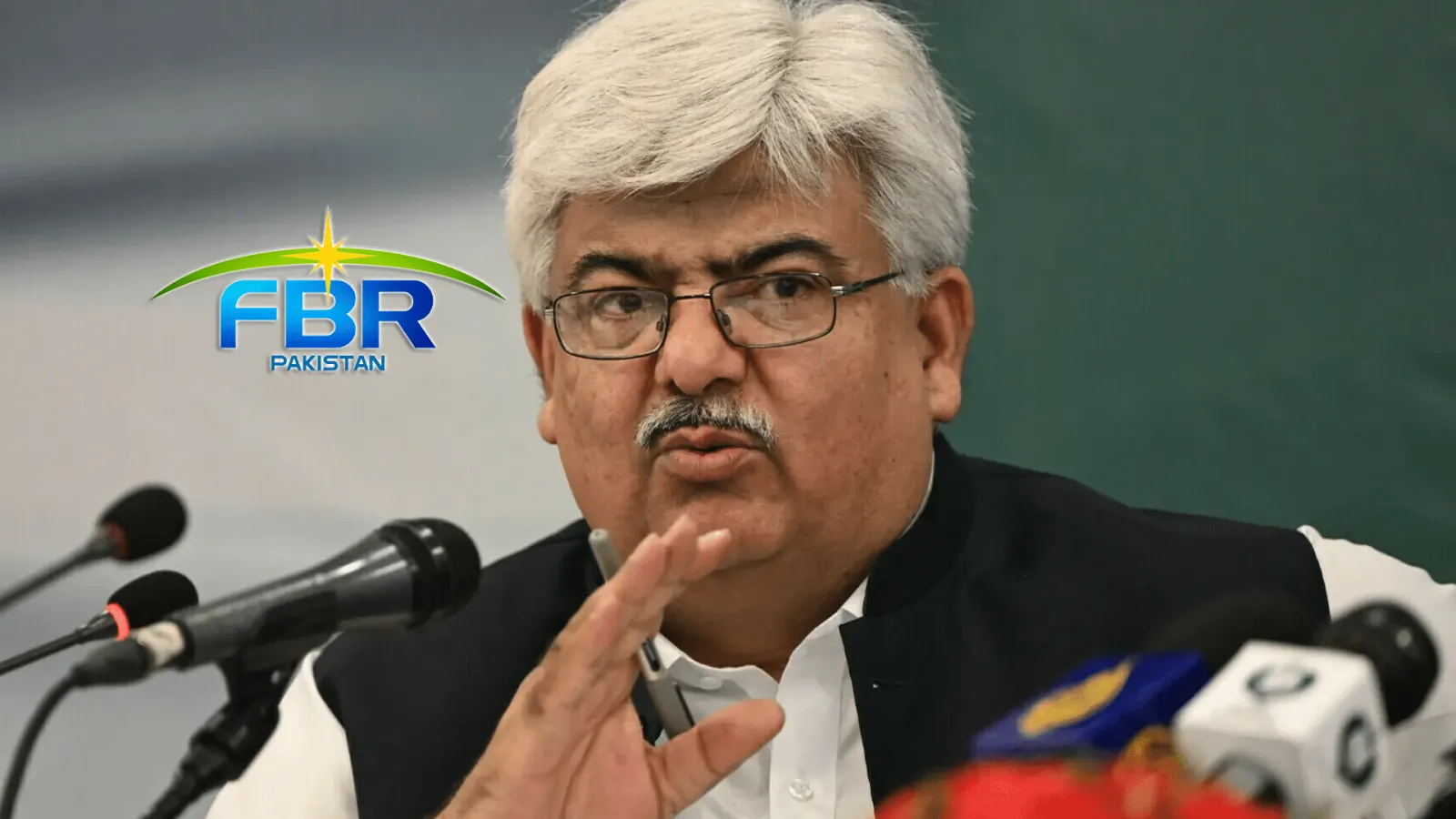
Businesses could soon receive tax relief as the Federal Board of Revenue (FBR) considers lowering the super tax to ease the financial burden on companies and encourage new investment.
FBR Chairman Rashid Mahmood Langrial shared the development during his meeting with the Lahore Chamber of Commerce and Industry (LCCI), where he discussed measures to support the private sector, stimulate industrial growth, and create jobs.
What Is the Super Tax and Why Is Its Reduction Significant?
The "super tax" is a surcharge imposed on corporate income tax in Pakistan. It was introduced in 2019 as a temporary measure to raise additional revenue for the federal budget. The rate has varied, reaching as high as 15 per cent for large corporations. Critics argue that the extra levy discourages capital investment, especially in sectors that already face high operating costs such as manufacturing and export-oriented industries.
Lowering the super tax would directly reduce the effective tax rate for companies, improving after-tax profitability. For exporters, a reduced levy can translate into more competitive pricing in overseas markets, potentially expanding market share. The move also aligns with the government's broader fiscal consolidation strategy, which seeks to broaden the tax base while easing the compliance burden on the private sector.
FBR Reports 30% Increase in Tax Refunds
The FBR chairman said delays in tax refunds had been addressed through a fast track mechanism and urged the business community to verify whether payments were being processed within the prescribed timelines.
He said refund claims received by the 13th of each month were being processed and paid by the 3rd or 4th of the following month. Referring to approximately Rs. 47 billion in refunds, Langrial said the FBR had issued 30 percent more refunds during the first four months of the current fiscal year compared with the corresponding period last year.
He also invited the LCCI to nominate two or three representatives familiar with export operations and refund procedures to review the new online refund system, scheduled for introduction in December.
How the New Online Refund System Works
The upcoming platform will allow taxpayers to submit refund applications electronically, track status in real time, and receive automated notifications when payments are scheduled. By digitising the process, the FBR aims to cut paperwork, reduce human error, and shorten the average turnaround from claim to disbursement. The system will integrate with the existing tax management software used by large firms, ensuring data consistency across filing, assessment, and refund stages.
FBR to Establish Customs Hearing Room in Lahore
On customs valuation disputes, Langrial agreed to establish a dedicated hearing room in Lahore to facilitate importers appearing before relevant authorities.
The facility will include electronic document transfer and display systems, allowing importers to present their records directly to hearing officers. He said the hearing room would become operational the following Monday.
He also agreed to organize an awareness session at the LCCI, with the Director General of Customs attending to brief importers on customs valuation laws, procedures, and regulatory requirements.
Why a Dedicated Hearing Room Matters for Importers
Customs valuation disputes often stall cargo clearance, leading to demurrage charges and supply-chain disruptions. A specialised hearing venue reduces the need for importers to travel to Islamabad or Karachi, cutting costs and accelerating resolution. The electronic display system ensures that all parties can view valuation calculations simultaneously, increasing transparency and reducing the likelihood of procedural errors.
LCCI Seeks Tax Relief for SME Exporters
The meeting also discussed a standardized format for registering complaints with the FBR, the proper storage and preservation of confiscated goods, and tax incentives for businesses that sell products in the domestic market while also exporting them.
LCCI President Ali Hussam Asghar called for closer consultation between the government and the business community in formulating economic and taxation policies. He also urged the government to introduce a dedicated concessional tax regime for small and medium sized enterprise exporters to help smaller businesses expand exports and access international markets.
Background: Tax Policy and SME Challenges in Pakistan
Small and medium enterprises (SMEs) account for roughly 30 per cent of Pakistan's GDP and employ about 40 per cent of the formal workforce. Yet they face higher effective tax rates than large corporations because of limited capacity to claim deductions and navigate complex filing procedures. Historically, the government has offered a reduced corporate tax rate for SMEs, but the super tax surcharge has eroded those benefits.
Export-oriented SMEs often encounter additional hurdles, such as customs clearance delays, inadequate export financing, and limited access to market intelligence. A concessional tax regime, similar to the one applied to large exporters under the Export Promotion Capital Goods (EPCG) scheme, could provide a more level playing field, encouraging diversification of export baskets.
Impact on Different Stakeholders
Large corporations stand to gain immediate cash-flow improvement if the super tax is lowered, allowing them to reinvest in plant and equipment. Export-focused SMEs could benefit from both the faster refund system and a potential tax concession, reducing the cost of entering new markets. Importers will experience shorter dispute resolution times thanks to the Lahore hearing room, which may lower logistics costs and improve inventory turnover. Finally, the government could see higher compliance rates as businesses perceive the tax system as fairer and more predictable.
What Comes Next: Timeline and Next Steps
The FBR has not set a definitive date for any amendment to the super tax rate, but Chairman Langrial indicated that a proposal will be drafted for review by the Ministry of Finance within the next quarter. The draft will be circulated to industry bodies, including the LCCI, for comment before being submitted to the cabinet.
The online refund system is slated for a pilot launch in December, with full rollout expected early next fiscal year. Importers interested in testing the new customs hearing room are invited to register through the LCCI's upcoming awareness session, which will be scheduled for the first week of the coming month.
Stakeholders are advised to monitor official FBR releases and the Ministry of Finance's budget statements for updates on the super tax proposal, as well as to prepare documentation for the new refund portal to avoid delays once it goes live.
Practical Takeaways for Business Leaders
- Review current super tax liabilities and model scenarios under a reduced rate to assess potential cash-flow benefits.
- Ensure refund claims are filed before the 13th of each month to qualify for the fast-track payment schedule.
- Nominate knowledgeable export-operations staff to participate in the December review of the online refund system.
- Prepare digital copies of customs valuation documents in advance of the Lahore hearing room's launch.
- Engage with the LCCI's advocacy committee to shape the proposed SME export tax concession.
Expert Opinions on the Proposed Changes
Tax consultants at a leading Karachi firm note that a 5-percentage-point cut in the super tax could increase net profits for a typical manufacturing firm by roughly Rs. 1.2 billion annually, assuming a pre-tax profit of Rs. 10 billion. They also caution that any reduction must be paired with stronger enforcement to prevent revenue leakage.
Customs law experts emphasize that the hearing room's electronic system will set a new benchmark for procedural fairness, but they stress the need for clear guidelines on document admissibility to avoid future disputes.
Conclusion
While the final decision on the super tax remains pending, the FBR's current initiatives, faster refunds, a new online portal, and a dedicated customs hearing room, signal a proactive approach to easing the tax burden and improving the business climate in Pakistan. The LCCI's push for a dedicated SME export tax regime adds another layer of advocacy that could reshape fiscal policy in the coming year.





