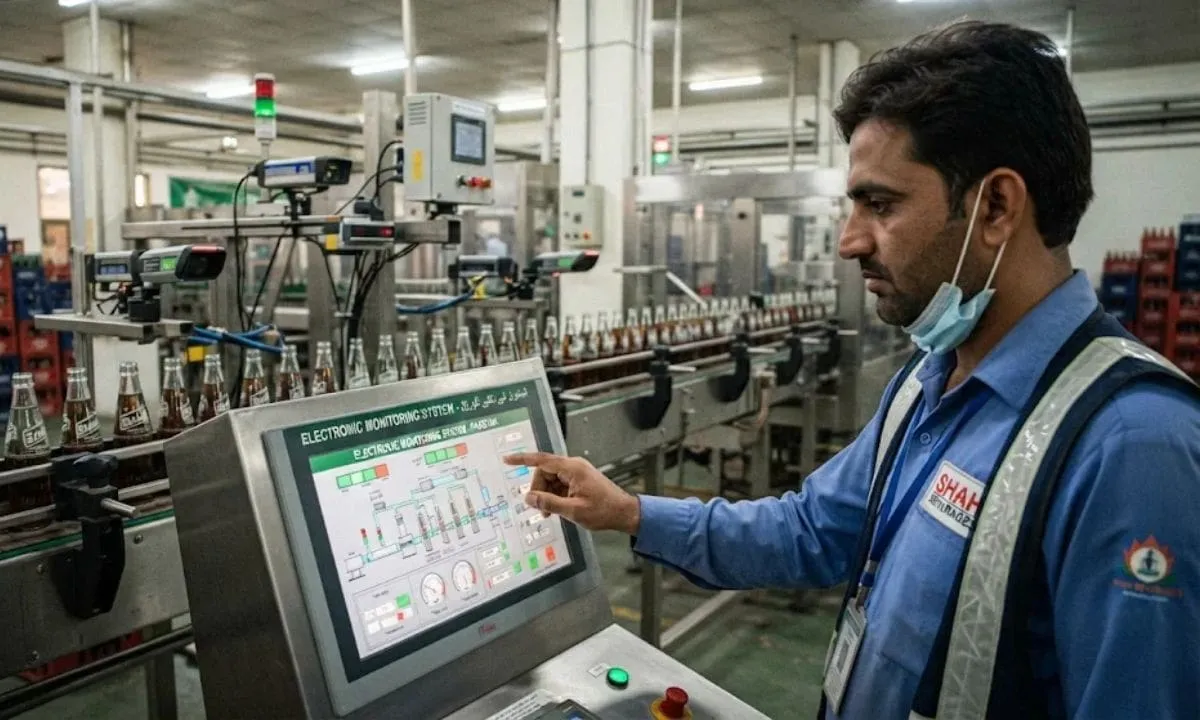
The Federal Board of Revenue (FBR) has approved seven additional vendors to supply, install and maintain electronic monitoring systems at factories producing beverages, bottled water, packaged juices and milk, enabling tax officials to track output remotely and detect possible tax evasion.
FBR Chairman Rashid Mahmood Langrial issued Sales Tax General Order No 37/2026 approving the vendors. The order supplements Sales Tax General Orders No 3, 4, 6 and 7 of 2026 and takes immediate effect.
Who Are the Newly Approved Vendors?
The seven vendors cleared by the order are:
- National Radio and Telecommunication Corporation (NRTC)
- Obsidian Technologies
- Excellence Delivered (EXD) Pvt Ltd
- ISSM Labelling Solutions Pvt Ltd
- Toolink Pakistan Pvt Ltd
- AJCL Pvt Ltd
- Authentic
Manufacturers may engage any of these firms to install the required electronic devices on their production lines. The inclusion of both local and specialized technology firms broadens the pool of service providers and is intended to accelerate rollout across the sector.
How Does the Electronic Monitoring System Work?
Each approved vendor will install sensors and counters on bottling, juicing or milk-packaging lines. The devices automatically record the number of units produced - bottles, juice packs or milk cartons - in real time. Data are transmitted via secure internet connections to the FBR's central computer system.
Tax officials can then view factory output from any sales tax or federal excise duty office, and even from the FBR headquarters, without needing a physical site visit. The system mirrors the track-and-trace technology previously introduced in the sugar industry, where similar devices helped authorities verify sugar production against declared figures.
Why Is the Government Introducing This System?
The primary goal is to improve the accuracy of production reporting and strengthen tax compliance. By comparing electronically recorded output with the figures declared in tax returns, the FBR can quickly identify mismatches that may signal under-reporting or evasion.
For example, if a factory's sensors record 100,000 bottles produced in a day but the company declares only 70,000, the discrepancy of 30,000 units would trigger a review. Officials would then seek an explanation - whether the missing units were sold, held in inventory, or simply omitted from the return.
Beyond detection, the system is expected to raise revenue by ensuring that the correct sales tax and federal excise duty are applied to the actual volume of goods manufactured.
Which Manufacturers Are Affected?
The FBR has released a list of 54 manufacturers that will be subject to the new monitoring requirement. The list includes major multinationals and local brands such as Coca-Cola, Pepsi, Nestle, Haleeb, Engro Foods, Shezan and Qarshi.
Officials clarified that the list is neither exhaustive nor final. All registered manufacturers of bottled water, packaged juices, packaged milk, carbonated beverages and related products must comply, regardless of whether they appear on the initial roster.
What Is the Legal Framework Behind the Order?
Sales Tax General Order No 37/2026 is part of a series of orders (Nos 3, 4, 6 and 7 of 2026) that collectively define the technical standards, certification procedures and compliance timelines for electronic monitoring in the beverage sector. The orders are issued under the Federal Board of Revenue Act, which empowers the board to issue regulations for the administration of sales tax and federal excise duty.
Compliance is mandatory once the order takes effect. Failure to install approved devices within the prescribed timeframe can result in penalties, including fines and potential suspension of the manufacturer's sales tax registration.
Implementation Timeline and Next Steps
Vendors have been given a 30-day window to begin installations at factories that have already submitted their compliance plans. Manufacturers are required to submit a detailed implementation schedule to the FBR, outlining equipment placement, testing procedures and staff training.
After installation, a verification phase will be conducted by FBR auditors to ensure that the devices are calibrated correctly and that data transmission is secure. Once verified, the system will go live and data will flow continuously to the central database.
The FBR has indicated that round-the-clock monitoring will be possible from its headquarters, allowing real-time oversight of production across the country.
Potential Challenges and Limitations
While the technology promises greater transparency, its effectiveness depends on several factors:
- Equipment reliability: Sensors must function correctly in harsh industrial environments, including exposure to moisture, temperature fluctuations and vibration.
- Data integrity: Secure transmission protocols are essential to prevent tampering or loss of records.
- Verification processes: Auditors need to cross-check electronic data with physical inventory counts, sales invoices and tax returns to confirm that reported output aligns with actual sales.
- Manufacturer cooperation: Timely submission of implementation plans and access for verification visits are crucial.
Moreover, production figures alone do not determine a company's total tax liability. Tax authorities must also examine sales volumes, inventory levels, applicable tax rates and any exemptions before concluding whether the correct amount of tax has been paid.
Impact on the Beverage Industry and Tax Revenue
The beverage sector contributes a sizable share of Pakistan's sales tax and federal excise duty collections. By tightening oversight, the FBR expects to close gaps that have historically allowed under-reporting.
Industry analysts anticipate that the new system could lead to a modest increase in tax receipts, though the exact figure will depend on the extent of previously unreported production. Larger multinational firms, which already have sophisticated accounting systems, may experience minimal disruption, while smaller local producers could face a steeper learning curve.
In the longer term, the electronic monitoring framework may serve as a model for other high-volume manufacturing sectors, such as dairy processing, confectionery and pharmaceuticals, where similar concerns about tax compliance exist.
What Should Manufacturers Do Now?
Manufacturers should take the following practical steps:
- Review the list of approved vendors and select a partner that can meet the technical specifications and timeline.
- Develop an internal project plan that includes equipment procurement, installation schedules, staff training and data validation procedures.
- Submit the implementation schedule to the FBR within the 30-day window to avoid penalties.
- Prepare for on-site verification by ensuring that production lines are accessible and that records are readily available for auditors.
- Integrate the electronic output data with existing accounting software to streamline reconciliation of production, sales and tax filings.
By proactively engaging with the new requirements, manufacturers can minimize disruption and demonstrate compliance, reducing the risk of future audits or fines.
Looking Ahead
The FBR has not disclosed a specific date for a nationwide rollout beyond the initial 30-day installation period, but officials have indicated that the system will become fully operational once all verified factories are online. Stakeholders are advised to monitor further communications from the board for updates on compliance deadlines, technical guidelines and any amendments to the underlying sales tax orders.
As the electronic monitoring system matures, its data will likely feed into broader analytics platforms used by the FBR to identify sector-wide trends, assess compliance risk and inform policy decisions on tax rates and exemptions.
In summary, the addition of seven approved vendors marks a decisive step by the Federal Board of Revenue to harness technology for more accurate production reporting, tighter tax enforcement and potentially higher revenue from Pakistan's vibrant beverage industry.





