Viral Video Leads to Wildlife Act Case in Narowal
Two suspects face a case under the Wildlife Act in Narowal after a video of a rare snake being killed circulated on social media. The incident drew immediate attention from regulatory authorities and triggered a formal legal response in the region.
The Punjab Wildlife and Parks Department has registered an FIR against the two men for allegedly killing an Indian Rock Python in Village Khan Khasa, Tehsil Narowal. The case was filed at Police Station Sadar Narowal to hold the individuals accountable for violating environmental protection laws.
Assistant Chief Wildlife Ranger Hanfia Yousaf received information about the incident, launched an investigation, and identified the suspects, according to officials. The action was taken under the leadership of Senior Minister Maryam Aurangzeb, highlighting strict oversight by provincial authorities regarding animal welfare and habitat protection.
Understanding the Indian Rock Python
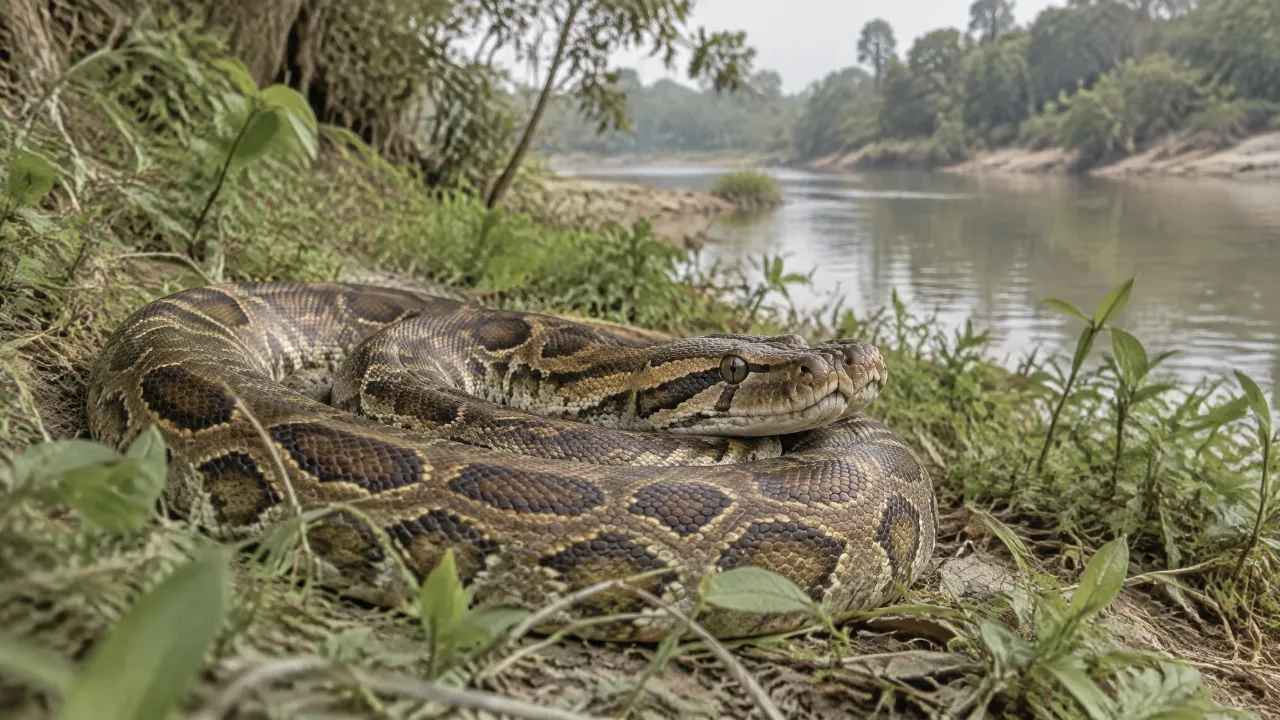
The Indian Rock Python is a large, non-venomous snake that kills its prey through constriction rather than venom. It can grow between two and four metres and feeds mainly on rats, rabbits, birds, and small mammals.
Because of its size and hunting style, the species often draws fear from local populations who mistake it for a dangerous threat. However, biologists and environmentalists classify this reptile as completely harmless to humans unless provoked or cornered.
The reptile uses powerful muscular coils to subdue its meals before swallowing them whole. This biological mechanism requires immense energy, meaning the animal spends long periods resting while digesting its food.
Ecological Importance of Pythons in Agricultural Areas
Wildlife experts consider the species important for maintaining ecological balance, as it helps control rodent populations and supports the natural food chain. Without these predators, pest populations can quickly multiply and damage local agriculture.
The species is commonly found in riverine forests, riverbanks, and agricultural areas of Punjab and Sindh, where the snake quietly does the job no pesticide can. Farmers often benefit directly from the natural pest control provided by large reptiles living near fields and irrigation canals.
Despite their usefulness, these creatures frequently encounter human settlements as agricultural expansion reduces their natural habitats. Habitat loss forces them into closer contact with villagers, increasing the risk of conflict and illegal killings.
Legal Consequences of Killing Protected Wildlife
What began as a viral clip has now turned into a legal case, with officials making clear that killing a protected species is a Wildlife Act violation. Law enforcement agencies rely on digital evidence, such as social media footage, to track down individuals who post illegal acts online.
The Wildlife Act provides a legal framework to prosecute poachers and individuals who harm protected fauna within the province. Convictions under these statutes can lead to heavy fines and imprisonment, depending on the severity of the offense and the conservation status of the animal.
Provincial departments continue to monitor online platforms for illegal content involving wildlife abuse. Authorities urge citizens to report sightings of wildlife to trained professionals rather than taking matters into their own hands.
How Wildlife Authorities Track Environmental Crimes
Investigating environmental crimes requires coordination between local police stations and specialized conservation officers. When digital clips emerge online, cyber cell units and field rangers work together to pinpoint the exact geographic location of the offense.
In this instance, prompt action by Assistant Chief Wildlife Ranger Hanfia Yousaf allowed investigators to move quickly from a digital video to identified suspects in Village Khan Khasa. Establishing the identity of the accused is a vital step before filing a First Information Report in court.
Public awareness campaigns often accompany these legal measures to educate rural communities about the protected status of native species. Officials emphasize that peaceful coexistence remains the safest approach for both humans and local wildlife populations.





