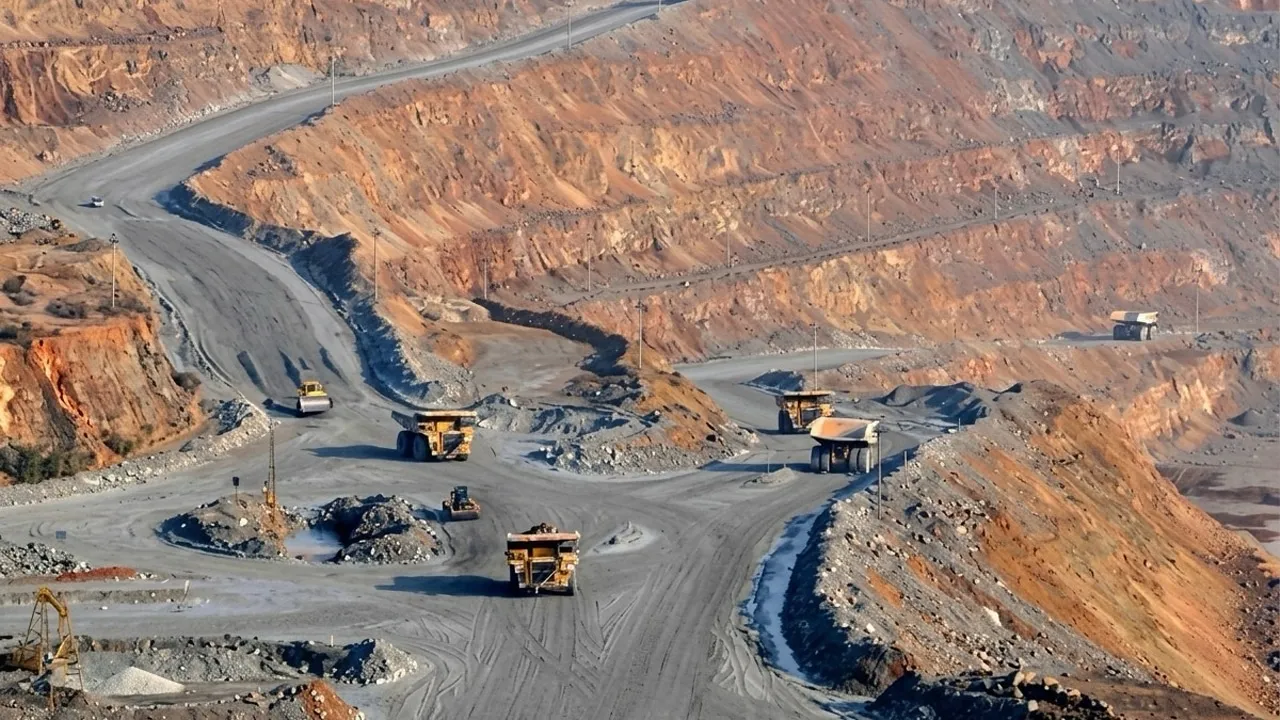
Pakistan's mineral potential is widely recognized. Turning it into projects that investors can finance depends on something less visible: modern, systematic exploration science. As the country prepares to host the Pakistan Minerals Investment Forum 2026 (PMIF26) in Islamabad on 12-13 November, companies such as Globacore Minerals are bringing international exploration methods and expertise to the task of building that foundation.
Why Data-Led Exploration Matters Now
The global backdrop makes the effort timely. The International Energy Agency warns that today's pipeline of mine projects points to a potential 30% shortfall in copper supply by 2035. Supply of key energy minerals is also highly concentrated, with one country the leading refiner for 19 of 20 of them, and the IEA calls diversification "the watchword for energy security." Buyers and investors are looking for new, reliable sources.
For Pakistan, a country that has identified 92 minerals, the urgency is compounded by the fact that more than 95% of its terrain remains under-explored, according to analysts at SFA Oxford. Balochistan's Chagai district already hosts Reko Diq, one of the world's largest undeveloped copper-gold deposits, and the Saindak copper mine, yet the vast majority of the country's mineral endowment is still hidden beneath the surface.
Who Is Driving the New Approach?
"The geological systems that form copper and gold deposits are clearly present in Chagai. What is still at an early stage is the work of exploring this ground systematically, to modern international standards. For an explorer, this offers a rare opportunity," said Nick Winer, VP Exploration at Globacore Minerals.
Winer brings a track record that speaks to this approach. A Fellow of the Australasian Institute of Mining and Metallurgy (AusIMM) and a Qualified Person, he led the teams that discovered the world-class Nuevo Chaquiro copper-gold porphyry deposit in Colombia and made the resource model for the Araguaia nickel deposit in Brazil viable. In both cases, the breakthrough came from compiling, interrogating and re-interpreting data that already existed.
"Discovery does not always start with new ground. Bringing existing data together, testing it and reading it with modern tools, including AI routines, is one of the most cost-effective ways to decide where to focus," he said.
How Globacore Applies Modern Science
Globacore is owned by six of Pakistan's leading business groups, giving it both capital strength and local credibility. The company applies its data-led model across a portfolio that spans the Chagai belt and the Washuk area. Its workflow blends remote sensing, integrated geophysics, detailed geological mapping and systematic sampling.
The firm's joint venture with Mari Minerals in District Chagai, operated by Mari, has progressed to the drilling stage, according to the company. By adhering to international reporting standards such as JORC and NI 43-101, Globacore ensures that every drill result, assay and geological interpretation is vetted by a qualified professional before it reaches investors.
These codes dictate how exploration results are collected, verified and reported, and they require a qualified professional to stand behind them. Lenders rely on that discipline. Reko Diq's ability to secure $3.5 billion in debt from international lenders shows what credible, well-defined projects can attract.
Why Local Skills and Community Trust Are Essential
Modern exploration is not solely a technology story. It needs Pakistani geoscientists, data specialists and field teams who understand the terrain, the regulatory environment and the cultural context. Building trust with the communities where work takes place is equally important, as social licence can determine whether a drill program proceeds or stalls.
Globacore's strategy includes training programmes for local graduates, partnerships with Pakistani universities and on-the-ground community outreach. By integrating local expertise with global best practice, the company aims to create a sustainable pipeline of projects that can move from exploration to development without the delays that often plague foreign-led ventures.
What to Expect at Pakistan Minerals Investment Forum 2026
Winer will also speak on the panel "Building the Pipeline: Pakistan's Next-Generation Mining Projects" on the opening day of PMIF26 and make a presentation, "Challenges and Pitfalls in Early Stage Mineral Exploration", later in the day. His message is that patience and discipline pay off.
"Most targets never become mines, and that is normal. Patient capital, quality data and skilled people are what turn potential into projects that can be financed. That is the foundation Pakistan's next generation of mines will be built on," he said.
Attendees at the forum will hear case studies from Globacore's Chagai joint venture, see examples of AI-enhanced data integration, and learn how international reporting standards can de-risk projects for lenders. The event also provides a platform for Pakistani ministries, local investors and foreign financiers to discuss policy reforms, tax incentives and infrastructure needs that will support the mining sector's growth.
Implications for Investors and the Pakistani Economy
For investors, the data-led approach reduces exploration risk by focusing capital on targets with a statistically higher probability of economic mineralisation. It also shortens the time from target identification to drilling, meaning earlier cash-flow generation for project sponsors.
For Pakistan, successful translation of exploration data into bankable projects could diversify export earnings, create jobs in remote regions and contribute to the government's goal of increasing the mining sector's contribution to GDP from under 1% to 3% by 2030.
Next Steps and What to Watch
Globacore plans to release its first drill results from the Chagai joint venture by early 2027. The company also intends to expand its data-integration platform to the Washuk area, where preliminary airborne geophysical surveys have identified several anomalous zones.
Policy watchers will monitor the outcome of the PMIF26 discussions, particularly any amendments to the Mining Act, tax structures and royalty regimes that could affect project economics. The Ministry of Energy and Minerals has signalled a willingness to fast-track approvals for projects that meet international reporting standards, but concrete timelines are yet to be published.
Overall, the combination of global mineral demand, Pakistan's under-explored geology and a data-centric exploration model positions the country to attract the patient capital needed for large-scale mining development. The success of Globacore's pilot projects will likely serve as a bellwether for the sector's future trajectory.





