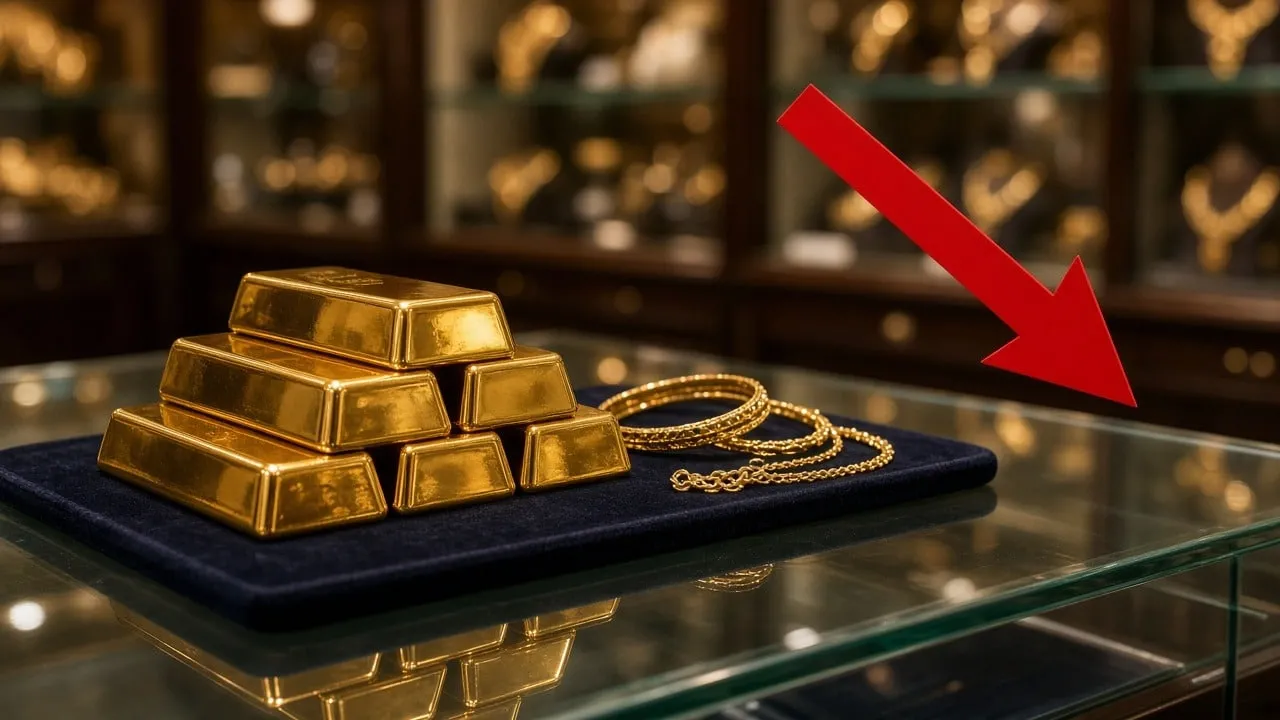
Gold prices in Pakistan fell for a third straight day on Saturday, with 24-karat gold dropping by Rs. 700 to Rs. 410,936 per tola.
According to rates shared by the All-Pakistan Gems and Jewellers Sarafa Association (APGJSA), 10-gram gold also fell by Rs. 600 to Rs. 352,311.
Why the Market Shift Occurred
The decline mirrors a broader slowdown in precious-metal markets worldwide. Over the past week, the United States dollar has strengthened against most currencies, putting pressure on gold, which is priced in dollars on international exchanges. At the same time, central banks in several major economies have signalled tighter monetary policy, reducing the appeal of gold as a hedge against inflation.
In Pakistan, the local market reacts quickly to these global cues because most traders import gold or base their pricing on international benchmarks. The APGJSA, which represents the major sarafa (gold market) districts in Karachi, Lahore and other cities, publishes daily rates that reflect both import costs and domestic demand.
Rs. 16,500 Lost in Three Days
Saturday's dip was smaller than the previous two days, but it extended the slide. Gold fell by Rs. 10,900 per tola on Thursday and by Rs. 4,900 on Friday, as ProPakistani reported when gold lost nearly Rs. 16,000 in two days.
In total, gold has now shed Rs. 16,500 per tola in three days, down from Rs. 427,436 on Wednesday.
International Gold and Silver Trends
The local decline followed the global market, where gold fell by $7 to $3,884 per ounce.
Silver also lost ground, falling by Rs. 124 to Rs. 5,343 per tola.
What This Means for Buyers
At Saturday's rate:
- Half a tola of 24-karat gold costs about Rs. 205,468.
- One tola costs Rs. 410,936.
- Two tolas cost about Rs. 821,872, around Rs. 33,000 less than on Wednesday.
These are APGJSA rates for pure 24-karat gold; jewellery buyers also pay making charges on top.
How the Decline Affects Different Stakeholders
Retail consumers looking to purchase gold jewellery will see a modest reduction in the base price, but the final amount paid still depends on the making charge, which varies by jeweller and design complexity. For investors, the fall may represent a buying opportunity if the trend reverses, but the volatility also signals caution.
Gold traders and sarafa owners experience narrower profit margins when wholesale rates drop sharply, especially if they have already purchased inventory at higher prices. Some may pass the lower cost to customers, while others may hold stock in anticipation of a rebound.
Historical Context of Gold Prices in Pakistan
Gold has long been a preferred store of value in Pakistan, especially during periods of economic uncertainty. Over the past decade, the price of a tola has risen from around Rs. 250,000 in 2015 to over Rs. 450,000 in early 2024, reflecting both inflation and global price movements.
Seasonal demand spikes typically occur around major festivals such as Eid and wedding seasons, driving prices higher. Conversely, periods of strong foreign exchange inflows or a stable rupee can temper price increases.
Regulatory Framework and Pricing Mechanism
The APGJSA works under the oversight of the Ministry of Industries and Production, which monitors gold imports, taxes and anti-money-laundering compliance. The association's daily bulletins are considered the official reference for banks, jewellers and consumers.
Import duties, customs clearance fees and the prevailing exchange rate for the US dollar all feed into the final tola price. Any change in these components, such as a rise in import duty or a shift in the official exchange rate, will be reflected in the next day's APGJSA rate.
What to Watch Next
Analysts suggest keeping an eye on the US Federal Reserve's policy meetings, as any indication of further rate hikes could push gold lower. In Pakistan, the State Bank's decisions on the official dollar-to-rupee rate and any adjustments to import duties will also influence future prices.
Buyers should monitor the APGJSA's daily updates and compare them with bank-quoted rates, which may include a small premium. Traders are likely to watch global spot prices closely, as a sustained move below $3,900 per ounce could deepen the local correction.
Practical Takeaways for Consumers
For anyone planning to buy gold jewellery, the current base price of Rs. 410,936 per tola offers a slight saving compared with Wednesday's rate. However, the final cost will still include making charges, which can range from 5 % to 15 % of the metal price depending on design and craftsmanship.
Investors should consider the short-term volatility and weigh it against longer-term trends. Diversifying into other assets, such as silver, currently priced at Rs. 5,343 per tola, might provide a hedge if gold continues to dip.
Overall, the three-day slide of Rs. 16,500 per tola reflects both global pressures and domestic market dynamics, underscoring the need for buyers and traders to stay informed about the factors that drive precious-metal pricing.