Higher Education Commission Integrates MOFA Attestation Into Online Portal
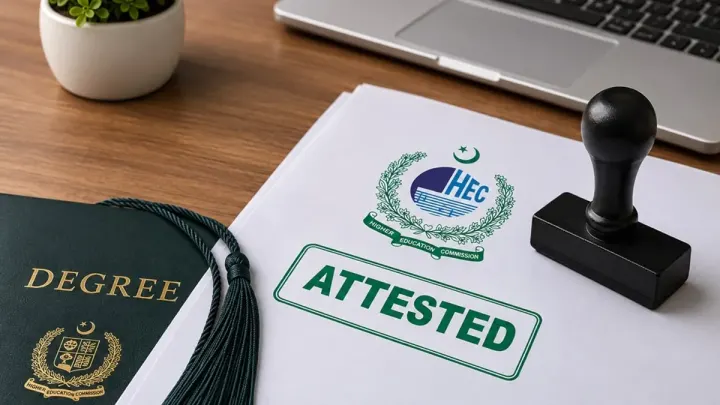
The Higher Education Commission has decided to integrate the Ministry of Foreign Affairs attestation option into its online degree attestation portal to make the process easier for students across Pakistan. This development marks a substantial shift in how graduates secure official validation for academic documents required for international travel, employment, or further education abroad. Previously, applicants had to navigate separate institutional channels and physical offices to complete the verification chain. By bringing these services under a single digital roof, the governing bodies hope to remove administrative bottlenecks that have historically frustrated students.
The initiative follows a Memorandum of Understanding signed between Pakistan's HEC and the Ministry of Foreign Affairs on October 12, 2026. This formal agreement laid the groundwork for technical collaboration between the two institutions, enabling secure data sharing and streamlined workflow integration. Officials from both departments worked together to align their verification protocols, ensuring that the digital interface meets strict security standards before its public rollout.
How the New HEC Online Attestation System Works
Under the proposed system, applicants will be able to select whether they also require MOFA attestation when submitting their degree attestation requests through the HEC portal. The new facility is expected to simplify the verification process and reduce the time and effort involved in completing separate procedures. Instead of submitting distinct applications to different government departments, users complete their primary verification with the commission and check an additional box for foreign ministry endorsement within the same user session.
The platform handles the transfer of verified documents behind the scenes, cutting out the physical transit or secondary application submissions that previously fell on the applicant. This digital handoff reduces the risk of document misplacement and minimizes human error during handling. Students receive updates through the unified portal, tracking their files from the initial academic verification stage all the way through to final foreign office clearance.
Background of Pakistan Degree Attestation Services
The Higher Education Commission serves as the primary regulatory body for higher education in the country, tasked with maintaining degree standards and providing official verification services. Graduates who wish to pursue careers or studies overseas must present degrees bearing stamps from both the educational commission and the foreign ministry to satisfy international equivalence requirements. Historically, this requirement meant visiting multiple offices, standing in long queues, or relying on courier services to move physical paperwork between government buildings.
Over the past decade, the commission has gradually moved its paper-based services online to handle a growing volume of applicants. Thousands of students apply for degree attestation every year, creating heavy seasonal rushes at regional and federal offices. The integration of foreign ministry services represents the next logical phase in this digital evolution, addressing long-standing complaints about bureaucratic delays and red tape.
Broader Digital Transformation Goals for Student Services
According to officials, the initiative is part of HEC's broader digital transformation plan aimed at making student services more accessible, transparent, and efficient. The commission also plans to further upgrade its online platform to provide faster and more convenient services, benefiting thousands of students who apply for degree attestation every year. These upcoming enhancements include improved payment gateways, better status tracking notifications, and enhanced customer support features built directly into the web interface.
Transparency remains a core objective of the digital overhaul. By digitizing every step of the verification pipeline, administrators can audit processing times and identify internal delays more effectively. Students gain clear visibility into the status of their documents, removing the uncertainty that often accompanied traditional paper applications.
Impact on Students and International Applicants
The consolidation of verification services brings direct practical benefits to graduates preparing for life abroad. International employers and foreign universities often enforce strict deadlines for document submission, leaving little room for bureaucratic slow-downs. Cutting down the time and effort involved in completing separate procedures means applicants can secure their paperwork weeks faster than before.
Financial savings also accompany the time saved. Applicants no longer need to pay multiple courier fees or take time off work for separate visits to different government offices. Small procedural changes like this reduce the hidden costs associated with bureaucratic compliance, easing the financial burden on recent graduates who are often operating on tight budgets.
What to Watch for in Future HEC Portal Upgrades
As the integrated system rolls out across the country, users should watch for official announcements regarding system updates and fee structures on the official commission portal. Administrative teams continue to monitor portal performance during the initial launch phase to iron out technical glitches and handle high traffic volumes. Future updates will likely focus on expanding payment options and integrating additional government services that require academic verification.