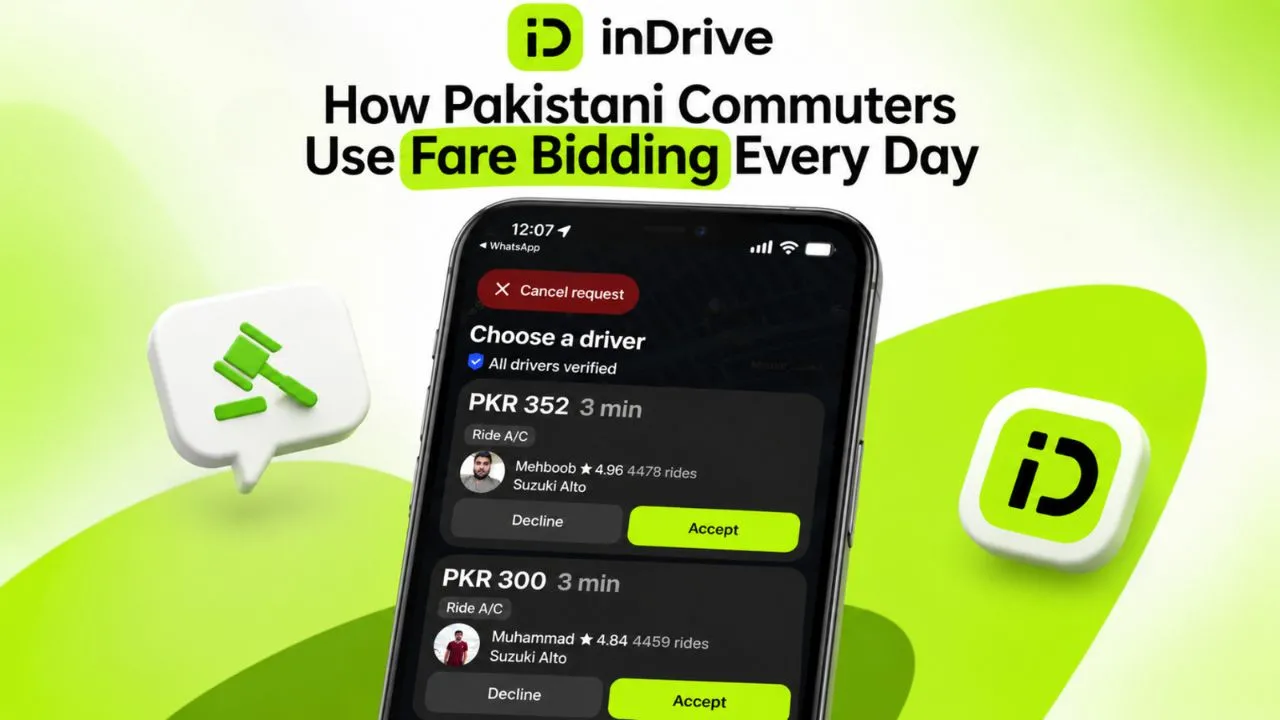
How Pakistani Commuters Use Fare Bidding Every Day
Daily transportation across Pakistan's major cities is increasingly influenced by the need for affordable, flexible and accessible mobility solutions. InDrive offers an alternative to conventional fixed-fare ride-hailing models through its transparent peer-to-peer fare negotiation system, enabling commuters in Islamabad, Lahore and Karachi to play an active role in determining the cost of their journeys.
Urban mobility in densely populated metropolitan areas requires constant adaptation to shifting economic conditions and traffic patterns. Millions of residents move across these urban centers every single day for work, education and personal errands, making predictable and manageable transport expenses a central priority for households. Traditional booking applications typically rely on algorithmic, fixed pricing structures that leave little room for individual circumstances, which prompts many residents to seek alternative methods for managing their daily travel outlays.
How the InDrive Fare Bidding Process Works
The process begins when a passenger enters their pickup and destination details and receives a suggested fare. This estimate serves as a starting point for negotiations, allowing passengers to propose an amount that aligns with their budget. Drivers, in turn, can accept the proposed fare or submit a counteroffer based on their assessment of the journey.
This transparent mechanism transforms the transaction from a rigid corporate tariff into a direct agreement between two individuals. Passengers evaluate their financial limits for the day, while vehicle operators factor in fuel costs, vehicle maintenance and current traffic congestion before settling on a final figure. The technology simply acts as a bridge, facilitating direct communication without imposing unilateral pricing rules on either side of the transaction.
Flexibility and Control for Passengers
This approach provides commuters with greater flexibility in managing their daily transportation expenses. Rather than relying exclusively on predetermined fares, passengers can exercise greater control over their travel budgets by proposing a price they consider reasonable and reviewing alternative offers before confirming a ride. The final fare is mutually agreed upon by both parties.
For budget-conscious urban residents, this level of agency helps cushion the impact of broader inflationary pressures affecting fuel and vehicle parts. Households can better allocate their monthly transportation spending by adjusting ride bids in real time depending on urgency and peak hour conditions. By seeing multiple counteroffers from nearby drivers, users gain a clear picture of market supply and demand at any given moment.
Driver Autonomy and Economic Independence
The platform also provides drivers with greater autonomy in managing their work. They can review incoming ride requests, assess relevant journey details and determine whether the proposed fare meets their expectations. Drivers have the option to accept an offer, submit a counteroffer or decline requests they do not wish to undertake, without penalties for rejecting unaccepted requests.
This operational freedom allows vehicle operators to run their businesses on their own terms rather than feeling forced to accept unprofitable trips dictated by automated dispatch systems. Drivers can target specific neighborhoods, manage their working hours around personal commitments and evaluate the financial viability of every single trip before turning the ignition key. Such independence attracts a diverse workforce, ranging from full-time professional drivers to individuals supplementing their household income during specific hours of the day.
Economic Impact According to Oxford Economics
Research conducted by Oxford Economics highlights the broader impact of this pricing model. According to its January 2026 report, 59% of riders and 54% of drivers surveyed in Pakistan reported taking more rides than they otherwise would have because of fare negotiation. These findings demonstrate the role of mutually agreed pricing in creating additional mobility and earning opportunities for both passengers and drivers.
The empirical data collected by the research firm points to a measurable stimulation of local economic activity driven by accessible transport pricing. When passengers feel they are paying a fair price, they are more likely to complete trips they might have otherwise skipped or postponed. Similarly, drivers secure more cumulative trips throughout the day, translating into steadier daily earnings compared to rigid pricing structures that might price them out of certain customer segments.
Improving Access to Underserved Urban Destinations
The research further highlights the potential of fare negotiation to improve access to underserved destinations. Across the markets surveyed, nearly half of respondents indicated that negotiation helped facilitate journeys to destinations that might otherwise be difficult to access. This flexibility can be particularly relevant in areas beyond central commercial districts, where longer distances and varying travel conditions can influence transportation costs.
Peripheries and developing residential zones often suffer from poor connectivity through standard public transport networks and traditional ride-hailing services. Drivers operating on peer-to-peer systems are more willing to venture into outlying suburbs or complex routes when they can negotiate a fare that adequately accounts for the distance and return trip logistics. This dynamic helps bridge the mobility gap between bustling downtown commercial centers and quieter residential neighborhoods.
Toward a Collaborative Urban Mobility Ecosystem
Peer-to-peer fare negotiation represents a collaborative approach to everyday mobility, placing greater emphasis on transparency, flexibility and individual choice. By enabling passengers and drivers to reach mutually acceptable pricing arrangements, inDrive provides an alternative transportation model that recognises the interests of both parties.
As Pakistan's urban transportation requirements continue to evolve, inDrive's approach demonstrates how greater participation in fare determination can contribute to a more flexible, accessible and inclusive mobility ecosystem.