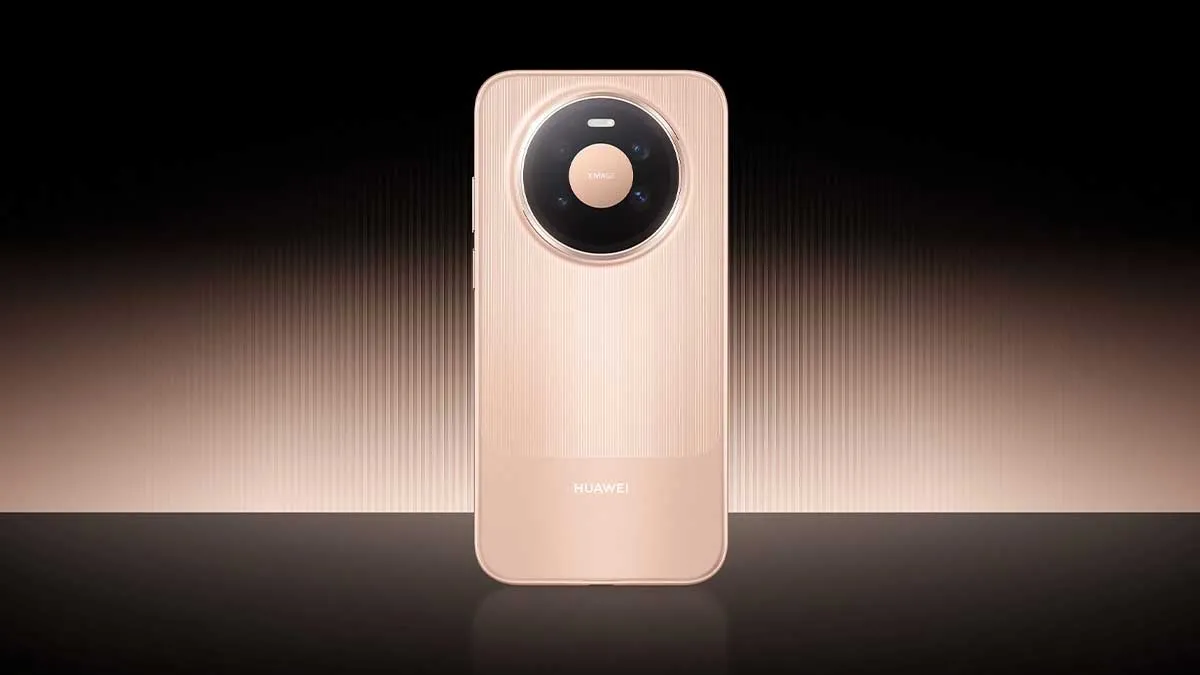
Huawei has officially launched the Mate 90 Air in China, succeeding last year's Mate 70 Air. The new model brings few hardware upgrades despite its updated design, retaining most of its predecessor's specifications while adding a Rose Gold color option.
What Are the Physical Changes in the Mate 90 Air?
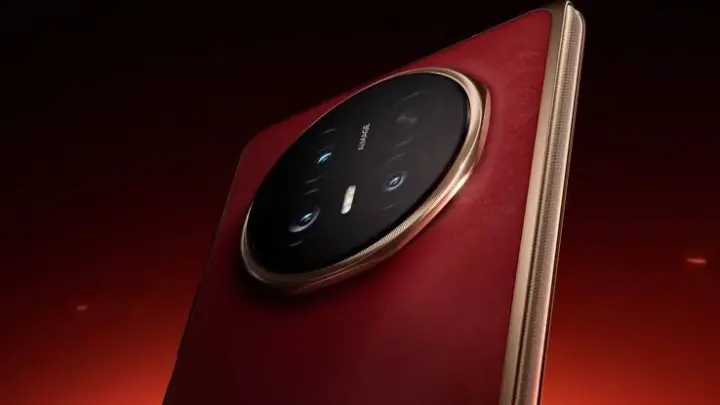
The Mate 90 Air keeps the same 7-inch LTPO OLED display size as the Mate 70 Air but is slightly thinner, measuring 0.02 mm less than the previous model. The rear panel has been redesigned, giving the phone a fresher visual appeal. Huawei now offers three finishes: Bright Moon Silver, Obsidian Black and a new Rose Gold shade that targets style-focused buyers.
Display and Stylus Support Remain Consistent
Both the Mate 70 Air and the Mate 90 Air feature a Full HD+ LTPO OLED panel with a 120 Hz refresh rate. The technology allows the screen to dynamically adjust its refresh speed for smoother scrolling and lower power consumption. As with its predecessor, the Mate 90 Air supports stylus input, a feature that appeals to professionals and creatives who use Huawei's pen accessories.
Processor Upgrade: From Kirin 9020A to Standard Kirin 9020
Huawei has replaced the custom-tuned Kirin 9020A with the standard 7 nm Kirin 9020 chipset. The company claims the new processor delivers 9 % better single-core performance, up to 36 % higher multi-core performance, and an 18 % boost in GPU speed. These figures are based on internal benchmark testing and suggest modest gains for gaming and multitasking, though the underlying architecture remains the same 7 nm process.
The chipset is paired with 12 GB of LPDDR5 RAM and offers two storage options: 256 GB or 512 GB. Huawei has discontinued the 16 GB RAM configuration that was available on the Mate 70 Air, likely to streamline production and reduce cost.
Camera System: Triple-Lens Setup with High-Resolution Main Sensor
Photography capabilities stay largely unchanged. The Mate 90 Air uses a triple-camera array on the back, anchored by a 50 MP main sensor with a 1/1.3-inch sensor size. The secondary lens is a 12 MP RYYB telephoto unit offering 3× optical zoom, while the third lens is an 8 MP ultrawide sensor for broader field-of-view shots. For selfies, a 10 MP front-facing camera is provided.
These specifications match those of the Mate 70 Air, meaning users should expect similar image quality, low-light performance, and video recording capabilities.
Battery, Charging and Other Core Features
The device houses a 6,500 mAh battery, a capacity that aligns with Huawei's recent flagship tablets and laptops. Fast charging support is rated at 66 W, enabling a full charge in roughly 45 minutes under optimal conditions. The phone runs HarmonyOS 7.0, Huawei's proprietary operating system that integrates tightly with its ecosystem of wearables, laptops and IoT devices.
Additional hardware features include IP69 ingress protection, which safeguards the phone against dust and high-pressure water jets, stereo speakers for immersive audio, and a side-mounted fingerprint scanner for quick unlocking.
Pricing and Availability in China
Huawei has listed the Mate 90 Air on its official online store in China. The 12 GB RAM / 256 GB storage variant is priced at CNY 4,999 (approximately $750), while the higher-end 512 GB model costs CNY 5,999 (about $900). These price points place the Mate 90 Air squarely in the premium mid-range segment, competing directly with other flagship-class devices that offer more aggressive hardware upgrades.
Why the Minimal Upgrade Strategy Matters
Huawei's decision to launch a model with only incremental changes reflects broader market pressures. Ongoing U.S. sanctions have limited Huawei's access to advanced semiconductor manufacturing equipment, constraining its ability to develop next-generation chips. By reusing the Kirin 9020 architecture and focusing on cosmetic updates, the company can keep production costs low while still delivering a device that meets the expectations of its existing user base.
Consumers who prioritize design, color variety, and a stable software experience may find the Mate 90 Air appealing, whereas power users looking for a substantial performance leap might consider alternatives from competitors that have access to newer 4 nm or 5 nm processors.
What to Watch for Next
Huawei has not announced a roadmap for a successor to the Mate 90 Air. Industry analysts suggest that the next major chipset iteration could arrive once the company secures a reliable supply chain for advanced nodes, possibly through partnerships with domestic Chinese fabs. In the meantime, the Mate 90 Air will serve as the flagship for Huawei's HarmonyOS ecosystem in China, and its sales performance may influence the company's pricing strategy for future models.
Potential buyers should monitor Huawei's official channels for any firmware updates that could further optimise the Kirin 9020 performance, as well as any promotional bundles that might include accessories such as the Huawei M-Pen or wireless earbuds.