Federal Interior Minister Mohsin Naqvi Spotted on Commercial Flight to United Arab Emirates
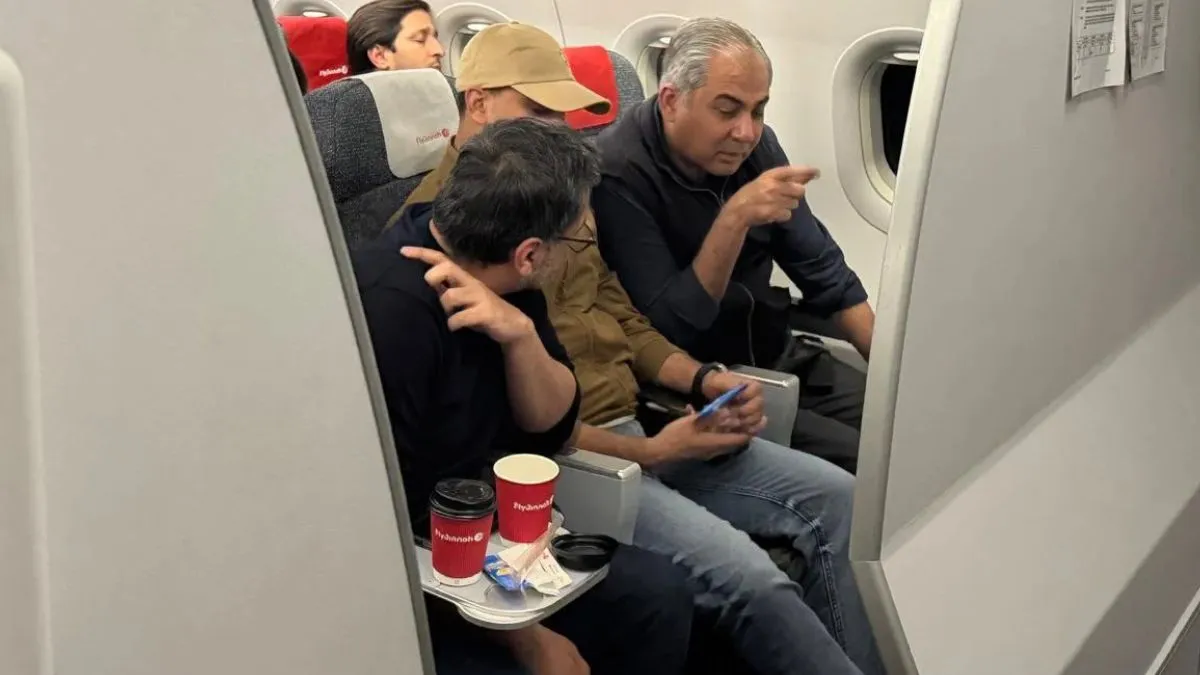
Federal Interior Minister Mohsin Naqvi has reportedly travelled to the United Arab Emirates in economy class aboard a Fly Jinnah flight. A photograph reportedly taken during the journey shows the interior minister seated alongside other passengers inside the commercial aircraft. This public sighting highlights a minimalist approach to official travel by a high-ranking government official in Pakistan. Fly Jinnah is a Pakistani low-cost airline operating domestic and international flights using Airbus A320 aircraft.
The decision to fly commercial economy class places the minister among everyday travellers. Commercial aviation in the region serves millions of passengers annually, connecting Pakistan closely with the Gulf states. Government officials typically have access to various state-managed travel protocols, making commercial low-cost choices notable among the public. Observers often scrutinize the travel habits of public servants, making such sightings a subject of public interest across domestic media platforms.
Understanding Fly Jinnah and Its Role in Pakistani Aviation
Fly Jinnah operates as a prominent low-cost carrier within Pakistan, providing affordable travel options for domestic and international passengers. The airline uses a fleet of Airbus A320 aircraft to maintain its regular flight schedules. Low-cost carriers have transformed regional travel by offering budget-friendly fares compared to traditional full-service airlines. This operational model relies on high aircraft utilization, standardized seating arrangements, and point-to-point routing.
The aviation sector in Pakistan includes several private and state-owned airlines competing for market share. Expansion within private aviation helps improve regional connectivity and economic exchange. Minister Naqvi also recently congratulated Fly Jinnah on expanding its fleet to 11 aircraft, describing the development as an important milestone for Pakistan's private aviation industry. Fleet expansion allows airlines to increase flight frequencies and introduce new international routes for passengers.
Previous Economy-Class Journeys and Public Reactions
This is not the first time reports have emerged of Naqvi travelling in economy class. In September 2026, media outlets reported that the interior minister travelled in economy class while returning to Pakistan from the UAE. Repeated instances of officials choosing standard commercial seating draw considerable public attention and commentary across social media networks.
Public figures using commercial transport often spark discussions regarding government austerity and public spending. Citizens frequently evaluate the actions of leaders against broader economic conditions within the country. While some view these travel choices as a positive gesture of simplicity, others analyze the security and protocol implications of ministers flying on commercial airlines without private charters.
The Significance of UAE and Pakistan Travel Corridors
Travel between Pakistan and the United Arab Emirates remains frequent due to business, tourism, and expatriate worker communities. Millions of Pakistani nationals reside and work in the UAE, contributing significantly to remittances and bilateral economic ties. Commercial airlines operate numerous daily flights between major Pakistani cities and destinations such as Dubai and Sharjah to accommodate this high volume of passengers.
Government officials frequently travel to the UAE for diplomatic, economic, and security-related engagements. Maintaining strong bilateral relations requires regular ministerial visits and high-level meetings. Using commercial flights for these official trips demonstrates adherence to standard travel procedures while engaging with the wider public during transit.
Austerity Measures and Government Travel Policies
Governments often implement austerity measures to reduce unnecessary expenditures on public transport and official delegations. While specific protocols govern ministerial travel, individual choices by leaders to fly economy class align with broader public expectations for fiscal responsibility. Public servants face continuous observation regarding their use of state resources and adherence to cost-saving guidelines.
Transparency in official travel helps build trust between citizens and government institutions. When leaders choose standard commercial options, it reflects a pragmatic approach to official duties. Observers will likely continue to monitor the travel habits and policy decisions of federal ministers as administrative priorities evolve.