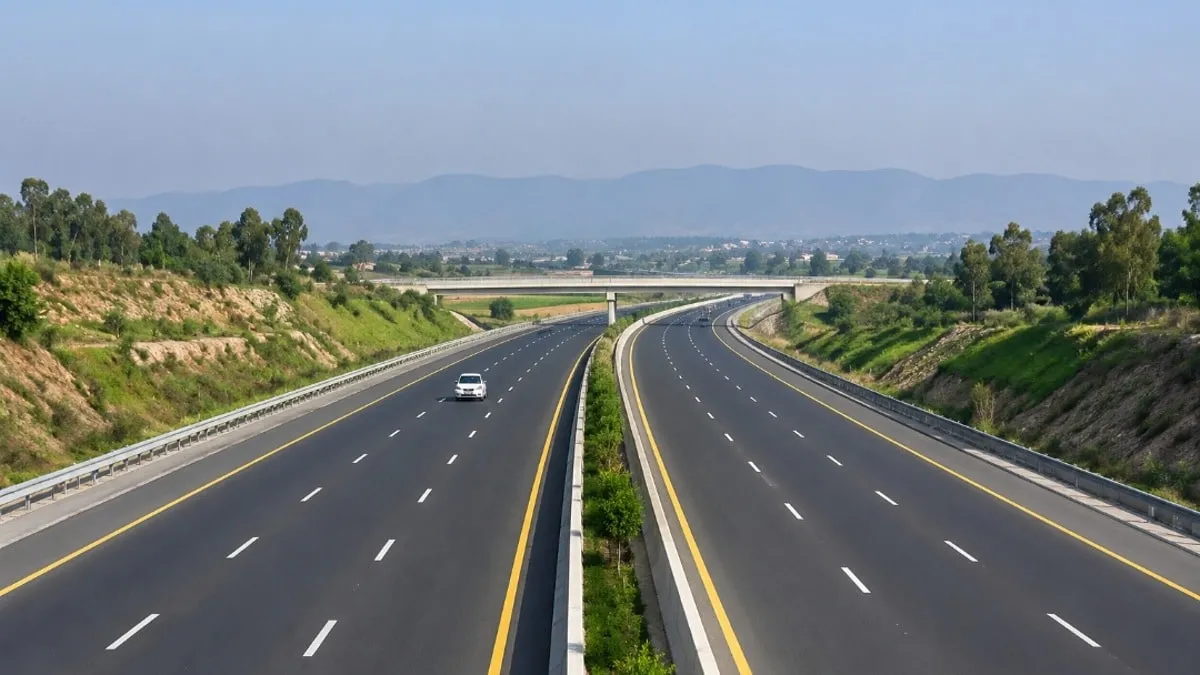
The National Highways and Motorway Police (NHMP) has reminded motorists that unregistered vehicles are not allowed to enter motorways and national highways across Pakistan.
In an advisory shared on its official social media account, the Motorway Police urged citizens to avoid driving unregistered vehicles to prevent inconvenience during their journeys.
The authority also advised motorists to follow traffic regulations to ensure safe travel.
What the Ban Means for Drivers
Under the current enforcement, any car, motorcycle, or commercial vehicle that does not display a valid registration number plate will be stopped, fined, or directed to the nearest registration office. The NHMP has said that officers will conduct routine checks at entry points, toll plazas, and random checkpoints along the motorway network.
Drivers found with a suspended or cancelled registration will be treated the same as those without any registration at all. The police have emphasized that the rule applies to the entire motorway system, including the M-1, M-2, M-3, M-4, and the newer M-5 and M-6 corridors.
Legal Basis: Section 18 of the National Highways Safety Ordinance, 2000
Section 18 of the National Highways Safety Ordinance, 2000, mandates that every vehicle travelling on a national highway must possess a valid registration and display its assigned registration marks in the prescribed manner. The ordinance defines "registration marks" as the alphanumeric plates issued by the provincial transport authority and affixed to the front and rear of the vehicle.
The law further clarifies that vehicles with suspended or cancelled registrations are also considered unregistered. This provision was introduced to curb the use of illegally modified or stolen plates, which have long been a source of traffic violations and insurance fraud.
Why the Enforcement Has Tightened Now
Historically, Pakistan's motorway network has struggled with a mix of fully registered, partially registered, and outright unregistered vehicles. The lack of uniform compliance created safety hazards, especially at high speeds where a missing plate can impede police identification and emergency response.
Recent data from the NHMP indicates a 12% rise in traffic incidents involving vehicles that could not be quickly identified because of missing or falsified plates. Moreover, the rise in cross-border trade has increased the volume of commercial traffic, prompting authorities to tighten checks to protect both domestic and foreign cargo.
How to Register a Vehicle Properly
Vehicle owners must complete the following steps before travelling on motorways:
- Obtain a valid registration certificate from the relevant provincial transport department.
- Affix the official registration plates to the front and rear of the vehicle exactly as prescribed.
- Ensure that any previous suspension or cancellation is cleared by paying outstanding fines or completing required inspections.
- Carry the original registration certificate and a copy of the insurance policy while on the road.
Failure to complete any of these steps may result in the vehicle being classified as unregistered under Section 18, exposing the driver to legal penalties.
Potential Penalties and Enforcement Process
When an NHMP officer identifies an unregistered vehicle, the typical procedure is:
- Stop the vehicle at the nearest safe location.
- Verify the registration status through the national database.
- Issue a written fine, which can range from Rs. 5,000 to Rs. 20,000 depending on the severity and repeat offenses.
- In cases where the vehicle poses an immediate safety risk, the officer may order the driver to withdraw from the motorway until proper registration is obtained.
Repeated violations can lead to higher fines, temporary seizure of the vehicle, or even criminal proceedings under the broader traffic safety statutes.
Impact on Different Road Users
Private car owners will need to verify that their registration documents are up to date before planning long-distance trips. Commercial fleet operators, especially those transporting goods across provinces, must audit their vehicle registers to avoid costly delays at toll plazas.
Ride-sharing platforms and taxi services, which often operate large numbers of vehicles, are expected to conduct internal compliance checks. The ban also affects foreign tourists renting cars; rental agencies are now required to ensure each vehicle in their fleet meets the registration criteria before handing over keys.
What Drivers Should Do Next
Motorists are advised to check the status of their vehicle registration through the official portal of their provincial transport authority or by visiting the nearest registration office. The NHMP has promised to keep its social media channels updated with any changes to the enforcement schedule.
For those who discover a suspension or cancellation, the quickest remedy is to settle any pending fines and request a re-issuance of the registration certificate. The process typically takes 7-10 business days, though expedited services are available for an additional fee.
Future Outlook and Monitoring
The NHMP says it will continue to monitor compliance through periodic audits and will publish quarterly statistics on the number of unregistered vehicles intercepted. Stakeholders are encouraged to provide feedback through the official NHMP helpline, which operates 24/7.
While the current advisory does not specify a deadline for full compliance, the police have indicated that enforcement will become routine within the next three months, making it essential for all road users to act now.
By aligning vehicle registration practices with the legal framework, Pakistan aims to improve road safety, reduce traffic congestion caused by illegal stops, and streamline emergency response across its expanding motorway network.