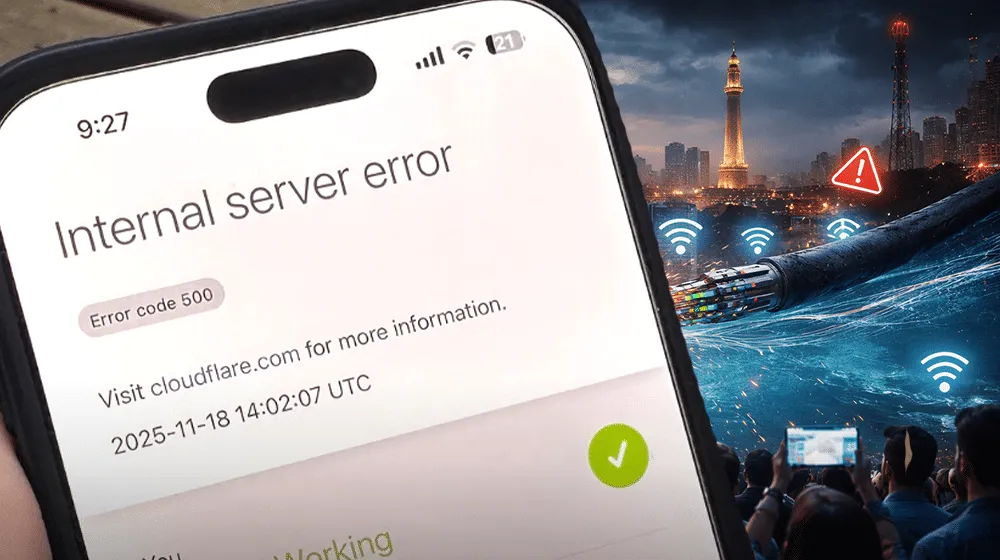
Internet Slowdown Expected Across Pakistan
Internet users in Pakistan may experience intermittent connectivity and slower internet speeds after an international submarine cable developed a fault near the country's coast. The sudden disruption poses challenges for businesses, educational institutions, and individual users who rely on stable broadband and mobile data connections for their daily routines and operations.
The Pakistan Telecommunication Authority (PTA) said on Wednesday that the fault occurred in the SEA-ME-WE 5 (SMW5) submarine cable system, approximately 11 kilometres from Pakistan's coast. This critical piece of telecommunications infrastructure carries a substantial portion of international data traffic into the country, making any physical damage to the line a matter of national significance for digital communication.
How the SEA-ME-WE 5 Cable Fault Affects Users
The authority said the issue could affect internet connectivity and service quality for some users across the country. While total blackouts are not reported, web browsing, video streaming, file transfers, and cloud services may suffer from increased latency and reduced throughput until engineers repair the broken or damaged segment beneath the water.
Transworld Associates (TWA) is working with the SMW5 consortium to identify the cause of the fault and determine the estimated time required for restoration. Specialized teams must inspect the marine environment, locate the precise point of failure on the seabed, and deploy specialized repair vessels to splice or replace the affected fiber optic strands.
Alternative Routes and Traffic Redirection
Meanwhile, internet traffic is being redirected through alternative international cable links to minimise disruption and maintain services. Pakistan connects to the global network through multiple submarine cable systems operated by different consortia, which allows local internet service providers to shift data loads away from the damaged line.
However, shifting large volumes of web traffic to secondary pathways often creates congestion, which explains why users still notice sluggish performance even with backup systems active. Network operators continuously balance loads across remaining circuits to prevent complete bottlenecks while repair operations take place offshore.
Monitoring and Official Response from Authorities
PTA said it was coordinating with relevant stakeholders and monitoring the situation to ensure that normal internet services are restored as soon as possible. Telecommunication regulators maintain regular communication with cable landing station operators and international partners to track progress and demand swift action.
The authority has not yet announced an estimated restoration time. Submarine cable repairs depend heavily on favorable weather conditions at sea, technical complexity, and the availability of specialized marine repair teams, meaning exact completion windows remain uncertain until physical inspections conclude.





