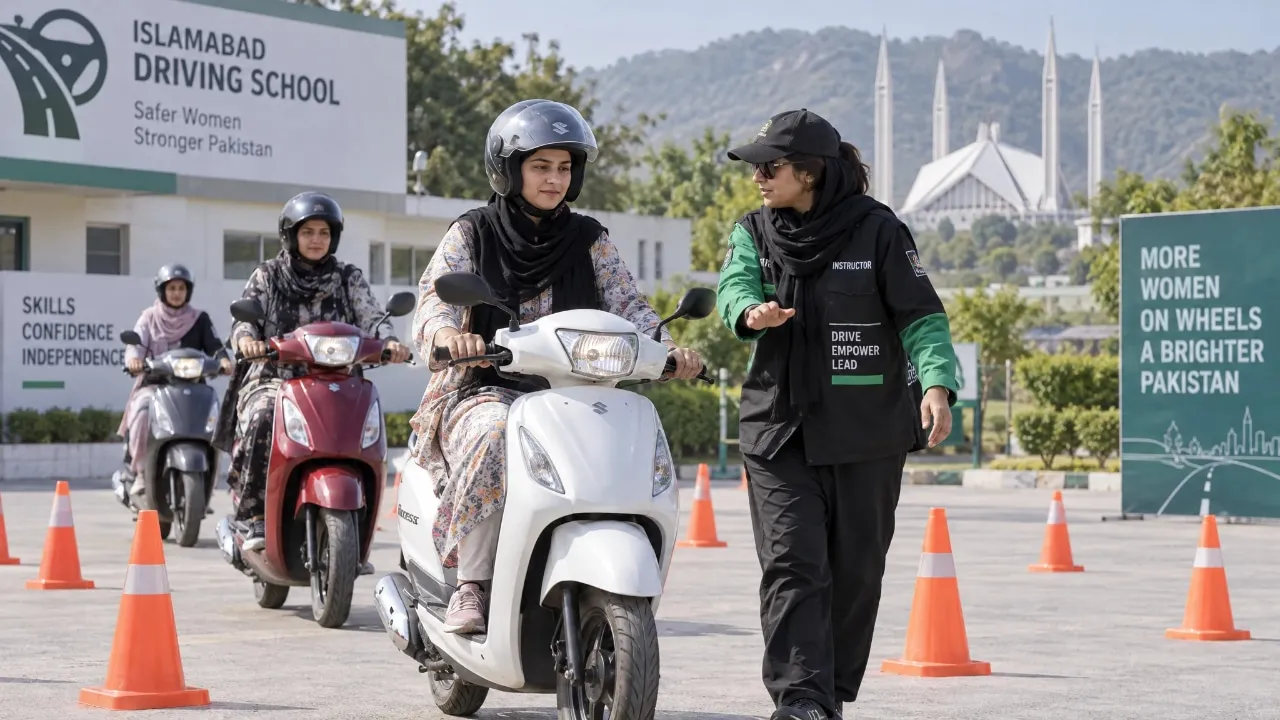
Islamabad Traffic Police Extends Women Scooter Training Program
The Islamabad Traffic Police has officially extended its free scooter-riding training program for women by two weeks following an overwhelming response from the public, pushing the deadline from November 15 to November 30. The programme, which began on November 1 at the Uraan Driving School, was originally scheduled to conclude on November 15. A second phase will now run from November 16 to November 30. Law enforcement officials stated that the extension was announced after strong interest and participation from women, with the additional phase designed to give more applicants the chance to benefit.
This initiative directly addresses the mobility challenges faced by female commuters in the capital territory. By providing structured, safe, and professional instruction, the traffic authority aims to bridge the gender gap in personal transport. Learning to operate a two-wheeler allows female students and professionals to navigate the city without relying exclusively on public transport or costly ride-hailing services. The training environment at the dedicated driving school focuses on building fundamental driving competence, traffic rule awareness, and defensive driving habits on busy urban roads.
Background of Women Mobility Initiatives in Islamabad
Public transportation systems in major urban centers often present safety and accessibility hurdles for female commuters. Recognizing these barriers, traffic authorities in recent years have rolled out targeted interventions to encourage independent travel. The current scooter program builds upon a foundation of progressive administrative steps taken by local law enforcement to integrate women more fully into the active transport network. Historically, driving schools operated by municipal bodies catered primarily to male applicants, leaving a significant void in specialized training options for women who prefer two-wheelers for daily commuting.
The establishment of specialized training cohorts reflects a shift toward inclusive public service delivery. Driving a scooter offers an affordable alternative to cars and traditional motorcycles, making personal transport economically viable for working women and university students. By offering these classes free of charge, the traffic police remove the financial barrier that often prevents women from acquiring a formal driving skill. Institutional support from traffic leadership ensures that participants receive instruction from certified professionals in a controlled environment.
What the Training Program Involves at Uraan Driving School
The training sessions take place at the Uraan Driving School, a facility equipped to handle practical driving instruction. Participants receive hands-on guidance on balance, braking, maneuvering, and navigating simulated traffic conditions. Instructors prioritize safety protocols, ensuring that every learner understands the importance of helmets, proper gear, and adherence to signal lights. The curriculum takes novices from basic stationary balancing to operating a scooter safely in light traffic conditions.
- Practical scooter-riding skills taught by certified instructors
- Focus on balance, braking, and hazard awareness
- Traffic rules and road sign education
- Controlled practice environment at Uraan Driving School
The structured approach helps participants overcome initial apprehensions about riding on public roads. Many women enter the program with zero prior experience operating a motorized two-wheeler. By the end of the course, graduates possess the practical skills required to apply for a formal driving license and commute independently. The extended second phase ensures that the high volume of applicants on the waiting list can complete the curriculum without rushing.
Broader Women Empowerment Policies by Islamabad Traffic Police
The scooter training extension is part of a broader push by the Islamabad Traffic Police under Chief Traffic Officer Kainat Azhar Khan to empower women, facilitate students, and make traffic services more accessible. Earlier initiatives in the same series include dedicated Pink Counters for women at police facilitation centres, same-day motorcycle licences for eligible students, and doorstep delivery of driving licences through TCS. These coordinated measures reflect a systematic effort to modernize traffic administration and remove bureaucratic hurdles for citizens.
Chief Traffic Officer Kainat Azhar Khan said empowering women, facilitating students, and providing modern, transparent, and accessible traffic services remain among the top priorities of the Islamabad Traffic Police. The introduction of Pink Counters, for instance, streamlined the licensing and registration process for female applicants by offering a dedicated space managed with sensitivity and efficiency. Similarly, same-day motorcycle licenses for students recognize the urgent transport needs of young people attending local universities and colleges.
Impact on Female Commuters and Student Mobility
The practical impact of these traffic department policies extends across households, educational institutions, and workplaces in the region. When women gain independent mobility, employment horizons expand because job opportunities are no longer restricted by transport availability or family members' schedules. Female university students benefit immensely by reaching their campuses on time without depending on erratic public vans or waiting for rides. The doorstep delivery of driving licences through TCS further saves citizens from making multiple trips to police offices, cutting down time and transport costs.
Local businesses and educational institutions have welcomed the sustained focus on female transit facilitation. As more women secure legal driving credentials and master two-wheeler operation, road safety awareness spreads organically within communities. The combination of accessible training, simplified licensing, and dedicated administrative counters creates a supportive ecosystem for women drivers in the capital. The traffic division continues to monitor participation rates to evaluate whether further extensions or additional training batches will be required in the future.
What Comes Next for Applicants and Traffic Services
With the second phase running from November 16 to November 30, applicants enrolled in the newly added slots must complete their training schedules at Uraan Driving School. Participants who successfully finish the course are encouraged to apply for official motorcycle licenses through the streamlined facilitation channels established by the traffic authority. Observers and citizens should watch for potential announcements regarding future training phases or expanded school partnerships if demand remains high beyond the November deadline.
The Islamabad Traffic Police maintains an open registration policy for public inquiries regarding driving courses and license delivery mechanisms. Officials continue to evaluate the success of urban mobility projects to refine service delivery models. Prospective applicants can visit designated facilitation centers or check official traffic police communications for updates on upcoming instructional batches and licensing requirements.





