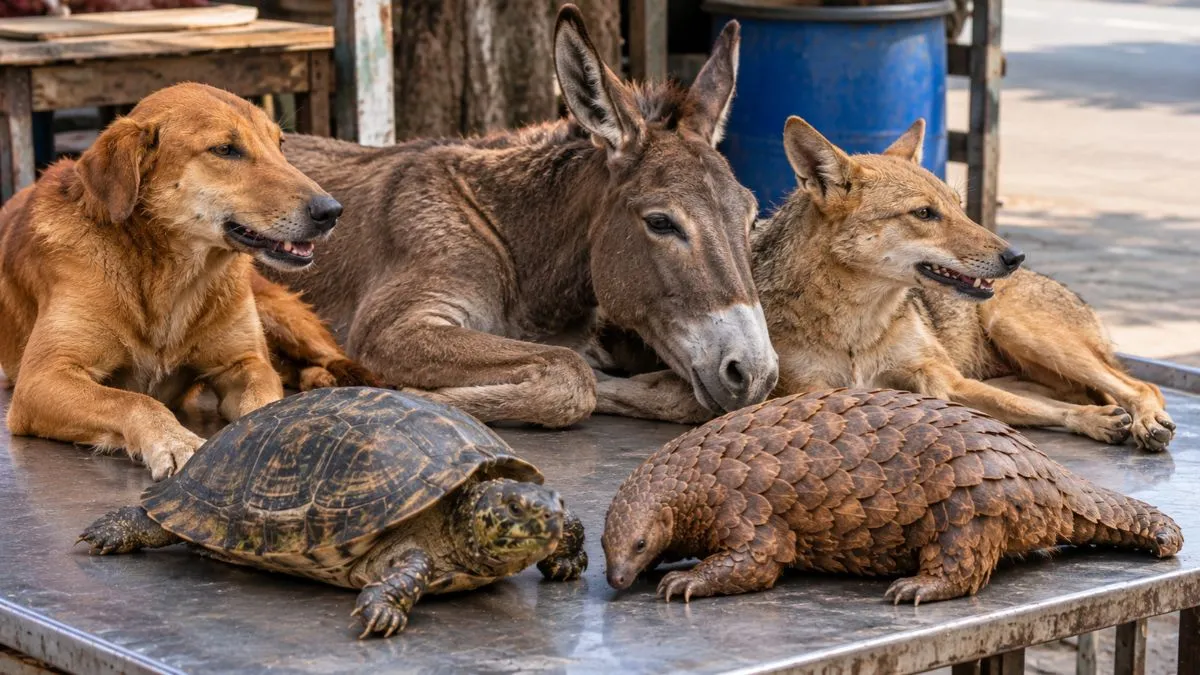
Islamabad Food Authority Raids Illegal Meat Operation in Sector D-14
The Islamabad Food Authority seized approximately 800 kilograms of suspected illegal meat from a property located in Sector D-14, where officials also recovered live animals and animal carcasses, according to a First Information Report. The discovery has raised serious concerns about an alleged illegal meat operation running within the capital city. Authorities have not yet established the seized meat of its origin or whether the recovered wildlife was intended for local consumption or trafficking.
Officials executed the raid at the premises at around 9:30pm on Monday following intelligence regarding suspected unlawful meat preparation and storage. Upon entering the property, inspectors found 12 live donkeys, five dogs, and 17 turtles, alongside the carcasses of a donkey, a jackal, and a pangolin. The total mass of seized meat was suspected to be entirely unfit or strictly prohibited for human consumption under local statutes.
According to the official FIR, the operators of the facility failed to provide any valid transportation records for the meat and the live donkeys. Furthermore, they could not produce any legal documents authorizing meat preparation and storage activities at that residential or commercial site. Following the inspection, authorities destroyed the contaminated meat directly at the site to prevent any chance of it reaching the market, and transferred the surviving live animals to the custody of local wildlife officials.
Legal Actions and the Islamabad Capital Territory Food Safety Act
The Golra Police Station registered an official case on November 17 following a detailed report submitted by an Islamabad Food Authority veterinary specialist. The legal action invoked Sections 11, 12, 13, and 14 of the Islamabad Capital Territory Food Safety Act, 2021. This specific legislation governs the preparation, storage, distribution, and sale of food items within the federal capital territory, aiming to protect public health and safety.
The Islamabad Capital Territory Food Safety Act empowers appointed food safety officers to inspect any premises where food is manufactured, processed, stored, or sold. Under the law, operators must maintain strict hygiene standards and possess traceable records regarding the source of animal products. Failure to produce authorization or operating unregistered slaughtering facilities carries heavy legal penalties, including imprisonment and substantial fines, to deter illegal trade practices.
The involvement of a veterinary specialist during the raid was crucial for identifying the species and assessing the condition of the recovered carcasses. Veterinarians help determine whether meat comes from permitted livestock such as cattle, goats, and sheep, or from banned animals. The presence of non-traditional animals like dogs, jackals, pangolins, and turtles points toward a specialized illicit market operating outside the bounds of established veterinary inspections.
Broader Context of Illegal Meat Seizures in the Capital
This recent enforcement action follows a similar high-profile raid conducted in July 2025 at a farmhouse located in the Tarnol area of Islamabad. During that operation, authorities recovered hundreds of kilograms of donkey meat and dozens of live donkeys destined for unauthorized processing. The Tarnol incident exposed vulnerabilities in the supply chain and generated widespread public anxiety about meat adulteration in local markets.
That earlier discovery prompted local legitimate meat traders and butcher associations to demand tighter regulatory oversight and better municipal slaughterhouse facilities. Traders argued that a lack of regulated, affordable slaughtering infrastructure pushes unscrupulous operators into clandestine locations. Despite repeated crackdowns, illicit operations continue to surface, driven by the profit margins associated with substituting low-cost or prohibited meat for certified beef and mutton.
Food safety watchdogs face significant challenges in monitoring the vast perimeter of the capital and its surrounding rural zones. Illegal operators frequently use secluded farmhouses, walled compounds, and residential properties to conceal their activities from inspectors. Community tips and intelligence networks remain the primary tools for uncovering these hidden slaughter sites before contaminated products reach consumers.
Health Risks and Public Safety Concerns
The consumption of uninspected meat from unknown origins poses severe public health hazards. Animals that are not slaughtered in approved facilities under veterinary supervision may carry dangerous pathogens, parasites, and chemical residues. Diseases such as anthrax, rabies, and various bacterial infections can easily transmit to humans who consume improperly handled animal products.
Wild animals and scavengers like dogs, jackals, and pangolins are particularly high-risk vectors for zoonotic diseases. Unlike farmed livestock raised under controlled feeding conditions, wildlife can harbor unique viruses and bacteria that are resistant to standard cooking methods. The inclusion of these animals in the food chain threatens community health on a broader scale.
Regulatory authorities urge citizens to remain vigilant and report suspicious activities related to meat processing and transport. Consumers are advised to purchase meat exclusively from licensed shops that display valid food safety certificates and inspection stamps. Municipal agencies continue to conduct random checks across markets and processing units to restore confidence in the food supply chain of the capital.





