Japan Pledges US$ 4.3 Million Grant for Pakistan Polio Programme
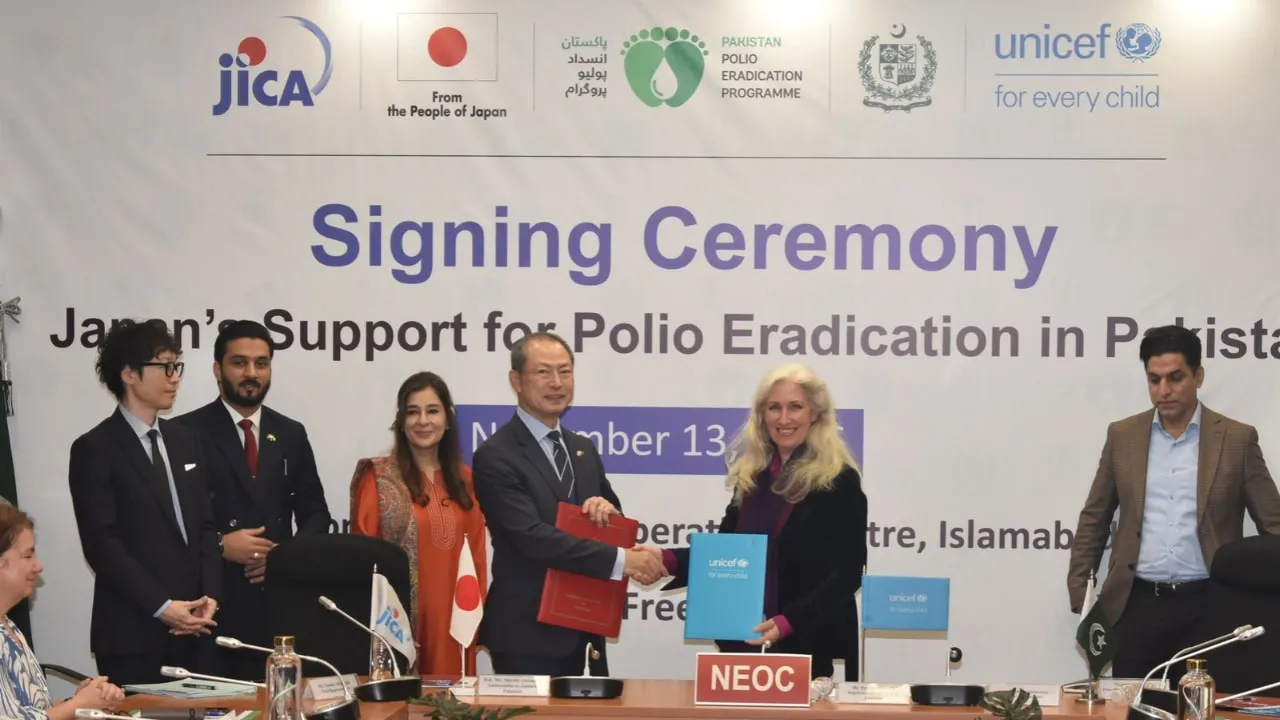
The Government of Japan has announced a new US$ 4.3 million grant to procure essential oral polio vaccines as part of its continued support to Pakistan's polio eradication efforts. The Pakistan Polio Eradication Initiative will use these funds to procure more than 28 million vaccine doses to support polio campaigns in 2027. This financial assistance comes at a time when health authorities are ramping up immunization drives to reach millions of children across the country.
Pakistan is one of only two countries in the world where wild poliovirus transmission has not yet been interrupted. The country has made significant progress in reducing polio transmission, with cases declining from 74 in 2024 to 31 in 2025, and 8 cases reported so far in 2026. Six of the eight cases in 2026 have been reported from south Khyber Pakhtunkhwa, where insecurity and access constraints continue to pose significant challenges to reaching every child.
How the Japan Grant Funds Vaccine Procurement in Pakistan
The newly signed grant will provide critical funding to the Pakistan Polio Eradication Initiative for the procurement and delivery of polio vaccines, supporting ongoing progress to interrupt the spread of poliovirus and sustain the gains achieved in recent years. Since 1996, Japan has contributed more than US$ 248 million in grants and loans through UNICEF to support polio vaccination and help Pakistan achieve a polio-free future. His Excellency Akamatsu Shuichi, Ambassador of Japan to the Islamic Republic of Pakistan, reaffirmed Japan's continued commitment to supporting Pakistan's health priorities.
He said, 'Since 1996, Japan has consistently supported Pakistan's polio eradication efforts, working closely with UNICEF and other partners. Today's new grant, which has been increased from last year, demonstrates Japan's continued support for our shared goal of achieving a polio-free Pakistan. Japan fully supports Pakistan's determination to achieve the goal of interrupting poliovirus transmission by the end of 2027.'
The National Emergency Action Plan and the Roadmap to Zero
The continued detection of poliovirus underscores the need for sustained efforts to interrupt transmission everywhere and protect every child. In an urgent effort to eradicate the incurable disease, the Government of Pakistan, with support from partners, has developed the National Emergency Action Plan 2026-27 under the Roadmap to Zero, setting out a focused approach to interrupting poliovirus transmission by the end of 2027. Each national immunization drive targets over 45 million children under five, supported by more than 400,000 frontline health workers who play a vital role in reaching communities and delivering vaccines.
Ms. Ayesha Raza Farooq, the Prime Minister's Focal Person on Polio Eradication, said, 'The Government of Japan's contribution comes at a critical time as Pakistan intensifies its efforts to interrupt poliovirus transmission and end this preventable disease. Every dose of vaccine supported through Japan's contribution brings us closer to a polio-free Pakistan. We are grateful to the Government and people of Japan for their continued commitment and partnership in Pakistan's efforts to eradicate polio and protect every child.'
Role of UNICEF and JICA in Pakistan Immunization Campaigns
UNICEF works closely with international partners and the local government to manage vaccine delivery and maintain high campaign standards. Ms. Pernille Ironside, UNICEF Representative in Pakistan, said, 'Japan has been a steadfast partner in Pakistan's efforts to end polio, and this contribution will help sustain the high-quality vaccination campaigns needed to interrupt transmission. UNICEF deeply appreciates Japan's continued partnership. By ensuring every child is reached with the polio vaccine, we can bring Pakistan closer to a polio-free future and leave no child behind.'
Mr. Yusuke Shinozaki, Chief Representative, JICA Pakistan Office, said, 'Let us continue working together until the day when no child suffers from polio. We sincerely commend the strong commitment of the Government of Pakistan, the dedication of frontline health workers who continue to serve communities under challenging circumstances, and the tireless efforts of UNICEF and all other partners to deliver life-saving vaccines to every child.'
Challenges in South Khyber Pakhtunkhwa and Future Outlook
Health officials face distinct hurdles in specific regions, notably in south Khyber Pakhtunkhwa, where security issues and local access barriers complicate efforts by frontline workers. Despite these obstacles, the funding ensures that logistical pipelines remain open for the massive quantities of oral drops required during house-to-house visits. The new funding underscores the importance of sustained international partnerships as Pakistan works to build on the progress achieved and maintain the momentum needed to end poliovirus transmission.
As authorities look toward the targets set for 2027, the collaboration between the Pakistani government, Japanese donors, UNICEF, and the Japan International Cooperation Agency remains central to public health strategy. The consistent flow of financial and technical resources allows immunization programs to adapt to regional difficulties while maintaining coverage for over 45 million vulnerable children nationwide.