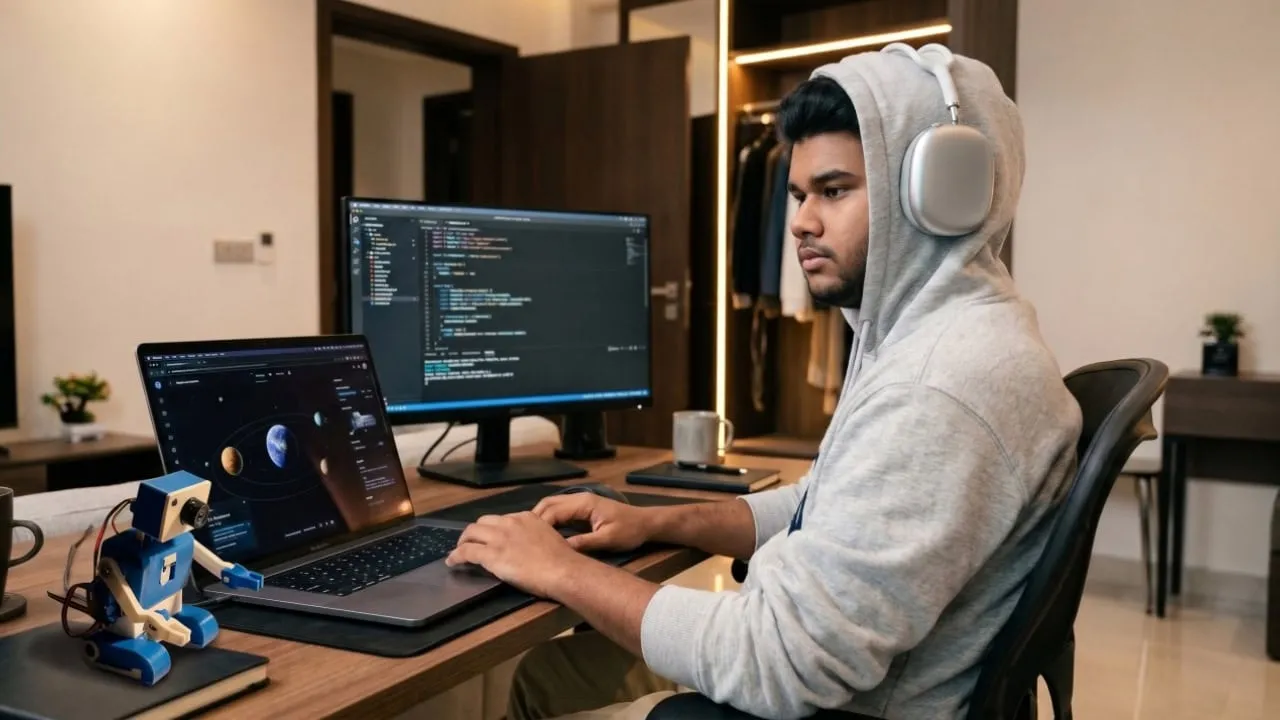
How a Karachi Teenager Built Smartpet
Sabih Ur Rehman, a 16-year-old artificial intelligence engineer living in Karachi, has developed a voice-guided learning assistant named Smartpet. Despite the confusion the name might cause, the project has nothing to do with animals. Instead, it is a web-based educational tool created to help complete beginners learn how to use a computer. The young creator applied to the prominent startup accelerator Y Combinator with this innovation, marking a major step in his young coding career.
The application operates through a standard web browser. When a user visits the website, the artificial intelligence speaks through the device speaker to ask for two specific details. It requests the user name and their learning goal. Once the system registers the objective, it divides the task into 10 simple steps tailored specifically for a beginner. The tool then walks the user through the process using their preferred language.
For example, if a user named Wasay wants to learn how to write articles productively, Smartpet generates 10 actionable steps designed for someone starting completely from zero. The tool specifically targets the gap between wanting to achieve something and knowing how to begin.
The Problem Smartpet Solves for Beginners
According to the young developer, the most common hurdle for people learning new skills is figuring out where to start. Many individuals understand their ultimate objective, but the pathway to reach that target remains unclear.
"Everyone knows the end goal but no one knows where to start and what will be the process," he said. "So AI can help a lot in that."
This gap between ambition and the first practical action is precisely where the web tool provides value. By simplifying complex tasks into 10 manageable instructions, the system removes the intimidation factor that often stops beginners from exploring technology.
Balancing Software Development, School, and a Job
Building a startup while managing adolescent education requires a strict daily schedule. Rehman works full-time at a company in Karachi while studying O Levels privately through coaching classes on alternate days.
"Waking up at 9 takes the part of checking that code is working and server is responding or not," Rehman said.
By 11 AM, he leaves for his office job, where he continues writing and debugging code between assigned tasks. When he returns home for the evening, he dedicates his time to updating the software.
"Then when I come home I do the rest of the work, which is most of the time adding new features and making it more good and flawless," he explained.
Plans for Phase Two and Hardware Integration
The current web-based version represents only the first phase of the project. The creator is currently waiting for an organization to approve a hardware grant so he can transform the software into a physical robot.
Version 2 of the project will focus on teaching hardware technology, including robotics and wiring. In this advanced setup, the artificial intelligence will observe students in real time through a live camera feed. It will guide them through physical builds step by step, acting as an automated instructor.
"It will act as a hardware tech professor to let the students learn hardware technology," he stated.
The moment that confirmed the potential of the concept involved watching the technology function in real time. Rather than waiting for text prompts to generate instructions sequentially, the live capability felt extraordinary to build.
"When I saw that I can make it watch in real time," Rehman said, "not just by sending the prompts and waiting it to generate instructions after it, but it can live. That part still feels magical."
Vision for Classrooms and Emerging Markets
The primary target audience for the software includes classrooms in emerging markets where practical technology education is often limited.
"The schools can have it to make students learn computer practically, not only by making them read books," he noted.
Beyond traditional educational institutions, he pictures the tool functioning as an accessible learning companion inside households everywhere.
A Track Record of Early Tech Achievements
This project is not the first technical creation built by the Karachi teenager. His prior experience demonstrates a consistent history of software development:
- Built a customer relationship management tool named SimpleCRM and pitched it at the National Aerospace Science and Technology Park at age 15, finishing in the top 10 out of 1,100 applicants as the youngest participant.
- Placed in the top 750 out of over 10,000 entrants at the AI Seekho hackathon with a project called Interior AI.
- Earned High Achiever status in Aptech's advanced ACCP-AI program and won Project of the Month within his cohort.
The Y Combinator application represents the most significant international move in his career so far. Whether or not the accelerator accepts the application, the creation highlights the technical capabilities of young developers in Pakistan.