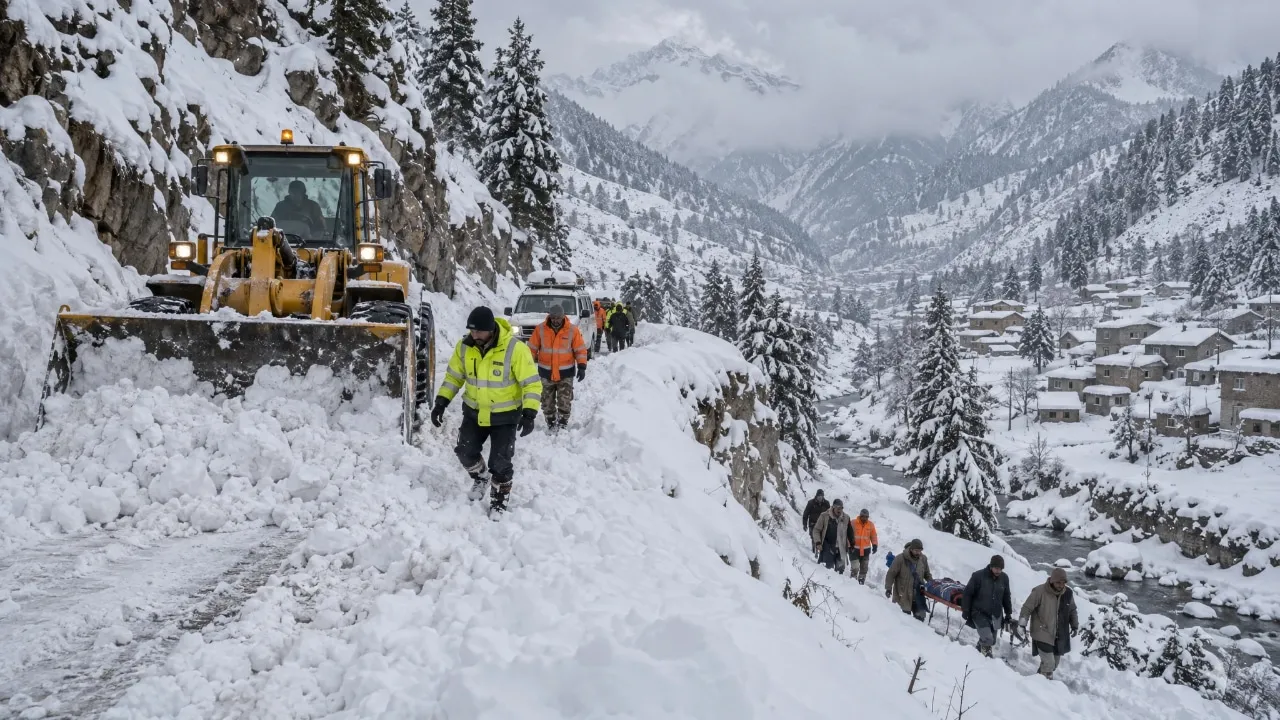
Eight districts of Khyber-Pakhtunkhwa have been identified as being at very high risk of winter-related emergencies, prompting the provincial government to direct relevant departments to complete preparations well before the onset of severe weather.
The directives were issued at an important meeting of the Relief Department chaired by the Governor's Adviser on Information and Public Relations and Relief, Rehabilitation and Settlement, Samar Haroon Bilour.
The meeting reviewed the winter contingency plan for 2026-27, the impacts of climate change, natural disasters, terrorism, traffic accidents, and the province's overall emergency preparedness.
Officials briefed the meeting that potential winter hazards had been assessed in all 37 districts, with eight placed in the very high-risk category.
The briefing also covered available resources, emergency supplies, district-wise requirements and additional facilities needed to deal with possible emergencies.
Why the High-Risk Designation Matters
Khyber-Pakhtunkhwa's topography is dominated by rugged mountains, deep valleys and river-cut gorges. Every winter, heavy snowfall can block roads, cut off remote communities and trigger avalanches. In the past decade, the province has recorded several deadly snow-block incidents, most notably the 2015 Upper Dir avalanche that left dozens dead and stranded hundreds of residents for days.
Climate-change data from the Pakistan Meteorological Department shows a steady rise in extreme winter events over the last 15 years, with higher snowfall intensity and longer periods of sub-zero temperatures. The eight districts flagged this year, Upper Chitral, Upper Kohistan, Upper Dir, Shangla, Mansehra and Swat, have historically recorded the highest snowfall averages and the most frequent road closures.
What the Winter Contingency Plan 2026-27 Covers
The provincial winter contingency plan is a multi-year framework that aligns the Relief Department, Rescue 1122, the Health Department, police, and local governments. Its core components include:
- Pre-positioning of relief stocks such as blankets, dry rations, medicines and portable heaters.
- Mapping of vulnerable settlements, schools and health centres in snow-prone valleys.
- Designation of alternate access routes and pre-clearing of critical road segments before the first snowfall.
- Training of local volunteers and operators for snow-clearing machinery.
- Establishment of district-level Emergency Operation Centres (EOCs) that operate 24/7 during the winter months.
The plan also integrates a real-time weather-alert system that disseminates warnings through radio, SMS and community loudspeakers, ensuring that residents receive timely information about impending storms.
Specific Directives for Snowfall-Prone Areas
Bilour stressed the need for preparations, effective planning and coordination among relevant departments to address climate-related challenges. She directed authorities to pay particular attention to snowfall-prone areas, including Upper Chitral, Upper Kohistan, Upper Dir, Shangla, Mansehra and Swat.
Key actions include:
- Ensuring the timely availability of snow-clearing machinery, fuel and trained operators to restore roads in remote valleys and snowbound areas.
- Identifying routes likely to be blocked during winter, mapping alternative access roads and isolated communities, and making necessary arrangements in advance.
- Setting up temporary shelters equipped with heating units at strategic points along the identified routes.
These measures aim to keep supply chains open for essential goods and to allow emergency services to reach isolated populations without delay.
Relief Stocks, Funding and Financial Coordination
The adviser called for immediate verification of existing relief stocks, their availability according to district requirements, and improvements in the transportation and distribution system. She also directed officials to assess district-level relief fund requirements and address financial constraints on a priority basis.
Bilour said issues concerning the Relief Department's finances and funding would be taken up with the Finance Department and the governor to ensure their timely resolution. This coordination is intended to prevent the funding bottlenecks that have delayed relief distribution in past emergencies, such as the 2020 flood response in Swat.
She emphasised that homeless, poor and vulnerable people, particularly women, children, elderly citizens and persons with disabilities, must receive priority in relief operations.
Round-the-Clock Emergency Response and Inter-Agency Coordination
Regarding terrorism, road accidents and other emergencies, she directed that rescue teams, vehicles and equipment remain operational round the clock. She stressed effective coordination among Rescue 1122, district administrations, police and the Health Department to ensure a swift and coordinated response.
Bilour further directed authorities to provide immediate financial and relief assistance to families affected by accidents and other emergencies, making the process simple, transparent and free of unnecessary bureaucratic hurdles.
The adviser also called for keeping district and provincial emergency operation centres fully functional, strengthening monitoring and ensuring timely dissemination of information.
Tourist Safety and Evacuation Protocols
Regarding tourist destinations, she stressed the need for visitor safety, timely weather alerts, identification of safe locations and arrangements for emergency evacuations. The provinces of Upper Chitral and Swat attract thousands of domestic and foreign tourists each winter for skiing and trekking; the new directives require local hotels and tour operators to register with the EOCs and to maintain emergency kits.
Bilour directed all relevant departments to clearly define their responsibilities, available resources and emergency response procedures, reiterating that public safety, timely rescue operations and immediate assistance to affected families remained the government's top priorities.
What Residents and Businesses Should Expect
Local authorities will begin a door-to-door verification of relief stock levels within the next week. Residents in the eight high-risk districts should receive printed leaflets outlining evacuation routes, shelter locations and contact numbers for Rescue 1122.
Businesses that rely on road transport, especially those moving agricultural produce from Mansehra and Swat, are advised to coordinate with district transport offices to secure alternate routes before the first heavy snowfall, expected in early December.
Schools in the identified districts will remain open but will implement a "snow-day" policy that allows for remote learning if road conditions become hazardous. Parents will be notified through SMS alerts generated by the provincial weather-alert system.
Next Steps and Monitoring
The Relief Department will submit a progress report to the Governor's office by 15 November, detailing the status of machinery deployment, fuel allocation and shelter preparation. The Finance Department is expected to release an additional Rs. 1.6 billion earmarked for winter relief by the end of the month.
Continuous monitoring will be carried out by the provincial Disaster Management Authority, which will issue weekly bulletins on snow depth, road status and any emerging security concerns. The public is encouraged to follow official channels for updates rather than relying on unofficial social-media rumors.
By implementing these comprehensive measures, Khyber-Pakhtunkhwa aims to mitigate the impact of severe winter weather on its most vulnerable communities while maintaining essential services and tourist safety.





