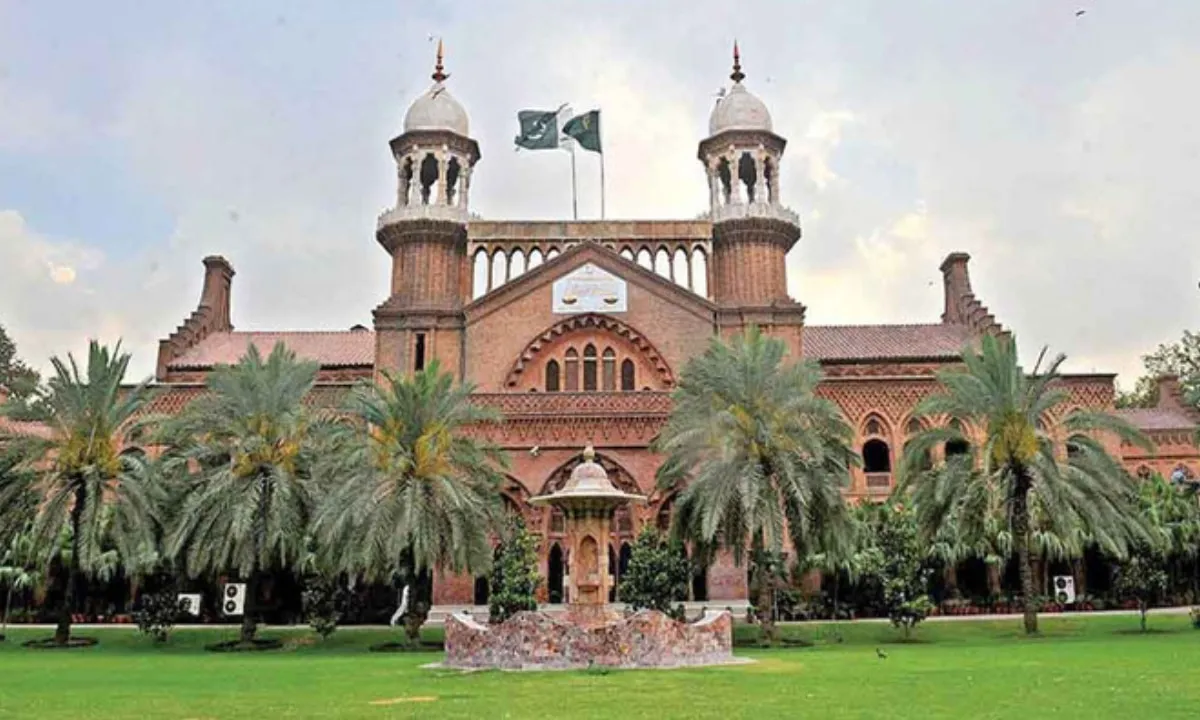
Lahore High Court Suspends Higher Education Commission Order
The Lahore High Court has suspended an order issued by the Higher Education Commission, observing that the commission does not have the legal authority to handle employment and service matters of faculty and staff at chartered universities in Pakistan. Justice Jawad Hassan issued the interim order on Tuesday while hearing a petition filed by a private university challenging HEC's interference in its internal affairs.
The legal challenge brings to the forefront a long-running debate regarding the jurisdictional boundaries of national regulatory bodies versus the institutional autonomy granted to degree-awarding institutes. As higher education institutions expand across the country, questions surrounding administrative oversight continue to find their way into judicial forums. The interim ruling offers temporary relief to the petitioner while setting the stage for a thorough legal examination of statutory powers.
Arguments Presented by the Petitioner
During the hearing, Advocate Muhammad Ali Siddiqui, representing the university, argued that the institution was established under the Times University Multan Act, 2020, and that its employment matters were regulated by the Employees Service Regulations, 2022. The counsel detailed how the legislative framework governing the institution explicitly outlines its internal governance structures, including hiring protocols, employee rights, and disciplinary procedures.
He explained that Section 10 of the Higher Education Commission Ordinance, 2002, authorizes HEC to evaluate, improve, and promote higher education and research through policies and guidelines. However, the law does not allow the commission to intervene in the internal administration or employment matters of chartered universities. According to the petitioner, the statutory mandate of the federal regulator centers on academic standards, curriculum development, degree recognition, and research funding rather than micro-managing human resource operations.
Origin of the Disputed Directive
The lawyer also informed the court that HEC had issued the disputed order following directions given in an earlier writ petition. He maintained that such directions could not extend the commission's powers beyond those granted by law. Judicial interpretations often grapple with whether observations or instructions passed in unrelated or prior litigation can automatically expand the administrative jurisdiction of a statutory body without formal legislative amendments.
Regulatory overreach remains a sensitive topic within the academic sector, where university administrations frequently push back against circulars and directives that cross into day-to-day management. The petitioner stressed that allowing external bodies to dictate employment terms creates administrative confusion and undermines the statutory autonomy granted by provincial or federal legislative acts.
Judicial Observations and Next Steps
After reviewing the arguments, Justice Hassan suspended the HEC order, noting that the university's claim regarding the commission exceeding its legal authority appeared to carry significant weight. The court admitted the petition for regular hearing and issued notices to the respondents for December 10. This gives both legal teams time to prepare comprehensive arguments on the statutory limits of regulatory power.
It also directed the law officer to obtain instructions and ensure that the respondents submit a report and paragraph-wise comments within four weeks. A senior HEC official familiar with the case was ordered to appear at the next hearing to explain the commission's position. The inclusion of a senior official signals the court's intention to examine the institutional rationale behind the contested directive directly.
Understanding the Regulatory Framework
The Higher Education Commission functions as the primary national institution entrusted with setting and raising standards in universities across the country. Established under the HEC Ordinance of 2002, its core responsibilities include distributing public funds, accrediting academic programs, and formulating broad educational policies. Universities, on the other hand, derive their existence from specific acts passed by legislatures, which typically vest governance powers in syndicates, senates, or boards of governors.
The tension between national standardization and institutional autonomy typically surfaces when regulatory guidelines intersect with internal human resource policies. While the commission maintains that its guidelines protect educational quality and ensure transparency, universities frequently argue that such interventions violate their chartered independence. The outcome of this case may establish a critical precedent for how administrative disputes between regulatory bodies and autonomous educational institutions are resolved in the future.