The Lahore High Court has decided that placing an appellate order on the Federal Board of Revenue's Inland Revenue Information System (IRIS) does not constitute lawful service under the Income Tax Ordinance, 2001.
A division bench of Justice Mirza Viqas Rauf and Justice Anwaar Hussain heard three linked reference applications filed by Tahir Mehmood. The petitions contested three Appellate Tribunal Inland Revenue orders that had dismissed the taxpayers' appeals as time-barred, on the basis that uploading the orders to IRIS was deemed sufficient service.
One petitioner claimed that Covid-19 restrictions and a quarantine after an overseas trip stopped him from accessing the portal. The other two said they only became aware of the Commissioner (Appeals)'s orders after receiving recovery notices in April 2026, months after the orders were issued.
Justice Hussain, who wrote the judgment, held that Section 218(1)(d) of the ordinance allows electronic service only when it follows the prescribed method. He pointed out that Rule 74 of the Income Tax Rules limits an electronic address to a fax number or an email address and requires confirmation of transmission.
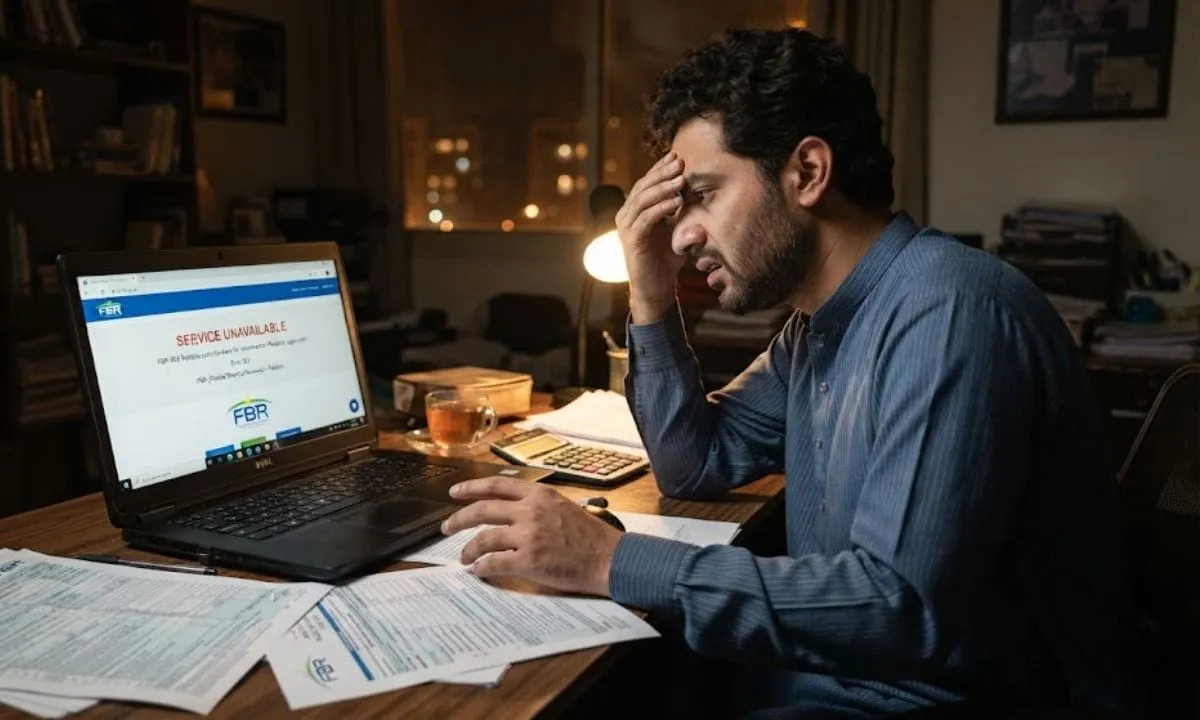
The judge noted that IRIS is an internal, web-based workflow system for tax administration. Simply placing an order in a taxpayer's account does not meet the rule's requirement of transmitting it to an electronic address. He distinguished accessibility from service, observing that an order can be viewable without being legally served.
The court ruled that the limitation period cannot start from an event the law does not recognise as its starting point. It rejected the department's claim that Rule 74 could not limit the parent provision, stating that the "prescribed manner" requirement is embedded in the ordinance. The judge also dismissed the argument that taxpayers must constantly monitor IRIS.
Regarding the pandemic-related explanation, the judge said the department could not ignore it, as the correctness of the tribunal's conclusion raised a question of law within the high court's competence.
The judge observed that technology serves as a tool for statutory administration rather than an independent source of statutory authority, and that modernization cannot override legal safeguards.
Referencing decisions of the Peshawar and Islamabad high courts, the Delhi High Court, and Articles 4 and 10A of the Constitution, the bench set aside the challenged orders and instructed the tribunal to rehear the appeals on their merits.