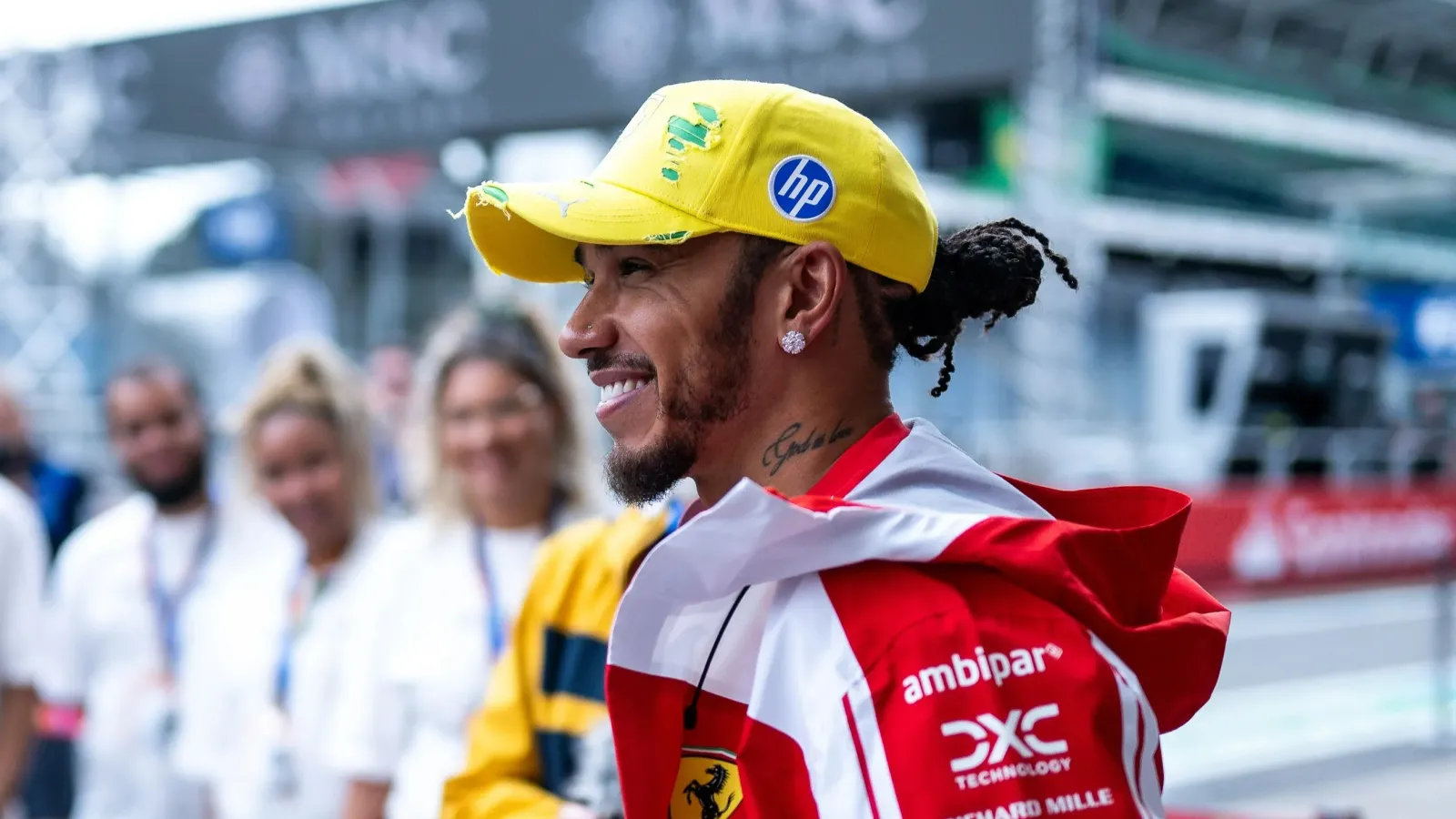
Lewis Hamilton Charity Warns Formula One Faces Talent Drain
Formula One risks missing out on a generation of future talent if it fails to open new pathways into the industry, according to a stark warning from Lewis Hamilton's Mission 44 charity group. Five years after the seven-time world champion launched the Hamilton Commission to promote inclusion for young people from underrepresented and disadvantaged backgrounds, the charity has published a follow-up report titled Igniting Inclusion. The new publication evaluates the progress made across the motorsport sector and details the structural changes still required to build a sustainable pipeline of diverse engineers and professionals.
While a Diversity and Inclusion Charter has been signed by Formula One management, every team, and the FIA, the latest findings suggest that much more work remains. Mission 44 is calling for a major financial commitment, including a £50 million funding plan over the next five years, alongside exemptions for apprenticeships and scholarships from cost-cap calculations. The report also highlights growing fan demand for representation, with polling indicating that audiences want to see wider participation across the paddock.
What the Igniting Inclusion Report Reveals About F1 Demographics
The report surveyed 3,000 fans across the United Kingdom, the United States, and Brazil to gauge public sentiment regarding diversity within motorsport. Among those polled, 80 per cent believe that greater representation would help attract more fans to the series, while 69 per cent stated that visible progress would make them more likely to follow and support the sport. However, the survey also exposed deep skepticism, with 55 per cent of respondents expressing the view that Formula One only pays lip service to the inclusivity ideas it claims to promote.
Behind these figures lies a high-pressure recruitment environment where thousands of hopeful candidates compete for a tiny fraction of available roles. One anonymous senior team member told researchers that their squad received 8,000 applications for a single graduate position. With such massive volumes of interest, many aspiring candidates face automated screening by artificial intelligence algorithms before a human recruiter ever reviews their CV. Mission 44 warns that this technological bottleneck threatens to shut out brilliant minds from non-traditional backgrounds.
The Role of Artificial Intelligence and Recruitment Hurdles
Cara Cinnamon, the lead author of Igniting Inclusion and Chief Impact Officer at Mission 44, highlighted the delicate balance required when managing high volumes of job submissions. Employers across many industries rely on automated tools to process applications, but the charity emphasizes the need for transparency and personalized feedback for scholarship recipients. Ensuring fairness in the hiring pipeline is essential to prevent talented individuals from falling through the cracks of a computerized screening system.
"It's a really delicate balance," Cara Cinnamon told SunSport. "F1 are an industry that attracts enormous numbers of applications. It's an issue that exists everywhere in many different industries. But we are saying we would like those young people who have been supported through scholarships and bursary programmes to receive personalised feedback. AI is a tool that many employers use as a means to screen candidates. We just want to ensure it is being done very carefully, thoughtfully, and there's disclosures in place if that is being used. Mainly to ensure that we don't see any kind of issues with unfairness to ensure the application process and recruitment process is as fair and transparent as it can be."
Real-World Impact on Young Engineers
The practical benefits of targeted intervention are already visible in the paddock, even if trackside diversity still lags behind corporate offices. Lily Owuye serves as a prime example of how structural support can change a career trajectory. Graduating as a Mission 44 scholar in 2023, she now works as an engineer for Red Bull, contributing to their high-profile RB17 hypercar project.
Hailing from a working-class background in Warwick with no prior family history in higher education or motorsport, Lily noted that navigating the industry would have been nearly impossible without external assistance. She explained that without the scholarship, she might have gravitated toward an adjacent field like aerospace or struggled to find an entry point into racing. Reflecting on her journey, she credited the initiative for opening doors that typically remain closed to outsiders.
"I acknowledge I was already privileged to be able to attend university, and even knowing I wanted to study engineering is also a massive thing," Lily told SunSport. "Winding it back to where I was during my undergraduate study, even if I knew engineering and maybe something more broadly automotive, I hadn't quite pinned down motorsport. So I absolutely would credit the scholarship programme and, of course, the journey Mission 44 have been on to open those doors for people like myself, other scholars, and kind of young people across the globe... It was definitely a game changer for me."
Three Key Recommendations for the Future of Motorsport
To secure the long-term health of the sport, Mission 44 has outlined three distinct recommendations for all stakeholders involved in Formula One administration. These measures aim to create accountability and transparency across every team and governing body.
- Centralised Dataset: Formula One, the FIA, and all teams should report consistent data regarding recruitment, promotions, and departures to an independent data partner, categorized by gender, ethnicity, and socio-economic background.
- Accreditation Standards: Establish clear benchmarks for inclusive recruitment and retention, rewarding top performers through annual awards tied to data submission compliance.
- Substantial Funding: Invest £50 million over the next five years to bring motorsport recruitment practices into alignment with major global sports leagues like the NBA, NFL, and the English Premier League.
Common measures and accreditation standards are targeted for agreement by July 2027, with the first sport-wide figures and awards scheduled for 2028, followed by a review of team-level publication in 2030.
Lewis Hamilton Reflects on Five Years of Advocacy
As Formula One expands its global footprint and targets an audience approaching one billion followers, approximately 40 per cent of its new fans are women, highlighting a changing demographic profile that teams must learn to accommodate. While some organizations have made strides in office environments, trackside roles remain stubbornly homogeneous, prompting calls for strict equity in opportunities.
Reflecting on the milestone release of the follow-up report, Lewis Hamilton emphasized that the fight for inclusion requires constant dedication from every corner of the paddock. The seven-time champion noted that encouraging youth aspirations carries a moral obligation to provide viable entry points into the professional arena.
"Five years ago, I launched the Hamilton Commission because I knew F1 had to change," Hamilton said. "Since then, we've worked tirelessly to break down barriers and open doors. We can't tell young people to dream big and then not open the doors when they try to make those dreams a reality. We've shown that change is possible. Now we need to go further. The talent is out there, and the future of our sport depends on unlocking it."