Punjab Government Focuses on Modern Technology to Fight Organized Crime
Chief Minister of Punjab Maryam Nawaz Sharif stated on Sunday that organised crime is a major threat to social harmony, stability and progress, emphasising the necessity of concerted efforts at all levels to stop such activities. Speaking on the International Day for the Prevention of and Fight against All Forms of Transnational Organised Crime, she pointed out that regional authorities must adopt advanced measures to protect the public. The provincial administration aims to target criminal networks through systematic technological upgrades and improved intelligence gathering. Officials across various departments are aligning their strategies to address these complex security challenges.
She stated that there is an urgent need to combat drug smuggling, human trafficking and other illicit activities in her statement on the International Day for the Prevention of and Fight against All Forms of Transnational Organised Crime. These specific criminal enterprises generate immense illegal profits while destroying local communities and destabilizing the region. Transnational networks often use sophisticated methods to move contraband and vulnerable individuals across borders, requiring an equally sophisticated response from local authorities. The government intends to close the loopholes that allow these criminal syndicates to operate within the province.
Crime Statistics Show Declining Trends Across Punjab
The chief minister noted that Punjab had witnessed a declining trend of up to 70 per cent in the overall crime rate, terming it encouraging. This broad reduction reflects the ongoing adjustments within the security apparatus and the increased presence of law enforcement personnel in sensitive areas. Citizens have reported feeling safer as local police stations adopt more responsive operational models. Analysts point to better resource allocation as a primary driver behind these shifting statistics.
She stated that crime had declined by 41 per cent in Lahore, 16 per cent in Dera Ghazi Khan, 52 per cent in Bahawalpur and 32 per cent in Sheikhupura. Each district presented unique security challenges that required tailored interventions from local commanders. Urban centers like Lahore experienced distinct improvements in street safety and property protection. Meanwhile, rural and semi-urban districts benefited from increased patrols and faster response times.
Similarly, crime had decreased by 47 per cent in Multan, 36 per cent in Rawalpindi, 42 per cent in Sahiwal, 67 per cent in Gujranwala and 58 per cent in Gujrat, she added. These wide-ranging drops demonstrate that the regional security strategy is taking effect across multiple jurisdictions. Local police units have adapted their deployment methods to address high-crime zones directly. Community policing initiatives also contributed to the steady downward movement of offense rates in these cities.
How Smart Policing is Transforming Law Enforcement in Punjab
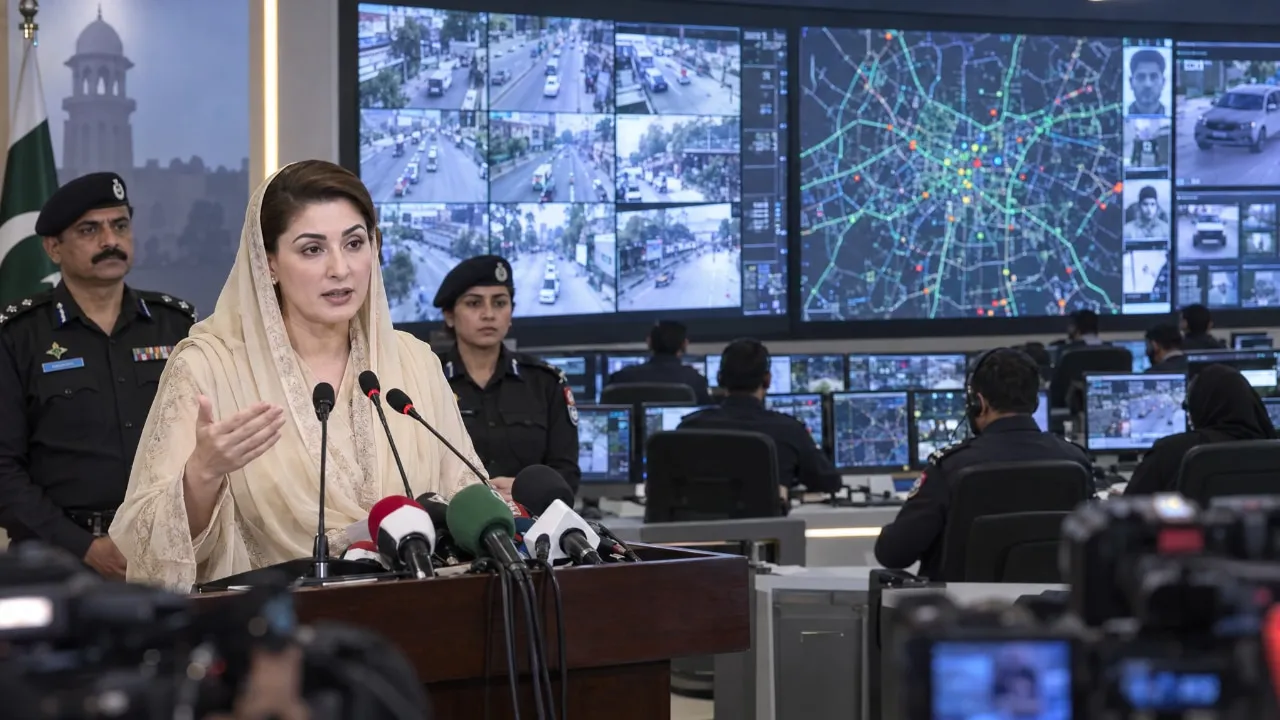
CM Maryam Nawaz said the establishment of District Safe City Authorities, mobile police stations and digital smart policing initiatives in Punjab was yielding positive results. These technological additions allow officers to monitor public spaces more effectively and respond to emergencies without delay. Mobile stations bring police services directly to neighborhoods that previously lacked immediate access to precinct infrastructure. Digital databases help officers track repeat offenders and share critical intelligence across district borders instantly.
She stressed that law enforcement agencies needed to play a more effective and proactive role in establishing a crime-free society, adding that modern technology, intelligence sharing and a coordinated strategy were essential to dismantle criminal networks. Traditional policing methods alone cannot keep pace with the evolving tactics used by modern syndicates. By integrating digital surveillance and centralized data analytics, security personnel can anticipate criminal movements before offenses occur. This proactive stance marks a clear shift from older, reactive models of law enforcement.
Top Priorities for Public Safety and Social Protection
A calm and safe society, according to the chief minister, depends on the rule of law, citizen protection and indiscriminate action against criminal elements. Law enforcement agencies have been instructed to apply the law equally, regardless of the social or political status of suspects. Public trust in the justice system relies heavily on the consistent and fair enforcement of legal statutes. Authorities continue to dismantle safe havens used by criminal syndicates throughout the province.
She emphasised that shielding young people from drugs and criminal activity, as well as protecting women and children from human trafficking and exploitation, were top concerns. Drug peddling networks frequently target educational institutions and vulnerable neighborhoods, destroying the future of the younger generation. Special task forces are focusing on dismantling supply chains that bring narcotics into schools and local communities. Simultaneously, specialized units are working to identify and rescue victims of human trafficking.
Future Strategies and International Collaboration
CM Maryam Nawaz reaffirmed her commitment to creating a just, safe and peaceful society by highlighting the importance of increased public awareness, improved police and law enforcement agency capabilities, and collaboration with international organisations and pertinent nations in the fight against organised crime. Transnational criminal groups often operate across multiple countries, making cross-border cooperation essential for their complete eradication. Local agencies are learning best practices from global partners to improve investigative techniques and evidence collection.
Public awareness campaigns remain a core component of the provincial strategy, educating citizens on how to report suspicious behavior safely. Community leaders, educational institutions and civil society groups are encouraged to participate in local crime prevention committees. By fostering a collaborative environment between the public and the police, the administration hopes to sustain these positive trends over the long term. Continuous training programs for police officers ensure that personnel stay updated on the latest technological tools and legal procedures.





