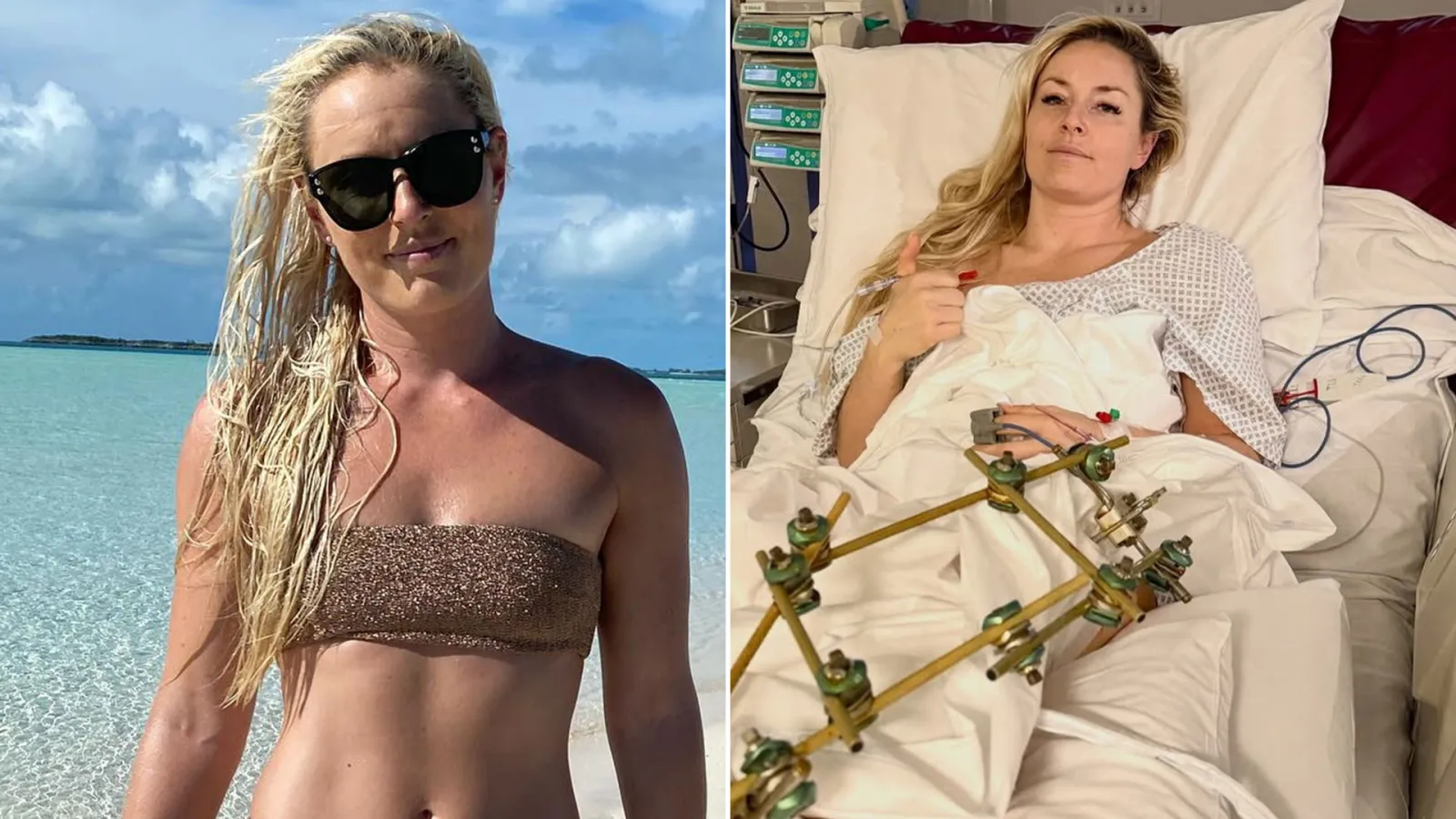
Lindsey Vonn Faces Ninth Surgery Following Winter Olympics Crash
American skiing legend Lindsey Vonn has undergone a ninth surgery following a severe crash during the Winter Olympics. The incident occurred at Milano Cortina 2026 in February, leaving the athletic world concerned about her long-term health and recovery. Vonn, 42, suffered a complex fracture to her left leg after crashing just 14 seconds into her run in the women's downhill skiing event. This latest medical procedure marks another difficult milestone in a career defined by incredible triumphs and severe physical challenges.
The timing of the Olympic accident compounded an already fragile physical state for the veteran athlete. The Saint-Paul, Minnesota native sustained a ruptured ACL just over one week prior while competing in Crans-Montana, Switzerland. In the months following the Olympic crash, she has endured a long road to recovery, remaining bed-bound for a significant period before slowly getting back on her feet ahead of her gruelling rehabilitation journey.
Details of the Instagram Announcement
Vonn shared the news of her latest medical procedure with her 3.6 million followers on Instagram. She posted a candid update detailing her emotions ahead of the operation, admitting the mental and physical toll the process has taken on her. The announcement immediately drew widespread support from fans and fellow athletes across the globe who have monitored her recovery.
Writing on the social media platform, Vonn stated: Surgery days are never easy, especially when they follow such traumatic accidents. She shared her frame of mind with her supporters by writing: This day has been looming on my calendar for a while now, and the time has finally come. She added: I have been nervous and anxious about it, but at the same time excited to hopefully put this behind me. Emphasising the magnitude of her medical history, she noted: This will be my ninth surgery and I am praying my last.
Medical Team and Uncertainty Surrounding the Procedure
Major orthopedic surgeries involving complex fractures require meticulous planning and highly skilled medical professionals. Vonn acknowledged the unpredictability of the operation while expressing complete confidence in her care providers. Medical staff had to evaluate the exact state of her leg bone and surrounding tissue once the procedure began.
Addressing the unknowns of the operation, Vonn wrote: There are still things that could change in surgery so we will have to wait and see how it goes, but I will keep you posted on my progress when I am out of surgery and recovering. She also made sure to credit the professionals aiding her rehabilitation, stating: I am in the best hands though and thankful for the help of my doctors, physical therapist, nurses, and medical staff.
Gratitude for Public Support During Recovery
Throughout her career and especially during this recent crisis, public backing has played a major role in her journey. The sheer volume of messages from well-wishers has provided substantial comfort during months of physical isolation and demanding therapy. Vonn took time in her statement to address the people who have stood by her through the hardships.
Expressing her appreciation, she wrote: Thank you again for all of the support over these last nine months. She added that the public response had a profound effect on her mindset, noting: It has truly meant the world to me to receive so much love and encouragement. Concluding her message with a personal family reference, she shared: As my Mother said, Today is another great day! I hope she is right.
Context of Alpine Skiing Injuries and Physical Demands
Alpine ski racing is widely recognised as one of the most punishing and dangerous sports in the world. Athletes routinely hurtle down icy mountainsides at speeds exceeding 80 miles per hour, subjecting their joints, ligaments, and bones to extreme forces. A single mistake, a sudden gust of wind, or an imperceptible bump in the snow can result in catastrophic crashes. The sport demands immense lower body strength, perfect balance, and uncompromising fearlessness, but it also carries an exceptionally high rate of traumatic injuries.
Over decades of elite competition, top-tier racers accumulate extensive medical histories involving knee reconstructions, broken bones, and spinal issues. The psychological burden of returning from such injuries matches the physical difficulty. Skiers must rebuild their confidence on the snow after experiencing life-threatening impacts, knowing that the physical margin for error is razor-thin.
The Road Ahead for Lindsey Vonn
Recovering from a complex leg fracture combined with a previous ligament rupture requires a disciplined, multi-phase rehabilitation protocol. Physical therapists focus first on managing pain and swelling, followed by restoring joint mobility and muscle activation. Once basic movement returns, athletes progress to weight-bearing exercises, strength training, and eventually sport-specific agility drills. Because Vonn faced a bed-bound period following the Milano Cortina accident, rebuilding foundational muscle mass represents a primary challenge for her medical team.
While this ninth surgery is intended to resolve lingering complications from the Olympic crash, the immediate focus remains entirely on healing and daily functionality. Fans and medical observers will monitor her updates as she transitions out of the post-operative recovery phase. Her journey continues to highlight both the extraordinary resilience required of elite winter athletes and the harsh physical toll of competitive skiing at the highest level.