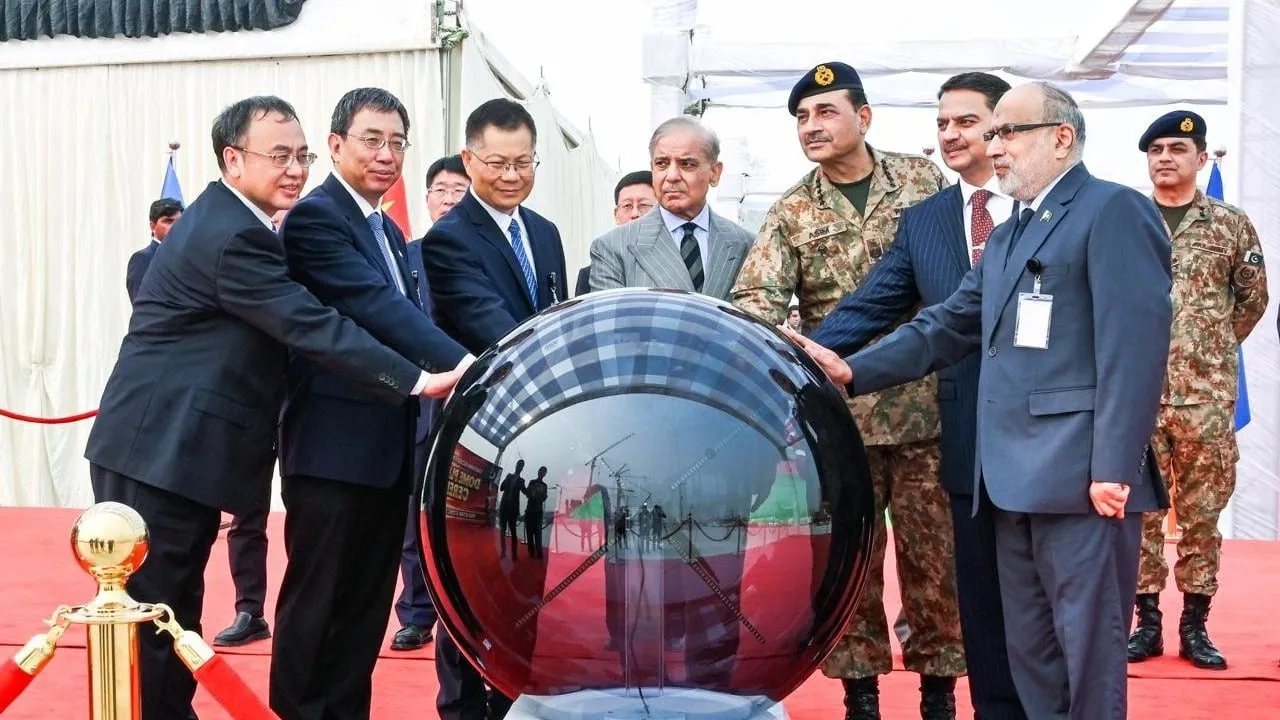
Pakistan's 1,200MW Chashma-5 (C-5) nuclear power plant has placed its reactor dome, a key construction milestone, less than three and a half years after work began and ahead of schedule.
Prime Minister Shehbaz Sharif attended the dome-placement ceremony in Mianwali as chief guest, alongside Field Marshal Syed Asim Munir, Chinese officials and senior representatives of the organisations involved, the Prime Minister's Office said.
The dome is the roof of the reactor building, which houses the reactor and its main equipment.
The plant is expected to start producing electricity in September 2030.
Why the Dome Placement Matters
Placing the reactor dome signals that the structural shell of the nuclear island is complete. After the dome is set, work shifts to internal systems such as the reactor pressure vessel, coolant loops, control instrumentation and safety-related components. Completion of the dome also allows the project team to begin rigorous testing of welds and alignment, steps required before the International Atomic Energy Agency (IAEA) can conduct its safeguards inspections.
Because the dome was installed ahead of the original timetable, the overall project timeline may be compressed. The prime minister has hinted that the plant could be commissioned earlier than the September 2030 target if construction continues at the current pace.
Background: Pakistan's Nuclear Energy Programme
Pakistan began its civilian nuclear programme in the 1970s, initially with the assistance of Canada and later France. The country now operates four operational reactors at the Karachi and Chashma sites, contributing roughly 16.6 percent of total electricity generation while representing only 8.6 percent of installed capacity. The higher generation share reflects nuclear plants' high capacity factor, especially in winter when their output can reach 26 percent of national demand.
Chashma-5 is the fifth reactor at the Chashma site, located on the banks of the Indus River in Mianwali district. The site was chosen for its seismic stability, access to cooling water, and proximity to the national grid. Construction began in July 2023 after a series of feasibility studies, environmental assessments and financing agreements were completed.
China-Pakistan Nuclear Cooperation
C-5 is the seventh nuclear power unit that China has helped Pakistan build. The partnership dates back to the 1990s when China supplied the first Chinese-designed reactors, Chashma-1 and Chashma-2, under a bilateral agreement. The China National Nuclear Corporation (CNNC) provides design, engineering, procurement and construction (EPC) services for C-5, while also supplying key nuclear fuel components.
During the dome-placement ceremony, Prime Minister Sharif thanked President Xi Jinping, the Chinese government and CNNC, noting that the project forms part of the second phase of the China-Pakistan Economic Corridor (CPEC). The second phase is intended to deepen economic ties through infrastructure, energy and trade projects, and the nuclear plant is seen as a flagship initiative that will generate clean power for both countries' industrial growth.
Regulatory and Safeguards Framework
In parallel with construction, Pakistan and the IAEA signed a safeguards agreement for Chashma-5. The agreement obliges Pakistan to allow IAEA inspectors to verify that nuclear material is used solely for peaceful purposes. Safeguards inspections typically begin after the reactor vessel is installed and continue through commissioning and operation.
The Pakistan Atomic Energy Commission (PAEC), the agency that operates the plant, has a long record of compliance. For example, Chashma-1 set a PAEC record of 427 days of uninterrupted operation, demonstrating the reliability of the technology and the competence of the operating staff.
Economic and Energy Implications
When fully operational, Chashma-5 will add 1,200 megawatts of capacity to the national grid. The prime minister described the plant as a source of "clean, reliable and affordable electricity" that will reduce Pakistan's dependence on imported fossil fuels such as oil and liquefied natural gas. By diversifying the energy mix, the plant is expected to blunt the impact of global fuel price volatility on households and industry.
Lower electricity costs can improve the competitiveness of Pakistan's manufacturing sector, encourage foreign investment, and support the government's goal of achieving universal electricity access. The plant's output will also help meet the country's climate commitments by displacing carbon-intensive generation during peak demand periods.
Project Timeline and Next Steps
Key milestones remaining after dome placement include:
- Installation of the reactor pressure vessel and primary coolant system (expected 2024-2025).
- Integration of control and safety instrumentation, followed by cold-functional testing (2025-2026).
- Fuel loading and criticality tests, overseen by IAEA inspectors (2027).
- Grid connection and commercial operation, targeted for September 2030 or earlier.
Each step requires coordination between CNNC, PAEC, the Ministry of Energy and the IAEA. Delays in any phase could affect the final commissioning date, but the early dome placement suggests the schedule is on track.
Impact on Local Communities
The construction phase has already created jobs for thousands of local workers in Mianwali, ranging from skilled engineers to unskilled labourers. The plant's operation will generate permanent technical positions and stimulate ancillary services such as transportation, catering and security.
Environmental monitoring is mandated under Pakistan's Nuclear Regulatory Authority (PNRA). Continuous radiation surveillance, water quality testing and emergency preparedness drills are part of the plant's operational plan, ensuring that the surrounding population remains safe.
What to Watch For
Stakeholders will be watching for the first IAEA verification report, which will confirm that safeguards are in place and that the reactor complies with international safety standards. Additionally, any changes to the CPEC financing structure or geopolitical shifts could influence the project's funding timeline.
Industry analysts will also monitor the plant's impact on electricity tariffs once it enters service, as well as its contribution to Pakistan's renewable-energy targets under the National Climate Change Policy.
Overall, the dome placement marks a tangible step toward expanding Pakistan's clean-energy capacity and deepening Sino-Pakistani cooperation in high-technology infrastructure.





