LinkedIn Updates Systems to Target AI Slop in Comment Sections
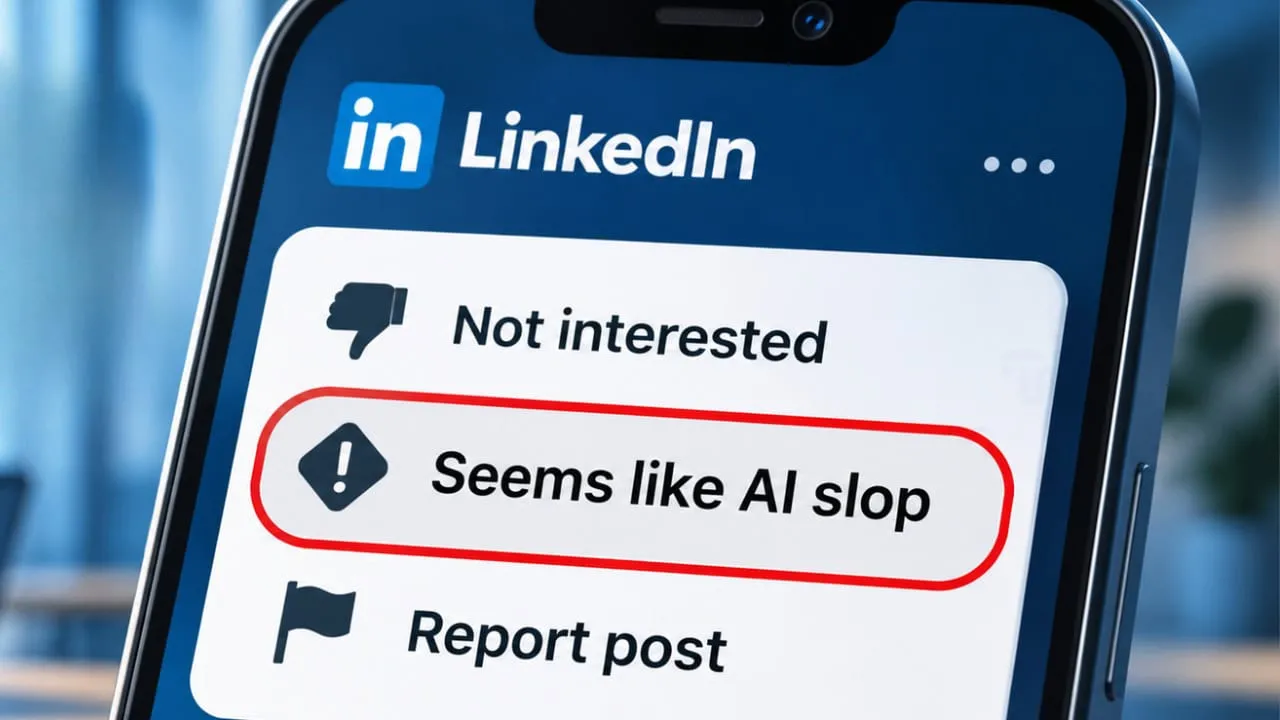
LinkedIn updated its comment detection and ranking systems to push AI-generated comments down in feeds. On November 15, Chief Product Officer Hari Srinivasan announced the changes as the latest step in the platform's fight against AI slop. As a result, early testing already shows a 20%+ drop in views for flagged slop comments.
The rise of generative artificial intelligence tools has changed how people interact across digital networks. While automation offers assistance for drafting messages, it also leads to mass-produced, low-effort text flooding discussion boards. This phenomenon degrades the quality of online professional discourse, making it harder for real users to connect over genuine insights. Professional networks rely on human authenticity to maintain trust among members, business leaders, and recruiters.
Addressing this challenge requires precise technical solutions that distinguish between thoughtful human input and automated noise. Platform engineers must build systems capable of parsing nuance, tone, and contextual relevance without silencing legitimate dialogue. The recent update represents a specific intervention designed to alter how users experience discussions on the platform.
How New Classifiers and Ranking Systems Work
Specifically, the platform added new classifiers that evaluate comment relevance and flag suspected AI-generated replies. However, these classifiers do not delete comments outright. Instead, they demote them in the default "most relevant" ranking view. Additionally, LinkedIn updated its notification system to alert creators only about high-quality comments. Consequently, AI-generated replies no longer trigger alerts alongside genuine responses.
This approach reflects a deliberate choice. Rather than removing content, LinkedIn targets visibility. Suspected AI comments still exist on the platform. However, fewer people see them, and creators receive fewer interruptions from them.
By shifting focus away from strict deletion, the platform avoids complex debates over false positives and freedom of expression. Content remains accessible to anyone who scrolls far enough or searches directly, but it loses prominent placement. Creators benefit from a quieter notification feed, allowing them to focus on meaningful interactions with colleagues and industry peers rather than filtering out repetitive automated praise.
Background on LinkedIn Anti-Slop Measures
Furthermore, the update builds on months of anti-slop measures. In August, LinkedIn became the first major social platform to add an AI slop reporting button. Within three weeks, over one million users tapped it. That volume confirmed the scale of the problem. Around the same time, LinkedIn also rebranded its own AI post enhancement tool as a "proofreader." In doing so, the platform drew a clear line between acceptable AI use and slop. Meanwhile, LinkedIn expanded identity verification and cracked down on engagement pods as part of its broader integrity push.
These sequential steps demonstrate a sustained campaign against artificial pollution on the network. Engagement pods, where groups coordinate to artificially boost each other's content, previously created similar distortions in feed rankings. By combining manual reporting features with automated detection tools, the platform attempts to cover multiple vectors of manipulation.
The rebranding of the post enhancement tool signals an internal shift in philosophy. Rather than encouraging fully automated content generation, the company positions its internal technology as an editorial assistant. This distinction helps set boundaries for users who wish to polish their writing without surrendering their unique professional voice to a machine.
Why Professional Authenticity Matters for AI Search Integration
The motivation extends beyond user complaints, however. AI chatbots like ChatGPT and Perplexity now cite LinkedIn in their responses. They rely on professional identity signals, engagement data, and creator history as trust markers. Similarly, Reddit benefits from crowd-sourced upvotes. If AI slop erodes those signals, LinkedIn risks losing its role as a top source for AI-powered search tools.
Modern search engines and large language models crawl public web pages to synthesize answers for users seeking expert opinions. If professional networks become saturated with automated conversational filler, the underlying data loses its value. Maintaining high signal-to-noise ratios ensures that external algorithms continue to treat the network as a reliable repository of human expertise.
This dynamic creates a new commercial imperative for data integrity. Platforms that host user-generated knowledge must protect their ecosystems from synthetic decay to remain valuable partners in the broader information economy. Trust becomes a measurable asset that directly influences external partnerships and platform relevance.
How LinkedIn Differs From Other Social Media Platforms
In contrast, other platforms face a harder version of this problem. Meta, X, and TikTok all invest heavily in generative AI features. As a result, cracking down on AI content contradicts their commercial incentives. LinkedIn avoids that tension because its value comes from professional authenticity, not AI-generated engagement volume.
Other networks often prioritize total time spent on site and raw posting frequency, regardless of whether a human or an algorithm generated the material. Their advertising models thrive on continuous activity and high interaction counts. Because LinkedIn operates primarily as a career and B2B networking environment, its users judge the platform based on professional utility rather than entertainment value.
This structural difference gives the platform more freedom to penalize automated clutter without threatening its core business model. While entertainment-focused platforms struggle to balance automated creativity with quality control, professional networks can enforce stricter boundaries around human-centric communication.