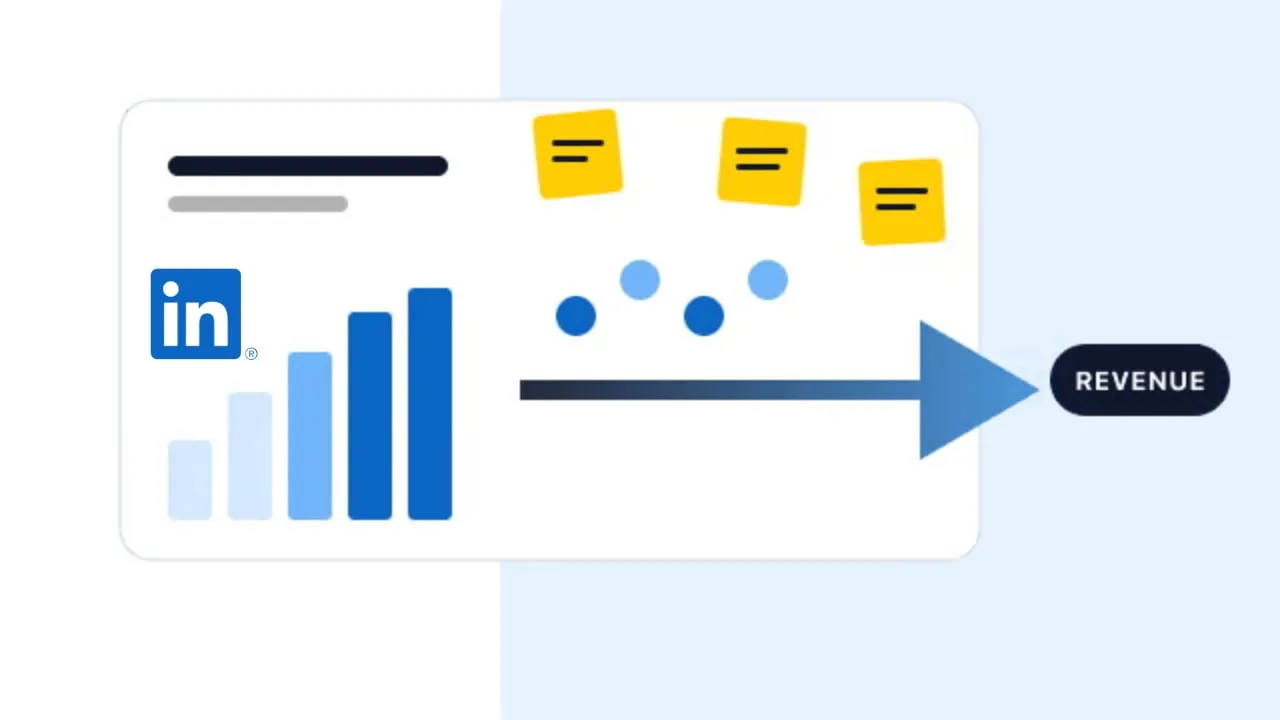
LinkedIn has issued an 18-page guide aimed at helping businesses determine which ads actually generate sales. The resource is directed at business-to-business marketers and contains five step-by-step frameworks for measuring ad performance throughout the buying journey.
This guide is purpose-built for B2B marketers who are done guessing and ready to act on better signals. Whether you're building your attribution strategy from scratch or looking to get more out of LinkedIn's measurement capabilities, this is the resource for you.
B2B sales differ from typical consumer purchases; a single deal may span months and involve multiple decision-makers. During that period, buyers shift across channels, read content without clicking ads, and even employ AI tools for research. LinkedIn refers to the unseen activity that precedes measurable actions as the "dark funnel," where engagement leaves no clear trail.
LinkedIn reports that only 33% of B2B marketers strongly agree they can demonstrate marketing impact to company leaders, while 75% say their measurement systems fall short. Analytics firm Dreamdata finds the average B2B buying cycle lasts 211 days and includes 76 touchpoints, making it difficult for marketers to link ad spend to business outcomes.
To address this, the guide outlines five frameworks for tracking results at each buying stage and shows how to tie early buyer interest to later outcomes such as deals and closed sales. It also names approved analytics partners, Dreamdata, Factors.ai and RevSure, that can enrich tracking reports, and provides steps to improve what LinkedIn calls "full-funnel visibility."
Although the guide largely promotes LinkedIn's own paid analytics tools, with some highlighted features available only on paid plans, the frameworks and breakdowns serve as useful starting points for marketers seeking to rethink B2B ad measurement.