Karachi Residents Face Live Worms in Tap Water Crisis
Residents of a densely populated neighborhood near Meena Bazaar in Karimabad No 3 have stopped using tap water entirely after live, crawling worms began emerging from household taps, sparking fears that sewage is contaminating the drinking water supply.
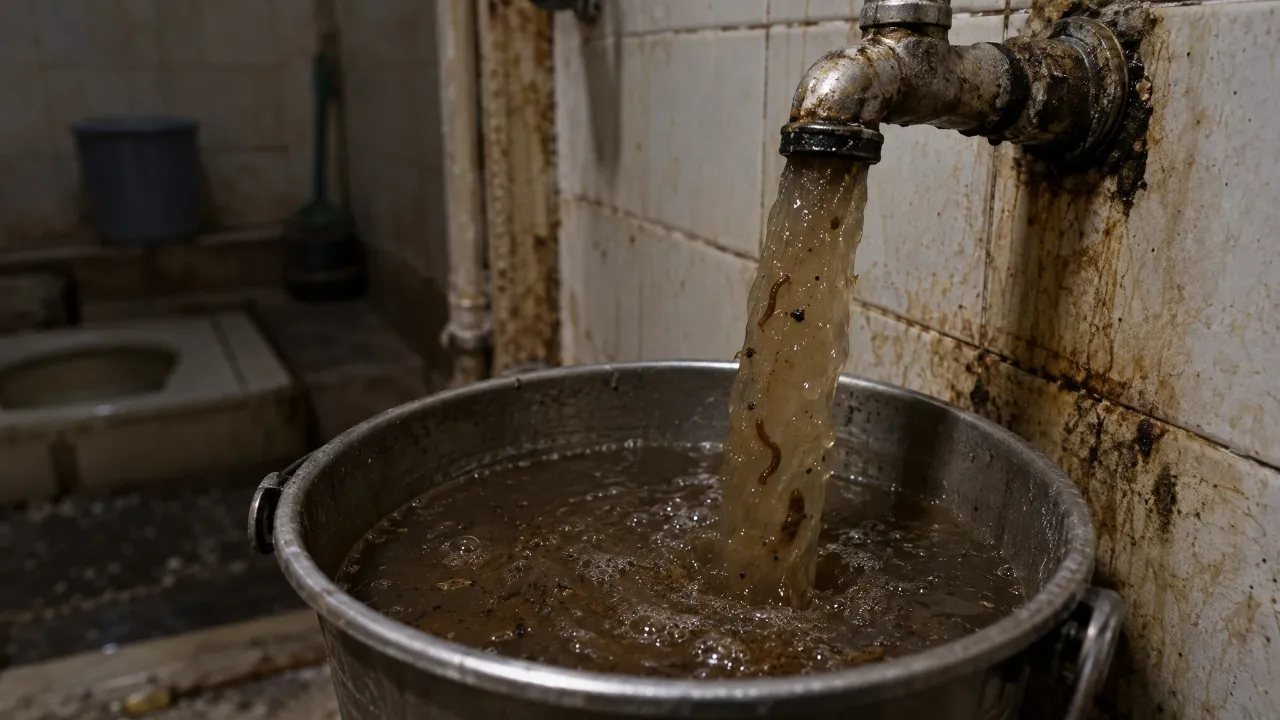
The alarming situation was reported in Saheba Apartments and surrounding buildings on Tuesday, with residents saying worms fell into buckets with the water whenever they turned on kitchen and bathroom taps.
From Discolored Water to Live Worms in Karachi Taps
Residents say they have battled water problems for around one and a half months. The water first turned cloudy and black with a strong sewage-like smell. Though the odor later subsided, the emergence of large numbers of live worms over the past few days has escalated the crisis.
Akbar Khan, a 20-year resident, described opening a tap to collect water and finding numerous crawling worms falling into the bucket. Similar incidents were soon reported across the building and neighboring properties.
Public Health Concerns Grow Over Contaminated Supply
Another elderly resident, Muhammad Farooq, said the issue had moved far beyond changes in color or taste. The presence of live worms raised serious fears of health consequences, warning that any sewage contamination of the supply network could trigger a major public health crisis.
Nauman Ahmed noted that Saheba Apartments alone houses more than 3,000 people across nearly 700 flats, with large populations in neighboring buildings, meaning contamination would not be confined to a handful of households.
Lack of Official Investigation Into Karachi Water Quality
Residents confirmed taps had earlier released material resembling human waste, and that muddy, black water had damaged household pumps and contaminated overhead tanks.
Despite six weeks of complaints, residents say no technical investigation has been conducted and no authority has meaningfully examined the problem.
Financial Burden and Health Risks for Local Families
The situation has deteriorated to the point where residents have stopped using tap water even for routine needs, buying bottled or mineral water for washing clothes and ablution, which creates an added financial burden on households.
Vulnerable residents, children, and the elderly face heightened risk of gastrointestinal disease, diarrhea, and other infections.
Broader Water Safety Challenges in Pakistan
Medical experts estimate more than 50,000 children and adults die every year in Pakistan from water-borne illnesses, with the World Health Organization attributing 70% of the countrys diseases to polluted water. In Karachi alone, roughly 20,000 children die annually from illnesses linked to unsafe water.
According to a KWSC study, Karachi generates around 460 million gallons of sewage daily, yet only 35 million gallons is treated, leaving 425 million gallons discharged untreated every day.
Residents are demanding an urgent inspection of supply and sewerage lines, chemical analysis of water samples, and alternative clean water arrangements, warning that inaction could turn contamination into a full-blown public health emergency.