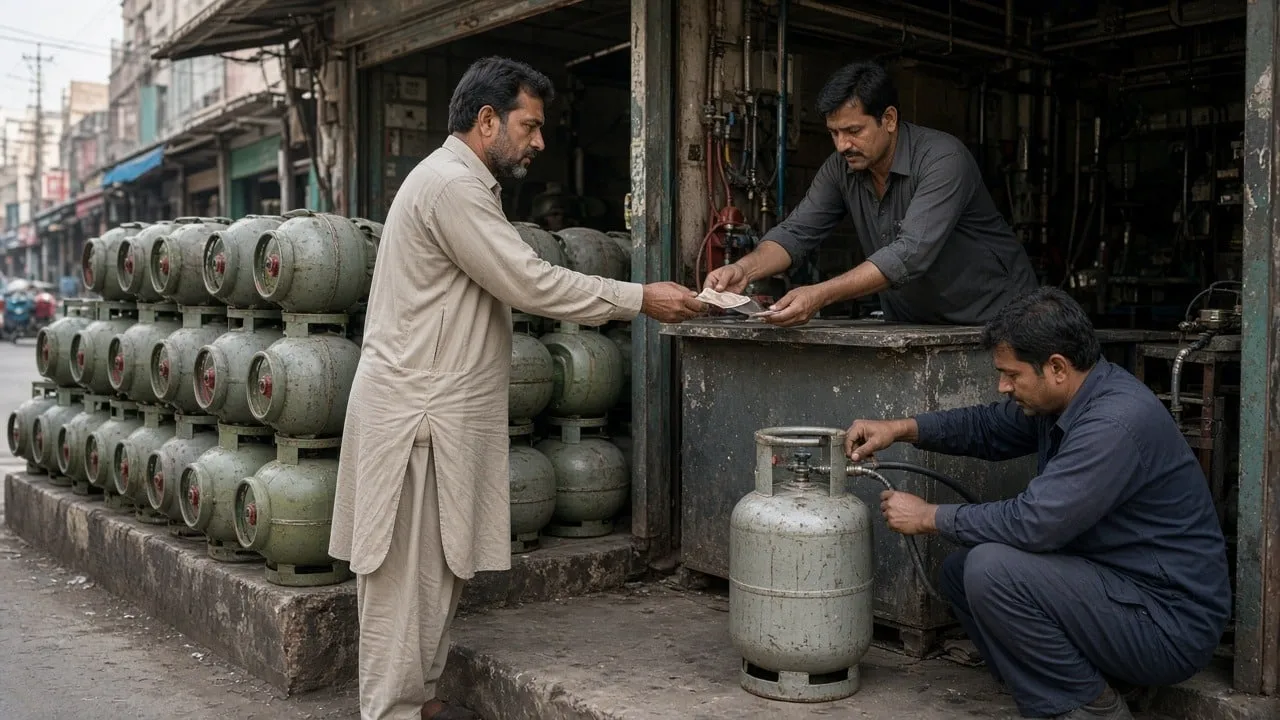
The price of a domestic LPG cylinder in Pakistan jumped 83% in October 2026 compared to the same month last year, making cooking gas the fastest-rising household essential in the country.
According to Pakistan Bureau of Statistics (PBS) Sensitive Price Indicator (SPI) data compiled by Gallup Pakistan Digital Analytics, the 11.67 kg LPG cylinder cost 82.6% more than in October 2025. Onions were the second-biggest gainer, up 69.9%, followed by electricity for consumers using up to 50 units, which rose 57.4%.
Why LPG Prices Have Spiralled
Pakistan imports most of its LPG, and global crude price volatility in 2025-2026 pushed international LPG freight rates higher. Domestic refining capacity has not kept pace with demand, leaving the market dependent on spot purchases that react sharply to world price swings. In addition, the devaluation of the rupee against the US dollar during the fiscal year increased the local cost of each imported barrel.
The government has kept a subsidy on piped natural gas for urban users, but households without pipeline access must buy cylinders at market rates. That structural split means any shock in import costs is felt directly by the majority of low-income families who rely on LPG for cooking.
Fuel and Flour Also Costlier
Petrol (super) cost 45.8% more than a year earlier, while high-speed diesel rose 43.5%. A bag of wheat flour was up 34.3%, and farm broiler chicken 22.4%.
Overall, 36 of the 51 items tracked in the SPI across 17 cities cost more than a year ago, while 12 got cheaper. Fourteen items rose by more than 10%, and the simple average price change across all 51 items stood at 7.6%.
Source: Gallup Pakistan Digital Analytics
LPG Among Biggest Monthly Gainers
Month-on-month, 32 of the 51 items rose in October while 11 fell. The LPG cylinder climbed 14.6% in a single month, behind only broiler chicken at 16.3%, while electricity for up to 50 units rose 12.9%.
Tomatoes (28.4%), bananas (14.8%) and potatoes (8.3%) saw the biggest monthly declines. Onions fell 5.5% during the month but remain 70% above last year's level.
What It Means for Households
The surge hits hardest in homes without piped gas that rely on cylinders for cooking. ProPakistani earlier reported that LPG prices had jumped 80%, as the government weighed a major policy shake-up for the sector.
For a typical family that uses one cylinder per month, the price increase translates into an extra expense of roughly Rs. 3,500-4,000 per month, cutting into food budgets that are already strained by higher wheat flour and vegetable prices. Rural households, which often lack access to electricity-based cooking options, feel the impact even more acutely.
Historical Context of LPG Pricing in Pakistan
Since the early 2000s, Pakistan's LPG market has oscillated between periods of government-imposed price caps and market-driven pricing. In 2019 the Ministry of Energy introduced a temporary ceiling to curb inflation, but the cap was lifted in 2021 when global supply tightened. The current spike is the first time the annual increase has exceeded 80% since the SPI series began in 2015.
Earlier spikes, such as the 30% rise in 2020, were linked to supply chain disruptions caused by the COVID-19 pandemic. The present surge, however, is driven by a combination of external and internal factors, including higher freight costs, reduced refinery output, and fiscal pressures on the national treasury.
How the Sensitive Price Indicator Works
The PBS Sensitive Price Indicator tracks a basket of 51 consumer items across 17 major cities, updating monthly. Items range from energy (LPG, electricity, fuel) to food staples (wheat flour, onions, tomatoes) and other essentials. The SPI uses a simple average of percentage changes, giving a quick snapshot of inflationary pressure on households.
Data are collected by Gallup Pakistan Digital Analytics, which conducts price surveys in retail outlets, markets and online platforms. The methodology ensures comparable data across months, allowing analysts to spot trends such as the current LPG surge.
Potential Policy Responses
The government has several tools at its disposal. One option is to re-introduce a temporary price ceiling on LPG cylinders, as was done during the 2020 pandemic response. Another is to increase subsidies for low-income families, though that would add to fiscal deficits.
Long-term solutions include expanding the domestic refining capacity for LPG, encouraging the development of small-scale LPG plants, and accelerating the rollout of piped natural gas networks to reduce reliance on cylinders.
What Consumers Can Do Now
Households can mitigate the cost impact by adopting energy-saving cooking practices, such as using pressure cookers, batch cooking, and limiting the use of high-heat burners. Some NGOs are promoting solar-powered cookers in remote areas as an alternative.
Consumers should also monitor local market prices, as regional variations exist. In some cities, competition among retailers has kept cylinder prices slightly lower than the national average.
What to Watch in the Coming Months
Analysts will watch the PBS SPI for October-December data to see if the LPG price increase stabilises or continues upward. The Ministry of Energy is expected to release a policy brief on LPG pricing in early 2027, which may outline any regulatory changes.
Internationally, the price of LPG is tied to crude oil benchmarks such as Brent and WTI. Any shift in those markets, especially due to geopolitical events in the Middle East, will likely reverberate in Pakistan's domestic prices.