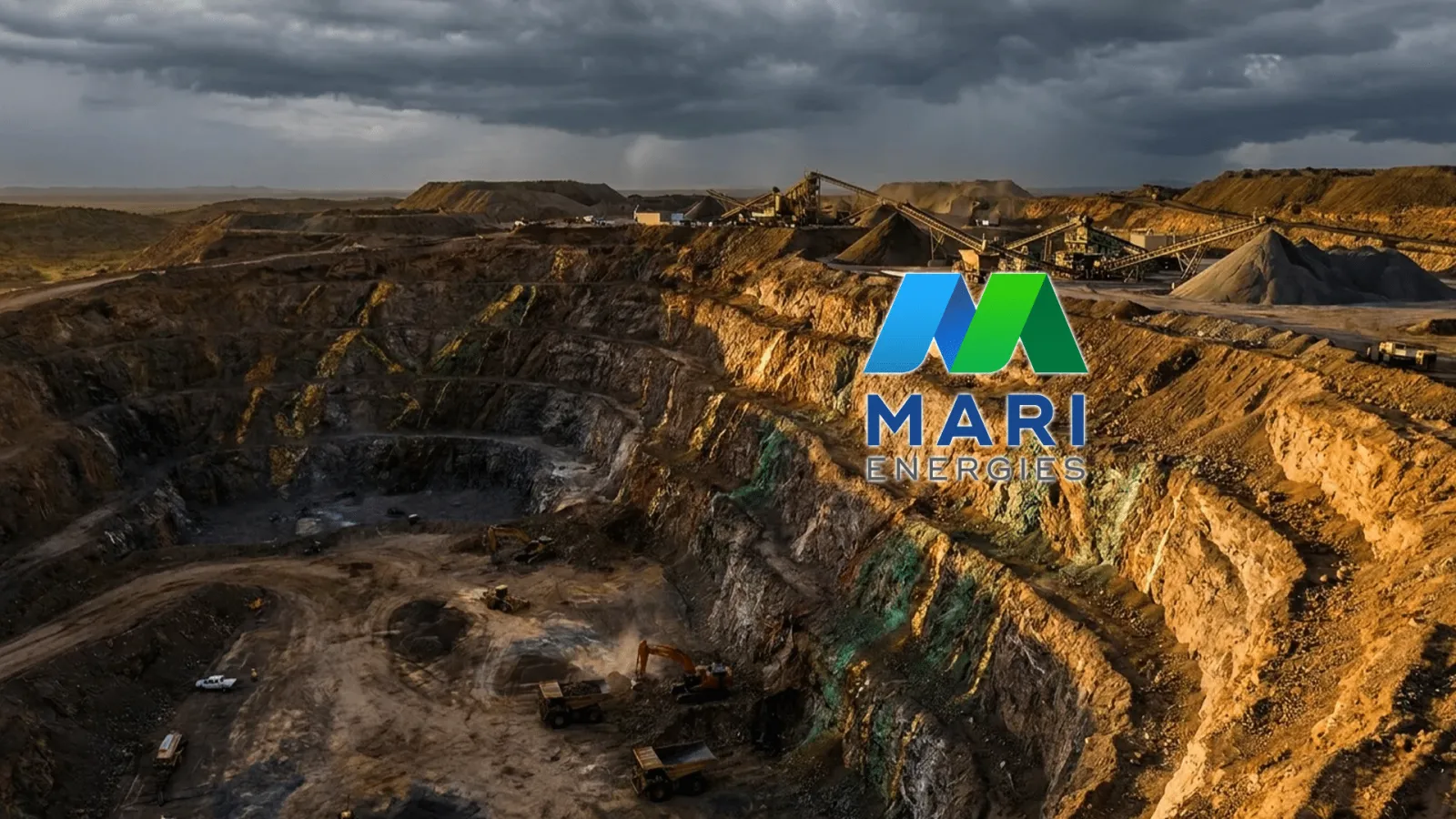
Mari Energies Announces Gold and Copper Discovery Near Reko Diq
Mari Energies Limited has announced a significant copper and gold discovery in Balochistan across an area of approximately 1.4 square kilometres. The finding marks a notable development for the region's mining sector, which has long drawn international attention for its rich mineral deposits. Exploration activities in remote areas of Balochistan often require extensive logistical planning, substantial financial investment, and advanced technical capabilities to locate and verify subsurface resources. The announcement brings fresh focus to the mineral potential of the province, where several large-scale exploration projects are currently underway by domestic and international firms.
The discovery was made at the East Siah Diq (ESD-1) exploration target by Mari Minerals, a wholly owned subsidiary of Mari Energies. The site is located around 50 kilometres east of the Reko Diq copper and gold project and 25 kilometres northwest of Nokkundi. Operating in this arid region presents unique geographic and climatic challenges, requiring specialized drilling equipment and infrastructure development to sustain long-term exploration camps. Subsidiary companies like Mari Minerals function under the parent organization to handle specific resource sectors, allowing specialized teams to manage geological surveys and exploratory drilling operations.
The company has completed approximately 25,000 metres of drilling in two phases, identifying a new porphyry copper system beneath around 100 metres of surface sediments. Porphyry copper systems are large bodies of rock that typically contain large tonnages of low-grade copper ore, often associated with gold, molybdenum, and other valuable elements. Discovering such a system requires deep core drilling to penetrate the overlying sediment layers and analyze the mineral composition at various depths. Geological teams use the core samples to understand the structural geology, mineral distribution, and grade continuity of the deposit before moving to resource estimation stages.
Strong Copper and Gold Grades Found at East Siah Diq
Results from the first phase of drilling show promising copper and gold concentrations. Laboratory assays of core samples provide the precise data needed by geologists to evaluate the economic potential of a mineral prospect. These initial findings help technical teams determine whether the deposit warrants the substantial capital expenditure required for pre-feasibility and full-scale feasibility studies. The presence of both copper and gold in measurable quantities enhances the commercial viability of the project, as joint-commodity mines often benefit from diversified revenue streams.
The strongest copper result came from drill hole ESD-1-DD-017, which recorded 0.50 percent copper over an interval of 400.25 metres, alongside 0.11 grams of gold per ton. Long intervals of consistent mineralization are a key indicator for porphyry systems, suggesting large volumes of accessible ore. Mining engineers analyze these thick intercepts to calculate potential open-pit or underground mining geometries. The depth and width of these intervals dictate how efficiently the material can be extracted once commercial operations begin.
Another drill hole recorded 0.45 percent copper over 392.7 metres, with a gold grade of 0.14 grams per ton. Secondary drill holes validate the continuity of the ore body, ensuring that the mineralization is not isolated to a single narrow zone. Consistency across multiple holes builds confidence in the geological model and guides the placement of subsequent exploratory bores. This iterative drilling process helps define the outer boundaries of the mineralized system.
The highest gold concentration in the first-phase results was 0.19 grams per ton, recorded in two separate drill holes. While gold is typically a byproduct in large porphyry copper mines, even modest grades can significantly improve the project economics. Precious metal credits often offset the operational costs of processing copper ore. Investors closely monitor these gold grades when assessing the overall value of a new mineral discovery.
The mineralization also contains molybdenum, another commercially important mineral used in industrial applications. Molybdenum is frequently found in association with porphyry copper systems and is recovered as a byproduct during ore flotation processes. Its high melting point and strength at elevated temperatures make it essential for manufacturing specialized steel alloys and electronic components. The presence of molybdenum adds another layer of economic value to the East Siah Diq deposit.
Mari Energies said copper mineralization was mainly associated with chalcopyrite, while other copper-bearing minerals were also identified during drilling. Chalcopyrite is the most abundant copper ore mineral and is relatively straightforward to process using standard flotation techniques. Mineralogical identification during core logging helps metallurgists design the chemical processing circuits required to separate valuable minerals from waste rock. Understanding the mineral host is a critical step in planning future extraction facilities.
The company has completed the first phase of testing, while laboratory analysis of samples from the second phase is underway. Results are expected in the first quarter of 2027. Laboratory turnaround times for large batches of drill core can take several months due to the rigorous assaying procedures required for precious and base metals. Geologists use this waiting period to integrate existing data into structural maps and cross-sections.
More Drilling Planned Near Reko Diq
Mari Energies plans to conduct additional drilling to test the mineralisation at greater depths, potentially reaching 1,000 metres below the surface. Deep drilling helps determine whether the porphyry system extends downward or transitions into higher-grade zones often found at depth in similar geological settings. Expanding the vertical scope of the exploration program is a standard procedure for defining the full scale of large mineral systems. Engineering teams evaluate the technical feasibility of extracting ore from deep underground environments if surface mining limits are reached.
The company will also prepare an initial geological model and resource estimate using results from both drilling phases. A resource estimate classifies the deposit into measured, indicated, and inferred categories based on the confidence level of the geological data. This document is a foundational requirement for any mining project, providing stakeholders and regulatory bodies with a standardized account of the in-ground mineral inventory. Preparing the model involves advanced software simulations that interpolate grade data between drill holes to estimate total tonnage and metal content.