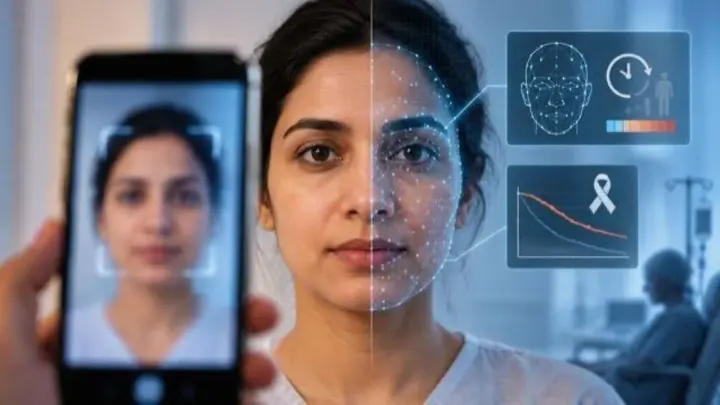
On Thursday, October 22, research published in the scientific journal Science revealed that Microsoft created an artificial intelligence program capable of diagnosing intricate medical conditions up to four times more accurately than generalist doctors during controlled tests.
Named Microsoft AI Diagnostic Orchestrator (MAI-DxO), the platform employs multiple artificial intelligence agents to evaluate symptoms, check medical backgrounds, request examinations, and pinpoint illnesses.
According to Microsoft, the platform reached roughly 83% accuracy for complicated medical scenarios, contrasting with 36% for physicians using reference tools and 22% for those operating without them.
Even so, researchers tested the software strictly on past medical files and have not yet proven identical results within actual clinical environments.
How Microsoft's AI Works
The company built the Diagnostic Orchestrator to operate similarly to a group of medical experts collaborating on patient care.
Rather than offering an immediate answer, the software examines accessible data, weighs potential diagnoses, asks for further tests, and adjusts its findings as fresh details emerge.
The platform runs on OpenAI's GPT-5 architecture and coordinates several artificial intelligence agents that debate each other's conclusions prior to determining a diagnosis.
Additionally, Microsoft created an evaluation framework named Sequential Diagnosis Benchmark (SDBench) to measure how software and physicians diagnose illnesses across multiple steps.
The firm intends to share this benchmark with researchers so they can assess other artificial intelligence platforms.
AI vs Human Doctors
Microsoft tested the platform using 304 complicated medical files published in The New England Journal of Medicine alongside 325 emergency room files from Beth Israel Deaconess Medical Center located in Boston.
The findings demonstrated that the artificial intelligence software outperformed generalist physicians under the examined circumstances.
The artificial intelligence platform proved roughly 3.7 times more precise than physicians operating without references and 2.3 times more precise than those using reference tools.
Regarding emergency room scenarios, the artificial intelligence reached 80% accuracy, whereas physicians achieved 47%.
Microsoft likewise stated that cost-optimized variants of the software managed to reach correct diagnoses while requesting fewer or cheaper tests.
Hospital Testing Planned
Despite these outcomes, Microsoft admitted that additional clinical evaluations are required before widespread implementation of the technology.
The study depended on previously recorded medical files rather than face-to-face patient interactions, and it compared the software against individual generalist physicians instead of specialist groups.
Microsoft aims to launch trials of the Diagnostic Orchestrator inside actual hospital environments through a collaboration with Beth Israel Deaconess Medical Center in Boston.
Dr. Dominic King, who leads Microsoft's artificial intelligence health division, informed The Verge that these trials could begin within the next couple of months.
The studies will investigate the software's performance with real patients and determine whether it can aid physicians during clinical choices.
Microsoft's Medical AI Plans
This study forms a segment of Microsoft's wider initiative to build what the company terms medical superintelligence, which is an artificial intelligence platform capable of surpassing top healthcare groups across various medical duties.
The business thinks artificial intelligence might eventually help with diagnosing illnesses, picking treatments, organizing clinical care, and handling other medical duties.
Mustafa Suleyman, who serves as Microsoft AI CEO, stated that the technology could shift healthcare delivery in the upcoming years.
Nonetheless, he stressed that human physicians ought to stay at the center of patient care, with artificial intelligence assisting in cutting down repetitive tasks to grant medical experts more time with patients.
Microsoft has not shared a release date for the commercial availability of the Diagnostic Orchestrator, and any broader launch must satisfy medical safety, regulatory, and compliance standards.