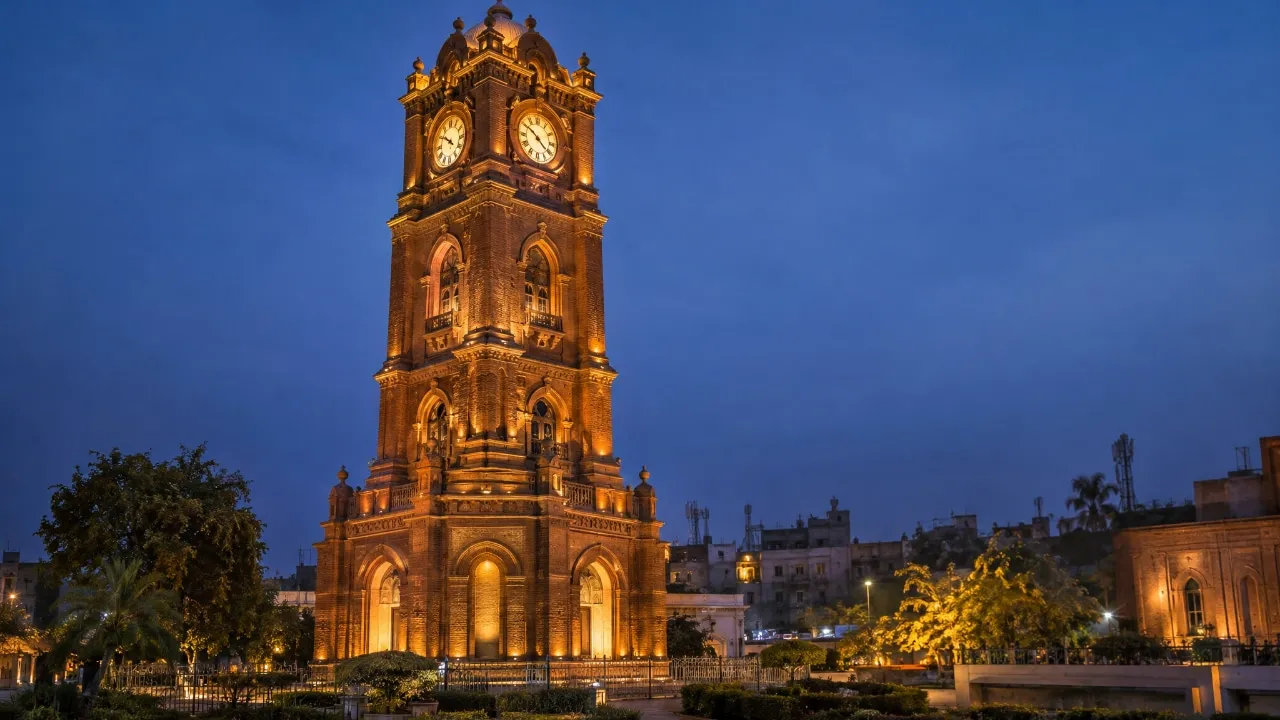
Multan Ghanta Ghar Illumination Project Details
The historic Ghanta Ghar, also known as the Clock Tower, in Multan has received a fresh visual appeal following the completion of a dedicated architectural illumination project. The Punjab Walled Cities and Heritage Areas Authority executed the lighting scheme as part of a wider southern provincial revitalization initiative. Officials stated that the new lights accentuate the structure, bringing out its historic brickwork and arches after sunset.
Constructed in the 19th century, the clock tower serves as a central landmark in the metropolitan area. For decades, the site has stood as a witness to the changing eras of the region. By introducing modern architectural lighting, the authorities have restored its nighttime prominence, making it a focal point for evening visitors and local residents who frequent the commercial and civic core of the city.
Role of the Punjab Walled Cities and Heritage Areas Authority
The Punjab Walled Cities and Heritage Areas Authority operates under specific directives issued by the provincial government of Punjab. The government tasked the agency with the responsibility of overseeing heritage preservation and architectural conservation across various districts. This mandate includes identifying structures of historical significance, securing their physical integrity, and updating their surroundings to better serve the public.
Director General Najmussaqib commented on the institutional mission behind these undertakings. According to the administration, the ongoing projects form part of a structured plan to protect provincial antiquities. "Following the vision of the Punjab government, PWCA is dedicated to safeguarding historic landmarks across the entire province. Illuminating Multan's Ghanta Ghar and upgrading Qila Kohna Qasim Bagh are key steps toward preserving the rich heritage of the City of Saints and boosting cultural tourism for generations to come," said Najmussaqib.
Ongoing Upgrades at Qila Kohna Qasim Bagh
In tandem with the clock tower project, conservation and development work remains active at Qila Kohna Qasim Bagh. This concurrent site involves extensive preservation efforts centered on the historic mound itself. Planners are working to protect the integrity of the elevated ground while simultaneously enhancing the surrounding public spaces for incoming visitors.
Qila Kohna Qasim Bagh represents another critical pillar of the regional heritage portfolio. The development work aims to create a more welcoming environment for tourists and families by improving pathways, green areas, and viewing points. Both the clock tower and the fort site are managed under the same provincial directives to ensure consistent standards of historical upkeep.
Boosting Cultural Tourism in the City of Saints
Multan holds the historical title of the City of Saints, earned through centuries of spiritual and cultural prominence in the region. The recent investments by the provincial administration are designed to translate this heritage into a modern attraction for travelers. Authorities indicated that proper lighting and improved public amenities form the foundation for attracting higher numbers of cultural tourists.
Local businesses, guides, and hospitality providers stand to gain from increased foot traffic around these restored zones. By making the central landmarks visually appealing at night, the city encourages visitors to extend their stay and explore surrounding markets and eateries. The provincial agency maintains that these physical upgrades serve as both a preservation duty and an economic driver for the local community.
Future Outlook for Multan Historic Landmarks
The completion of the clock tower lighting marks a milestone in the current phase of regional development. The heritage authority continues to monitor other structures across the district that require structural stabilization or aesthetic enhancement. Officials have not announced specific dates for subsequent projects, but the overarching provincial program remains active.
Residents and visitors interested in the heritage sector can observe the ongoing changes firsthand at both the clock tower and the fort grounds. The combination of structural conservation and modern lighting sets a precedent for how historical sites in the area may be managed in future phases. The administration continues to evaluate additional locations that fit the criteria for provincial protection and tourism development.