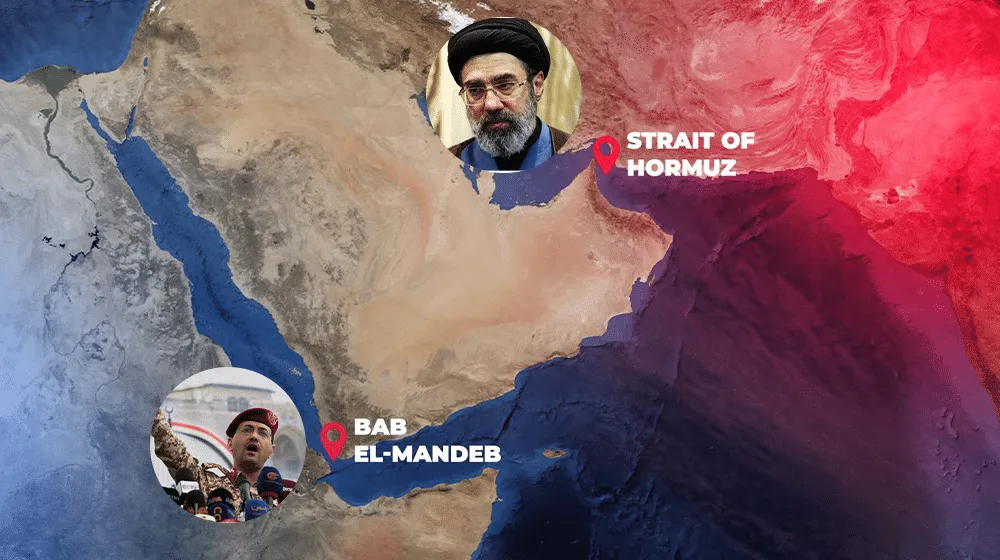
Oil prices fell on Friday, with US West Texas Intermediate (WTI) crude dropping below $81 per barrel as Houthi attacks on Saudi Arabia's capital, Riyadh, raised concerns over regional energy supplies.
At the time of press, WTI was trading at $80.97 per barrel, down $1.47 or 1.78 percent, while Brent crude stood at $90.26, declining $1.72 or 1.87 percent.
What Triggered the Immediate Price Drop?
Reuters reported that Houthi missiles struck Riyadh on Thursday, damaging a tower belonging to Saudi Arabia's Public Investment Fund. Saudi authorities confirmed a missile threat, debris, and property damage. The attack marked one of the few direct strikes on the Saudi capital since the conflict in Yemen escalated in 2015.
In a separate development, Iran's Revolutionary Guards Navy said two oil tankers had struck naval mines in the Strait of Hormuz and caught fire. The Strait, a chokepoint that carries roughly 20 percent of global oil trade, has been a flashpoint for regional tensions for decades.
Why the Market Remains Pressed Despite Supply Concerns
Even with the heightened geopolitical risk, both benchmarks stayed on track for a third consecutive weekly decline. Reuters attributed the pressure to strong Middle Eastern oil exports and crude shipments through the Strait of Hormuz returning to roughly pre-war levels, strengthening expectations of a global supply surplus.
Brent was heading for a weekly decline of around 3.5 percent, while December WTI was set for an almost 6 percent drop, according to Reuters. Analysts note that the surge in non-OPEC production, particularly from the United States and Canada, has offset the risk premium that usually follows Middle-East disruptions.
Background: Houthi Activity and Regional Oil Flow
The Houthi movement, a Yemeni rebel group backed by Iran, has increasingly used missile and drone attacks to pressure Saudi interests. Their missile strike on a Public Investment Fund tower is part of a broader strategy to signal capability and to disrupt Saudi economic assets.
Since the outbreak of the Russia-Ukraine war in early 2022, the Strait of Hormuz has seen a rise in naval mine deployments, often attributed to Iranian forces seeking to deter perceived threats. The reported tanker incidents are the latest in a series of events that have intermittently disrupted traffic through the strait.
How Oil Markets Calculate Weekly Movements
Weekly price changes are calculated by comparing the closing price on the last trading day of the week with the closing price on the previous Friday. For WTI, the December contract closed at $86.30 the week before, making the current $80.97 a decline of roughly 6 percent. Brent's weekly decline of about 3.5 percent follows a similar methodology.
Market participants watch these weekly trends to gauge sentiment. A third straight weekly decline often signals that supply expectations are outweighing short-term geopolitical risk, prompting traders to reduce bullish positions.
Impact on Different Market Participants
For airlines and logistics firms, lower crude prices can translate into reduced fuel costs, potentially improving profit margins. Conversely, oil-producing nations that rely heavily on export revenue, such as Saudi Arabia and Russia, may see budgetary pressure if the price slide continues.
Investors holding oil-related equities, including major integrated majors and independent producers, are likely to see share price adjustments reflecting the price movement. Hedge funds that bet on price declines through futures or options may benefit from the current trend.
What Comes Next? Monitoring Supply and Security Developments
Analysts will watch several indicators for the next price move. First, the volume of oil flowing through the Strait of Hormuz in the coming days will be reported by the International Maritime Organization and commercial tracking services. A sustained increase would reinforce the surplus narrative.
Second, any further attacks on Saudi infrastructure or additional mine incidents could reignite risk premiums, pushing prices higher. Saudi Arabia's defense ministry typically releases daily threat assessments, which market participants monitor closely.
Third, OPEC+ production decisions scheduled for the end of the month will affect the supply balance. If the group decides to cut output, the price decline could be halted or reversed.
Practical Takeaways for Readers
- WTI is currently $80.97 per barrel; Brent is $90.26 per barrel.
- Both benchmarks are on track for a third weekly decline, with December WTI projected to fall almost 6 percent.
- Houthi missile strikes in Riyadh and reported tanker fires in the Strait of Hormuz are the primary headlines, but overall supply remains strong.
- Travelers may see lower fuel prices at the pump if the trend continues.
- Investors should monitor OPEC+ meeting outcomes and Strait of Hormuz traffic reports for the next price direction.
Overall, the market is balancing immediate security concerns against a broader picture of abundant global oil supplies. The next few days will reveal whether risk premiums re-emerge or if the surplus narrative continues to dominate.





