The continuous AI aide, which operates in the background without explicit prompts, is this year's answer to practical deep-learning usage. Instinct's rapid rise and Meta's heavy promotion of its Muse assistant set the stage.
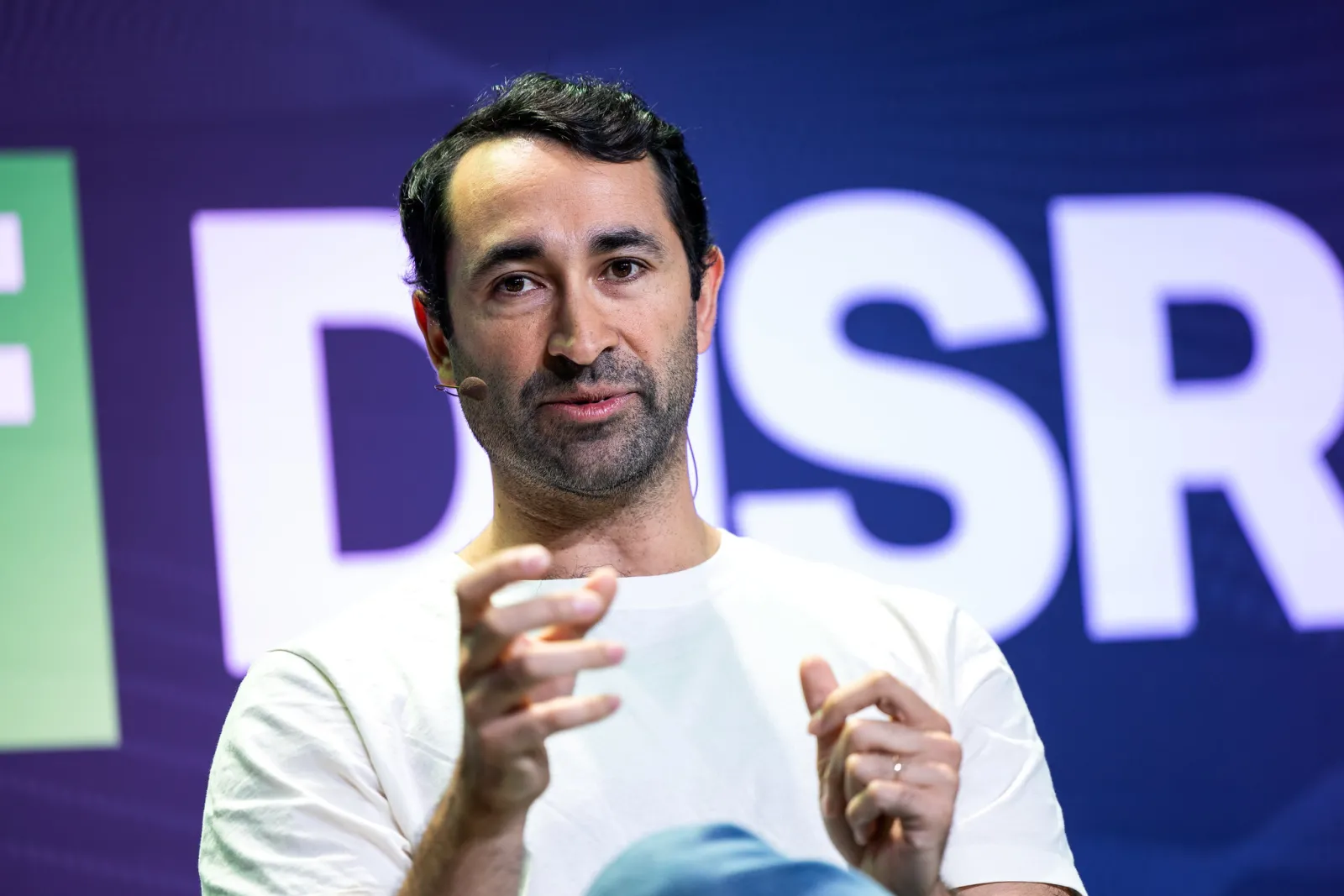
OpenAI responded by debuting "dots" at its developer day in late September. Alexander Embiricos, head of OpenAI's enterprise product team, spoke at TechCrunch Disrupt this month about the origin of the tool and why many firms opt for cute mascots to represent their massive models.
"There's kind of this convergent evolution happening," Embiricos said of the efforts to build AI assistants. "As we were working on the product, we realized if we could frame this as, it's an entity and it's a single conversation, not many different conversations....it starts to become intuitive."
The assistant lives inside the ChatGPT desktop and mobile apps for users on the Pro tier or above, with plans beginning at $100 a month. After linking to a calendar, email, computer and other services, the agent attempts to streamline tasks.
Embiricos notes that much of what dots does could be mimicked with OpenAI's Codex app, released early this year, though that approach demands more manual effort. He recalled celebrating when his spouse began leaving her PC on overnight so her agents could keep working.
"On the product team, what I think about is, how do we make this intuitive and useful to people?" he told Disrupt attendees. "A lot of that isn't building some new piece of tech into the product; it's how you frame it to the user and how it feels."
The shift from chatbot to coding tool to personal aide
Making the technology feel natural required repackaging model capabilities into a more approachable form, a route already taken when ChatGPT Work emerged from the agentic coding utilities built for developers. Even the name, derived from the negative space in OpenAI's logo, was meant "to feel like just something that could eventually be ubiquitous." When asked about Elon Musk's ownership of the dot.com domain, Embiricos replied, "I found out very late."
The concept of a persistent agent means it operates without a prompt. For OpenAI, that translates to higher token consumption; for users, a more proactive helper "that's sort of thinking about you and thinking how to help you," according to Embiricos.
Testing showed the assistant can anticipate needs, though timing isn't perfect yet. It flags calendar clashes and looming deadlines, but not always promptly.
"The first time it told me about one of those [conflicts], this is like early in development, it told me three minutes before the thing," Embiricos says of his dot. "It's like, 'Hey, this thing is coming up. You might want to do something about it.' I only have three minutes!"
Embiricos expects the notice window to improve, emphasizing that a proactive stance is central to the product. He cited an engineer at a drone-delivery startup who said his dot detected an outage, analyzed it, and presented a fix before the engineer even noticed.
Granting dots access
As with many AI agents, there is tension between the personal data needed for usefulness and the amount of information users expose to a company. Meta's Muse faced criticism for building profiles of friends and family to suggest restaurants, raising concerns about advertising value. The question arises whether dots gathers comparable data.
"Yes, we have a thing that we built into dots, which we call proactive research," Embiricos explained. "On a cadence, it will think about what it knows about you, what is the conversation that it's had, and then what have you given it access to that it can think about, and then it will go and research, 'What could I do to be more helpful to you?' And then, basically, it will propose that."
Separating the agent's data needs from its parent company's motives is challenging. Hark, a startup creating its own AI aide, explicitly states it does not harvest data for advertising like OpenAI and Meta allegedly do.
OpenAI says dots inherits the same privacy settings as ChatGPT: users may disable model training, which stops OpenAI from using conversations to improve its systems, and control which computer resources the assistant can reach. Those controls lack fine granularity, and the app can be insistent, for instance, it won't accept read-only cloud-drive access.
"What I think we need to do is basically build out super, super, super granular controls," Embiricos said, adding that the model's intelligence and discretion are the other side of the coin.
"This is actually something we kind of got some flack about when we launched," Embiricos noted. "We had really conservative defaults over what the agent would do, and it would ask for permission a lot. I remember knowing that we were going to see that feedback, but thinking, 'This is okay, we can tune that over time.'"
Can AI assistants scale?
The broader issue is whether such agents can grow beyond early adopters. They are entertaining for a handful of users, and stories of agents securing hard-to-get reservations circulate. Yet many businesses are hesitant to interact with agents, and some people dislike dealing with them, Embricos included. He maintains a human assistant because OpenAI's corporate clients prefer a person, stating, "I personally never intend to have a meeting with someone else's agent."
If agents truly represent the future, the industry must avoid overloading existing infrastructure, businesses, websites, payment networks.
"At OpenAI...we're not always moving the fastest in terms of shipping the next ability for the agent to work with the world," he said. "When we do, we're doing it really closely in collaboration with the rest of the ecosystem. I probably can't say too much here, but we're deep in lots of conversations with payment processors."
Allowing an AI assistant to spend money via payment-processor partnerships could become a lucrative avenue for OpenAI, yet it also represents a major concession for users. Granting email access already feels significant; granting bank-account access remains off-limits, for now.