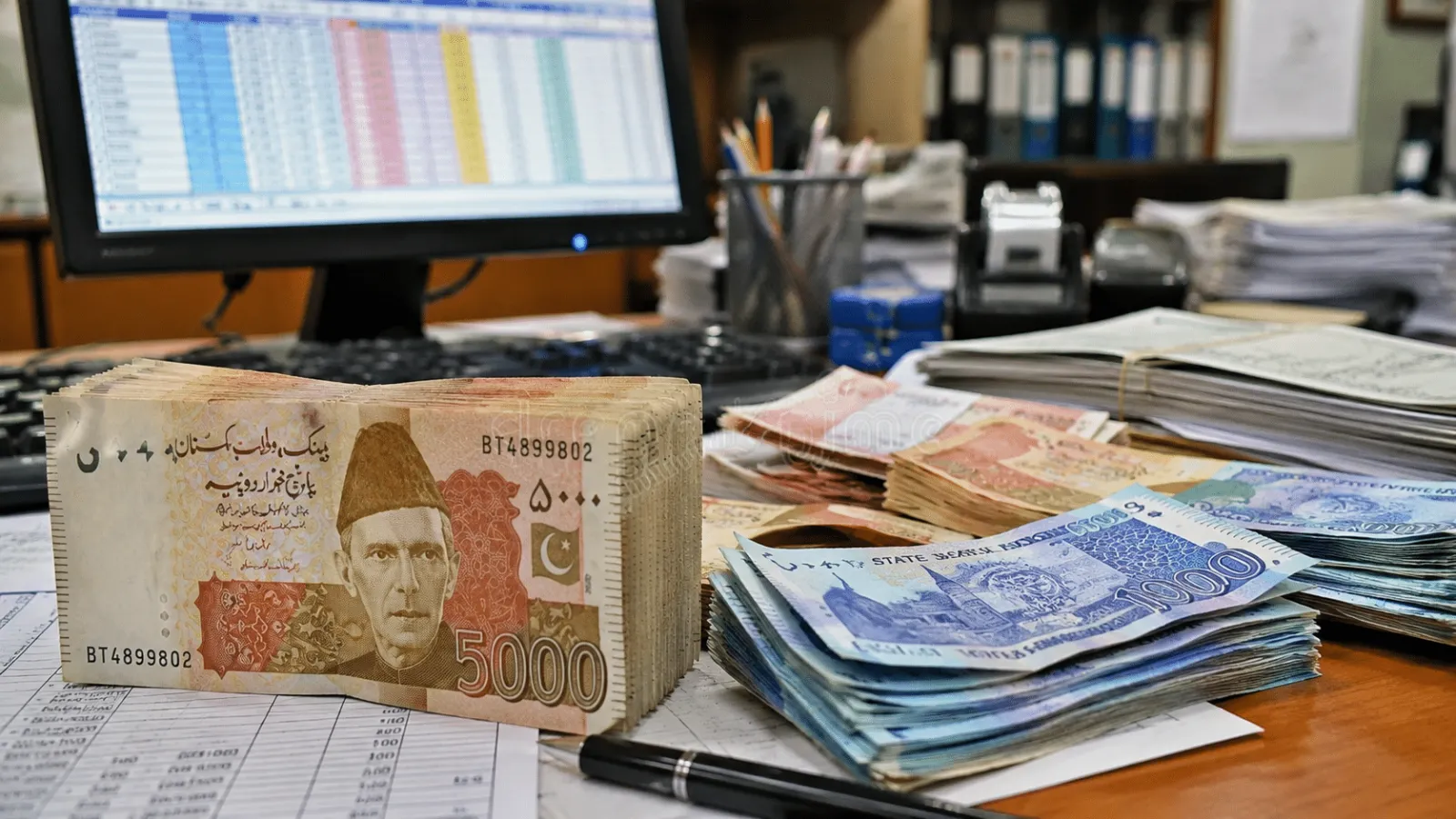
Pakistan Banking Sector Deposits Reach Rs. 40.15 Trillion
Pakistan's banking sector recorded a 14.2 percent year-over-year increase in deposits to reach Rs. 40.15 trillion in October 2026. This milestone highlights the continuous flow of capital into formal financial institutions across the country, even as short-term economic fluctuations cause month-to-month variations. For citizens and businesses parking their funds in commercial banks, the sector continues to expand its aggregate deposit base over longer periods despite modern monetary challenges.
When examining the broader timeline, deposits stood at Rs. 35.15 trillion in October 2025. Although the October 2026 figure represents a solid annual gain, it also reflects a decline of 1.7 percent from the previous month, when deposits peaked at Rs. 40.83 trillion in September 2026. Financial analysts monitor these monthly shifts to gauge liquidity conditions, consumer savings habits, and corporate cash flow movements within the national economy.
Understanding Bank Advances and Lending Trends
Along with deposit growth, bank advances increased 17.4 percent year over year to Rs. 14.51 trillion in October 2026. This compares with Rs. 12.36 trillion recorded in the same month last year. The expansion in advances shows that commercial lenders continue to extend credit to businesses and individuals, fueling various commercial and industrial segments across the country.
On a monthly basis, however, advances declined 5.7 percent from Rs. 15.38 trillion recorded in September 2026. This monthly contraction points toward a cooling period in credit demand or stricter lending evaluations by financial institutions as they manage their portfolios. Borrowers navigating the credit market experienced a temporary dip in loan disbursement during this specific transition from the third to the fourth quarter.
Bank Investments Rise While Borrowings Increase
Banks directed substantial funds toward government securities and other instruments, with total investments reaching Rs. 40.61 trillion in October 2026. This figure represents an 11.1 percent increase from Rs. 36.55 trillion in October 2025. Commercial banks frequently park their excess liquidity in secure government debt, balancing their risk exposure while earning steady returns.
Investments also rose 1.2 percent month over month from Rs. 40.14 trillion in September. This upward movement makes investments the only major banking sector asset category among deposits, advances, and investments to record monthly growth during this period. Meanwhile, bank borrowings increased 10.3 percent year over year to Rs. 16.53 trillion, compared with Rs. 14.99 trillion in October 2025. On a monthly basis, borrowings rose 4.1 percent from Rs. 15.89 trillion in September 2026, showing that institutions actively used external funding lines.
Shifts in Advance to Deposit Ratio and Investment to Deposit Ratio
The banking sector's Advance to Deposit Ratio, commonly known as the ADR, declined to 36.1 percent in October from 37.7 percent in September 2026. The ADR measures how much of a bank's collected deposits are being lent out as loans to the public and corporate sectors. Despite the monthly drop, the ratio remained above the 35.2 percent recorded in October 2025, indicating a slightly higher lending propensity over the twelve-month span.
In contrast, the Investment to Deposit Ratio, or IDR, increased to 101.1 percent in October from 98.3 percent in September. This ratio shows that banks hold investments exceeding their total deposit base, heavily using borrowings or equity to fund government paper. The IDR was lower than the 104.0 percent recorded in October 2025, meaning that while it increased on a monthly basis, it remained below its level from a year ago.
Economic Impact on Commercial Lenders and Borrowers
The combination of rising deposits and heavy investment in government securities shapes the operational strategies of financial institutions in Pakistan. Commercial banks balance their balance sheets by weighing sovereign yields against private sector lending opportunities. When government debt offers attractive returns, institutions frequently prefer investing over extending riskier consumer or corporate loans, influencing overall monetary circulation.
For everyday savers and business owners, these metrics reflect the broader health and caution prevailing in the financial system. Depositors continue to trust formal banking channels with sums exceeding Rs. 40 trillion, providing a stable foundation for the national economy. Observers and market participants will continue tracking upcoming monthly reports to see whether advances recover and how deposit trends evolve through the remainder of the fiscal year.





