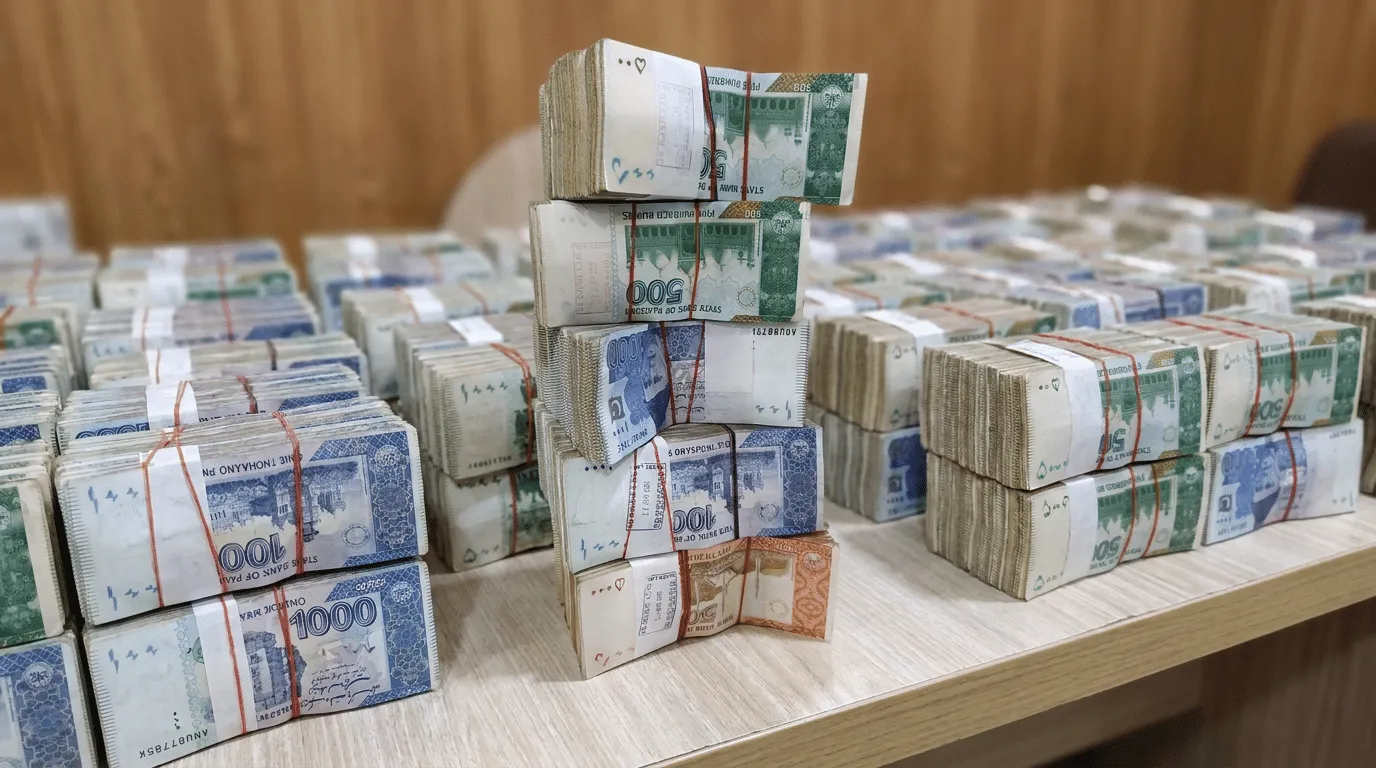
Pakistan Reliance on Cash Economy Fuels Illicit Financial Flows
Pakistan's heavy reliance on cash transactions is contributing directly to illicit financial activity, according to the head of the National Anti-Money Laundering and Counter-Terrorism Authority (NAML&CTA). NAML&CTA Chairman Mushtaq Sukhera delivered this assessment during a meeting of the Senate Standing Committee on Cabinet Secretariat. Lawmakers used the session to raise pressing concerns over tax enforcement, the issuance of money laundering notices to already registered taxpayers, and persistent corruption within the national tax administration.
The reliance on physical currency makes it exceptionally difficult for oversight bodies to monitor and track financial flows across the country. During the briefing, Chairman Sukhera informed the Senate panel that a policy paper proposing a deliberate transition toward a digital economy had already been submitted to the government for consideration. This structural flaw in the financial ecosystem allows illegal funds to move through informal channels without triggering standard regulatory alarms, complicating efforts to clean up the national financial network.
Understanding the Role of NAML and CTA in Pakistan
The National Anti-Money Laundering and Counter-Terrorism Authority acts as a central institutional body tasked with coordinating Pakistan policies against financial crimes. The authority collaborates with various federal and provincial departments to detect, prevent, and prosecute money laundering and the funding of terrorist operations. Its mandate involves reviewing systemic vulnerabilities in the financial sector and recommending legislative or administrative reforms to close loopholes exploited by criminal networks.
Financial transparency remains a critical challenge for the state as it attempts to meet international compliance standards set by bodies like the Financial Action Task Force. Transitioning away from physical cash is widely viewed by specialists as a prerequisite for establishing a transparent financial trail. Physical banknotes allow individuals and businesses to conduct large trades off the books, avoiding formal banking channels where transactions face mandatory reporting thresholds and regulatory scrutiny.
Senators Warn Against Aggressive Enforcement on Registered Taxpayers
During the committee proceedings, lawmakers pushed back against the methods currently employed by tax authorities to broaden the tax net. Senator Dilawar Khan cautioned authorities against adopting aggressive enforcement measures that could unnecessarily burden legitimate taxpayers. He pointed out that money laundering notices were being issued to individuals and businesses already registered with the Federal Board of Revenue (FBR), rather than focusing energy on undocumented sectors.
Senator Khan noted that harassing compliant entities creates deep resentment within the business community and discourages informal operators from entering the formal tax regime. The senator's concerns arrive amid wider public criticism of Pakistan tax administration and the heavy administrative burden faced by businesses operating within the formal economy. Compliant firms often complain that they bear the brunt of revenue collection drives while large segments of the economy remain completely undocumented and untaxed.
Corruption Within Tax Administration and Regional Tax Offices
The parliamentary discussion also touched upon systemic corruption within the tax machinery, exposing deep-seated integrity issues inside key revenue collection offices. Senator Abdul Qadir criticized corruption within the tax machinery, referring to a recent controversy at the Regional Tax Office (RTO) in Lahore involving a dispute over the distribution of bribe money. Incidents of this nature severely undermine public trust in state institutions and sabotage revenue collection targets by allowing corrupt officials to extract illegal payments from taxpayers.
The Lahore Regional Tax Office controversy served as a focal point for lawmakers questioning the internal accountability mechanisms of the revenue board. Senators emphasized that administrative corruption directly sabotages state efforts to implement fair taxation policies. When tax officials engage in bribery and extortion, compliant businesses suffer dual losses through official tax liabilities and illegal demands from corrupt inspectors.
Challenges of Bringing Economic Activity Into the Documented Economy
The broader discussion highlighted deep concerns about the overall effectiveness of tax enforcement, the unfair treatment of compliant taxpayers, and the persistent challenges of bringing more economic activity into the documented economy. Pakistan has historically struggled with a massive undocumented sector, ranging from real estate and retail trade to wholesale markets where cash remains the primary medium of exchange. Informal markets operate entirely outside the view of the Federal Board of Revenue, depriving the national treasury of billions in potential revenue.
Bringing these vast sectors into the documented economy requires a combination of incentives, technological infrastructure, and stringent enforcement against tax evasion. However, as the Senate committee discussion demonstrated, poorly targeted enforcement risks punishing the very people who already support the formal system. Lawmakers and regulators continue to debate the exact balance required to expand the tax base without strangling legitimate commercial activity through bureaucratic overreach.
Next Steps for Digital Policy and Tax Reform
Following the submission of the digital economy policy paper by Chairman Sukhera, the government faces mounting pressure to review its administrative strategies. Policymakers must evaluate the recommendations provided by the National Anti-Money Laundering and Counter-Terrorism Authority to determine how best to curtail cash usage without destabilizing small businesses that rely on physical currency for daily operations. Observers will be watching to see whether the administration adopts concrete legislative steps to digitize financial transactions and whether the Federal Board of Revenue reforms its notice-issuing practices to protect compliant taxpayers from unwarranted scrutiny.