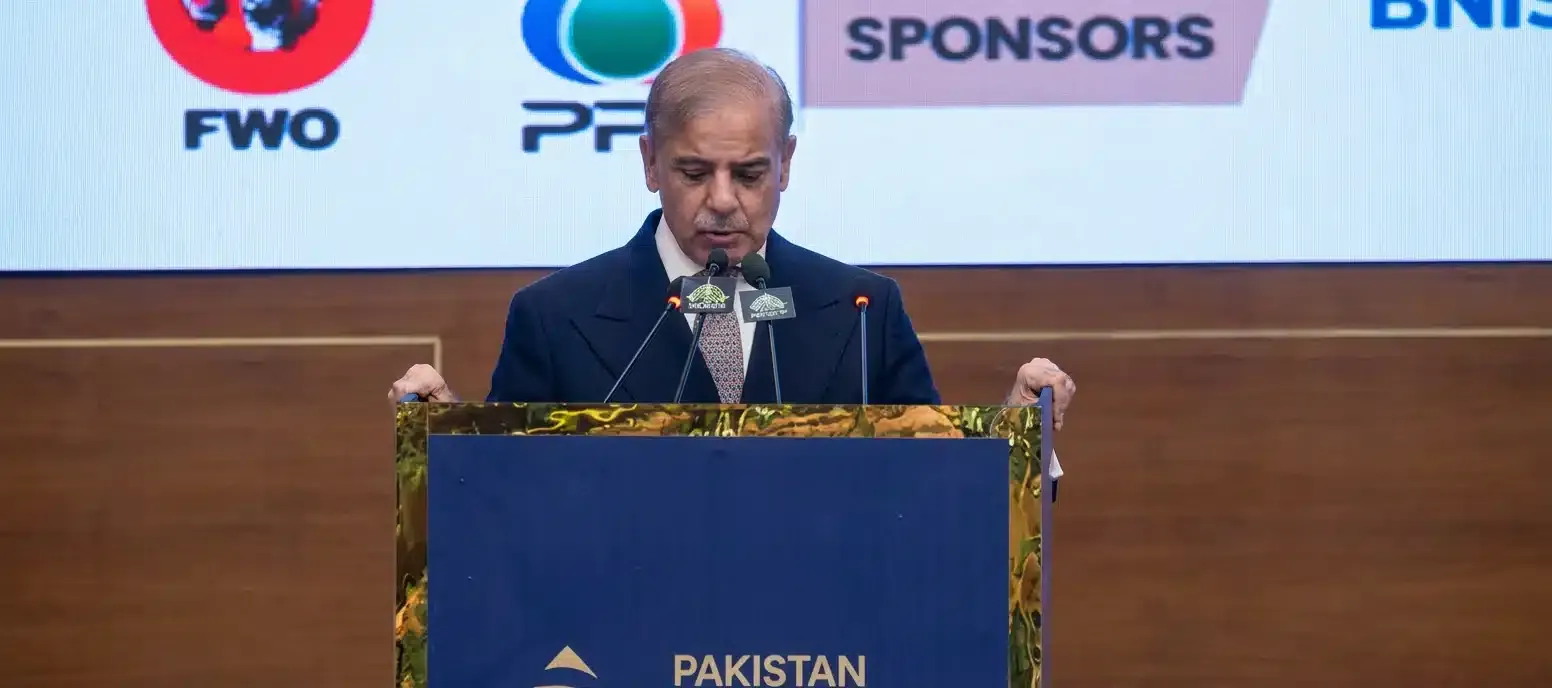
Prime Minister Shehbaz Sharif Challenges Global Economic Forecasts
Prime Minister Shehbaz Sharif stated on Friday that Pakistan will secure its place as the world sixth largest economy before the year 2050. Speaking in Islamabad, the prime minister challenged a well known projection by financial firm Goldman Sachs, which previously estimated that the South Asian nation would reach that specific economic milestone by 2075. The revision aims to bring forward the projected timeline by more than twenty five years.
The announcement came during an address at the Pakistan Mineral Investment Forum 2026 held in the capital city. Government officials, industry leaders, and international investors gathered at the venue to discuss resource development and financial growth strategies. The prime minister used the platform to outline his vision for accelerated national development despite existing fiscal hurdles.
Details From the Pakistan Mineral Investment Forum 2026
The Pakistan Mineral Investment Forum 2026 serves as a key platform for attracting foreign and domestic capital into the country mining and natural resource sectors. During his speech at the event, Prime Minister Shehbaz emphasized the importance of perseverance in national development. He acknowledged that the path to rapid growth involves steep challenges but insisted that continuous effort remains nonnegotiable.
Quoting a philosophy of steady persistence, the prime minister urged citizens and business leaders to maintain their momentum. You should rest a bit but never quit, he stated. That is our philosophy and that will make Pakistan a great country in the economy of nations. He added that taking a brief break when necessary is acceptable, but surrender is never an option for a developing state.
Understanding the Goldman Sachs 2075 Economic Projections
The global financial institution Goldman Sachs regularly publishes long term economic forecasts tracking the future size of gross domestic product across major countries. Earlier models from the firm suggested that demographic shifts and productivity growth would push Pakistan into the upper echelon of global economies by 2075. These traditional projections often rely on baseline assumptions regarding population growth rates, capital accumulation, and technological adoption over multi decade periods.
By aiming for the year 2050 instead, the current administration is signalling a push for aggressive structural reforms and faster industrial output. Officials hope that targeted investments in sectors like mining, agriculture, and manufacturing will compress the timeline significantly. Reaching the top six economies requires sustained high annual growth rates and deep institutional changes.
Path Forward and Economic Challenges Facing Pakistan
Achieving a massive jump in global economic rankings demands a difficult and lengthy journey, a reality that the prime minister openly acknowledged during his remarks. The country has faced persistent macroeconomic imbalances, high inflation, and foreign exchange constraints in recent years. Economic specialists note that transforming growth projections into reality requires consistent policy implementation across successive governments.
The focus on mineral investment represents one strategy to diversify exports and generate domestic revenue. Natural resource extraction and processing can create new employment opportunities and build industrial capacity. Observers will monitor how administrative policies align with the ambitious 2050 target over the coming years.





