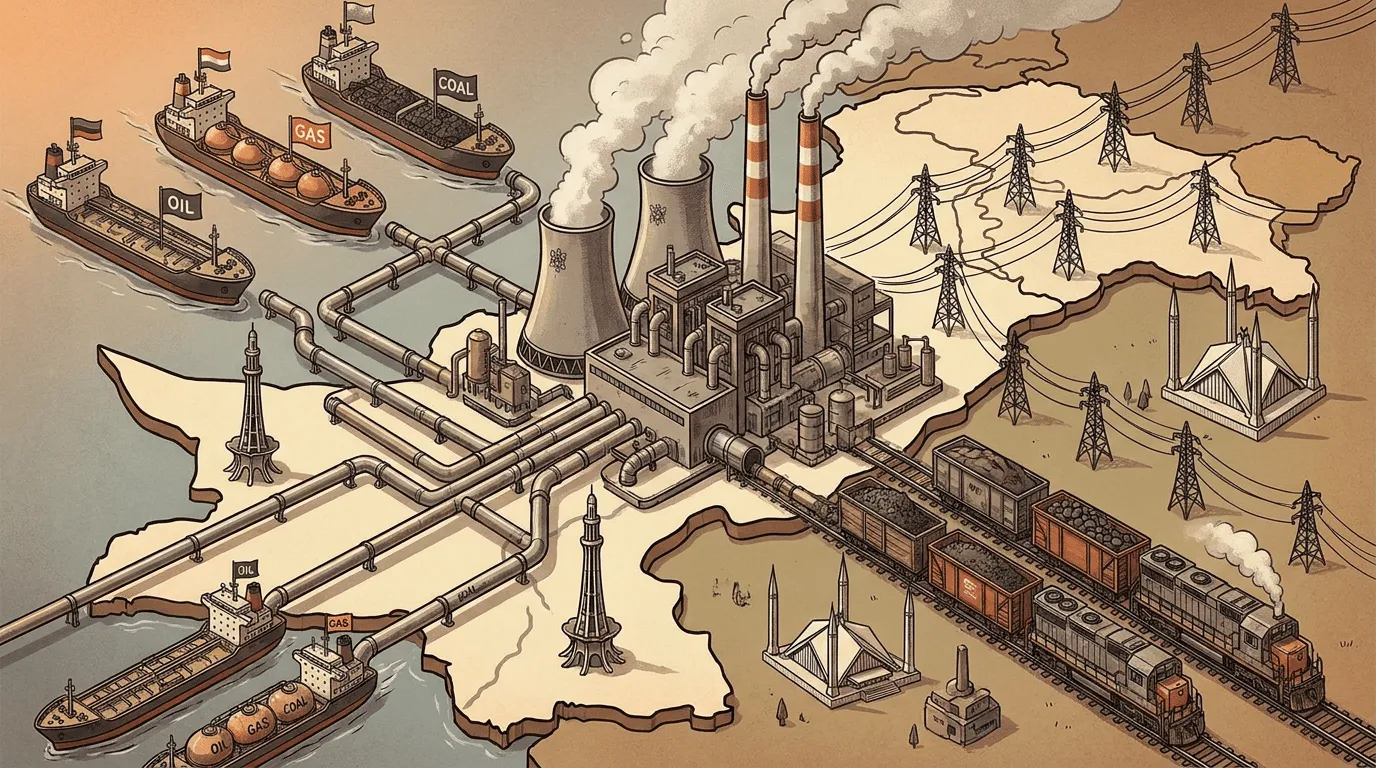
Pakistan Dependence on Imported Fossil Fuels Grows
Pakistan continues to grapple with a rising reliance on foreign energy sources, leaving its financial systems highly vulnerable to global price swings and supply chain shocks. Even as the nation slowly embraces green technology, fossil fuel imports maintain a dominant grip on the national grid and industrial sectors.
According to the Renewables First, Pakistan Energy Market Review, 2026 report, imported fossil fuels reached approximately 34 million tons of oil equivalent in fiscal year 25. This volume represents 41 percent of the total primary energy supply for the country. The figure marks a notable increase from the 37 percent recorded in fiscal year 24, demonstrating that the structural need for foreign energy is expanding rather than shrinking.
Decline in Domestic Oil and Gas Production
The growing reliance on external energy suppliers stems directly from shrinking domestic extraction rates across traditional hydrocarbon fields. Local crude oil production suffered a significant setback, dropping by 12 percent year-on-year in fiscal year 25. Domestic natural gas production followed a similar downward trajectory, registering an 8 percent decline over the same period.
Because domestic extraction cannot keep pace with national demand, refineries inside the country rely heavily on external shipments to stay operational. Imported crude oil accounted for 77 percent of the total feedstock requirements for local refineries during fiscal year 25. This severe supply deficit forces processing plants to depend almost entirely on foreign tankers and international supply routes.
Economic Risks of Foreign Energy Reliance
Heavy dependence on imported fuels exposes the national economy to severe structural risks, including sudden currency devaluation and balance of payment crises. When international commodity markets experience price surges, the cost of generating electricity and powering transport networks climbs instantly. These external shocks drain foreign exchange reserves and force the government to manage difficult fiscal trade-offs.
Supply chain disruptions in global energy markets also threaten the stability of domestic utilities and manufacturing operations. A shortfall in maritime shipments or sudden geopolitical conflicts can interrupt fuel deliveries, leading to power shortages and operational halts for industrial producers. The vulnerability extends across all consumer segments, driving up inflation and increasing the cost of living for ordinary citizens.
Role of Renewable Energy in Energy Security
Industry analysts and sector specialists argue that accelerating the transition toward green energy is the primary method to shield the economy from external shocks. Expanding indigenous renewable energy sources can help reduce this exposure as domestic fossil fuel production continues to decline. Harnessing solar, wind, and other clean power generation assets allows the country to use local resources rather than sending capital abroad for oil and gas purchases.
The Renewables First report emphasizes that shifting away from hydrocarbons requires coordinated policy frameworks and targeted investments in grid infrastructure. While solar and wind installations have gained traction in recent years, integrating these intermittent power sources into the national transmission system remains a complex engineering challenge. Policymakers must balance immediate energy needs with long-term strategic reforms to protect the financial health of the nation.