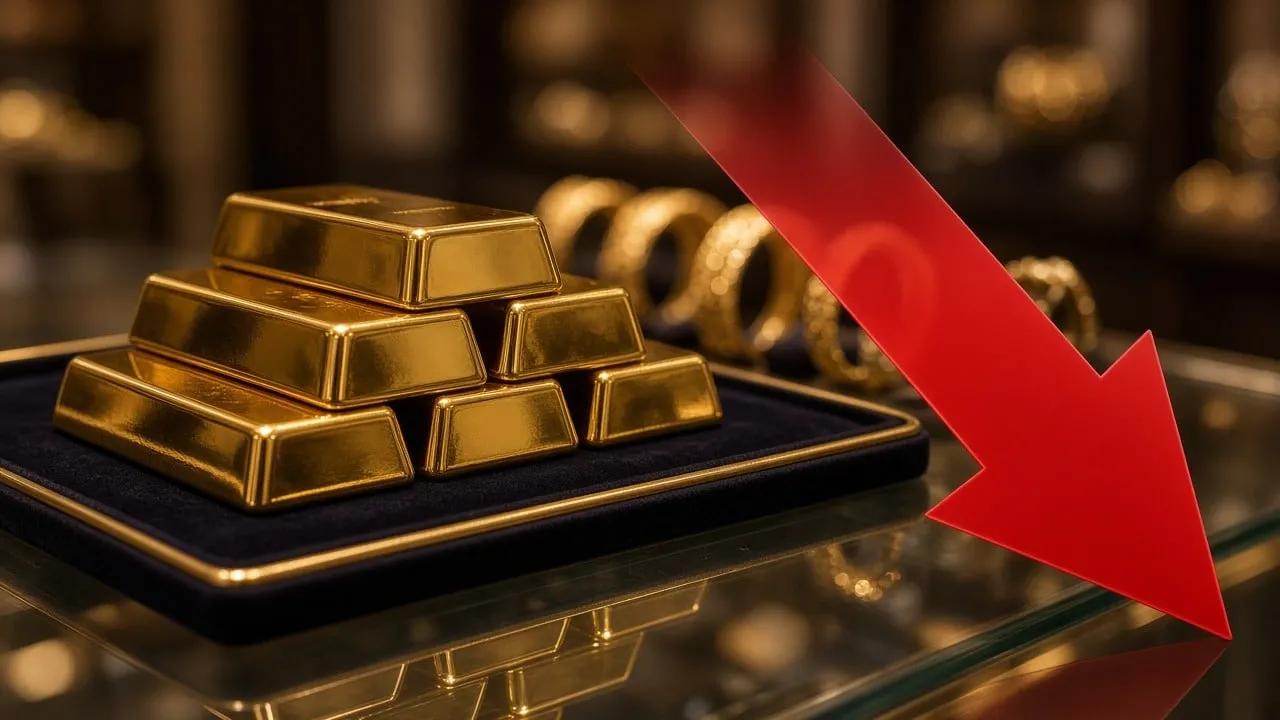
Gold Prices in Pakistan Fall Near Rs. 400,000 Per Tola
Gold prices in Pakistan fell for a fourth straight session on Monday, with 24-karat gold dropping by Rs. 2,000 to Rs. 408,936 per tola. This ongoing downward trend has brought the precious metal close to the psychological threshold of Rs. 400,000 per tola, offering relief to retail buyers who faced record highs just days prior. Local bullion markets have experienced sharp corrections, reflecting both domestic sentiment and shifting dynamics in foreign bullion trade.
According to rates shared by the All-Pakistan Gems and Jewellers Sarafa Association (APGJSA), 10-gram gold also fell by Rs. 1,715 to Rs. 350,596. The latest drop follows a Rs. 700 decline on Saturday, when gold closed at Rs. 410,936 per tola. Since Wednesday's rate of Rs. 427,436, gold has now lost Rs. 18,500 per tola. Earlier reports highlighted an initial slide when gold lost Rs. 16,500 in three days, following a massive crash on Thursday.
International Gold and Silver Market Trends
The local fall tracked the global market, where gold declined by $20 to $3,864 per ounce. Precious metals trade globally in US dollars, meaning local rates in Pakistan are heavily influenced by international spot prices and the exchange rate of the Pakistani rupee against the dollar. When foreign investors sell off bullion or when global economic data points to higher interest rates or stronger currency values abroad, domestic rates usually follow the same trajectory within hours.
Silver also lost ground, falling by Rs. 115 to Rs. 5,228 per tola. Silver typically moves in tandem with gold during broad market corrections, though its lower absolute price point attracts a different tier of retail and industrial buyers across the country. Jewellers and bullion traders monitor both metals closely to gauge the broader health of the precious metals sector.
What the Price Drop Means for Local Buyers
The losing streak has made gold noticeably cheaper for buyers. At Monday's rate, half a tola of 24-karat gold costs about Rs. 204,468. One tola costs Rs. 408,936, down from Rs. 427,436 on Wednesday. Two tolas cost about Rs. 817,872, around Rs. 37,000 less than on Wednesday. These calculations show significant savings for households planning weddings or major family events that traditionally require physical gold acquisitions.
These are APGJSA rates for pure 24-karat gold, but jewellery buyers must also pay making charges on top of the raw metal cost. Goldsmiths calculate making charges based on the intricacy of the design, meaning the final retail price for bangles, necklaces, or sets will exceed the baseline per-tola rate published by the association. Consumers are advised to check certified weight scales and verify making charges before finalizing purchases at local sarafa bazaars.
Understanding the Role of the APGJSA
The All-Pakistan Gems and Jewellers Sarafa Association serves as the primary authority for setting daily bullion benchmarks in the country. Representatives gather market data from major commercial hubs like Karachi and Lahore to determine the official trading rates. These figures ensure uniformity across provincial markets, protecting consumers from arbitrary pricing by individual retail shops.
Sarafa markets have operated under increased scrutiny as economic volatility drives more citizens to store wealth in tangible assets. Gold has historically served as a hedge against inflation and currency depreciation in Pakistan. When prices experience rapid multi-day corrections, trading volumes often spike as buyers step in to purchase the metal at a perceived discount.
Historical Context of Gold Price Volatility in Pakistan
Over recent years, domestic gold rates have broken numerous records, driven primarily by persistent inflation, currency devaluation, and global geopolitical uncertainties. The rapid ascent past Rs. 400,000 per tola marked a historic milestone for the local economy. Sudden corrections, such as the Rs. 18,500 loss recorded over four sessions, illustrate the high volatility that characterizes the precious metals sector.
Investors and everyday savers who purchase physical gold must navigate these sharp price swings. While long-term trends have generally favored precious metals preservation of purchasing power, short-term drops can result in immediate paper losses for those who bought near peak market levels. Financial analysts consistently remind the public that gold should be viewed as a long-term store of value rather than a short-term trading instrument.
What to Watch for in Future Gold Trading
Market participants will continue tracking international economic indicators, including United States inflation figures, central bank interest rate decisions, and geopolitical developments that influence safe-haven demand. Any shift in global investor sentiment away from equities and toward bullion will quickly reverse local downward trends. Conversely, a strengthening dollar or higher bond yields abroad could push international spot prices even lower.
Domestic buyers should monitor daily announcements from the APGJSA before visiting local markets. Because rates adjust every business day based on international market closures and currency fluctuations, keeping track of multi-day trends helps consumers identify optimal windows for purchasing gold or silver for investment or personal use.