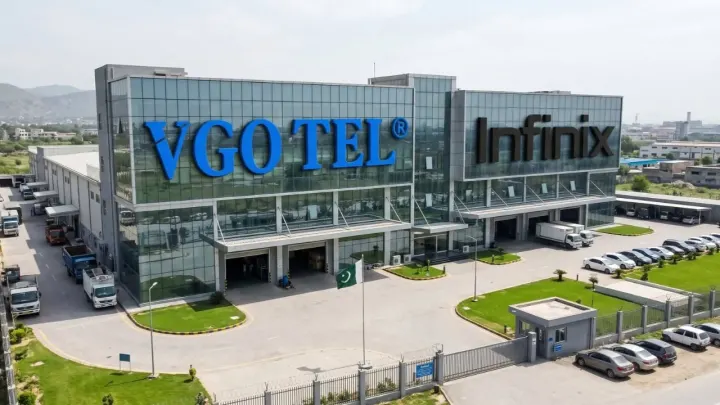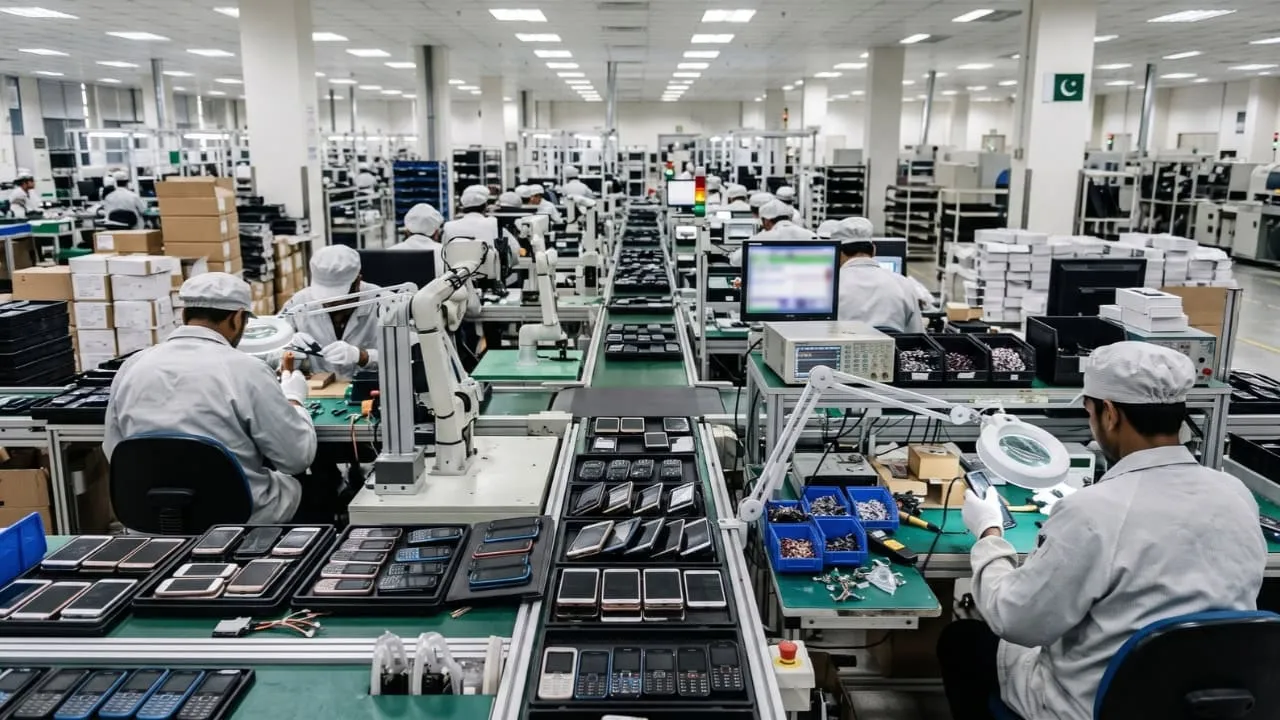
Pakistan's local mobile phone manufacturing and assembly plants produced 23.03 million handsets during January-October 2026. That figure stands at almost six times the 3.85 million units commercial importers brought in during the same period. Consequently, these numbers reflect the growing contribution of domestic production to meeting Pakistan's mobile phone demand.
Overall, the production figures indicate a significant shift toward locally assembled devices. Local manufacturers now produce substantially more handsets than the volume entering the country through commercial imports. According to official data, local manufacturers assembled 2.95 million mobile phones in October 2026. By comparison, commercial imports reached around one million units during the same month.
How Domestic Assembly Surpassed Commercial Imports in Pakistan
The expansion of local assembly plants marks a major turning point for the telecommunications sector in Pakistan. For years, the nation relied heavily on foreign shipments to supply retail shops. Regulatory changes and tariff adjustments altered this dynamic by encouraging international and domestic brands to set up assembly lines inside the country.
Government policies aimed at reducing import bills and promoting industrialization played a central role in this transformation. By imposing strict duties on completely built units while offering tax incentives for knocked-down kits, authorities made local assembly much more attractive for businesses. This industrial strategy created thousands of technical jobs and established a domestic manufacturing ecosystem that now dominates market supply.
Consumers benefit from this shift through wider availability of devices tailored to the domestic budget. Retail prices for locally assembled handsets are often more competitive than imported alternatives. As local facilities scale up operations, supply chains become more reliable, reducing the risk of sudden inventory shortages across major urban markets.
Understanding the Demand for 2G Handsets Versus Smartphones
Of the 23.03 million locally assembled handsets during the first 10 months of 2026, smartphones accounted for approximately 9.62 million units. Meanwhile, 2G handsets made up around 13 million units. Therefore, conventional mobile phones continue to account for a substantial share of domestic production.
However, the composition of locally assembled devices contrasts with mobile phone usage patterns on domestic networks. Specifically, Pakistan Telecommunication Authority data shows that smartphones account for 71 percent of active mobile devices on local networks. In contrast, 2G handsets constitute the remaining 29 percent.
These figures suggest an important trend in the local market. Although smartphones dominate Pakistan's active mobile device base, demand for comparatively basic 2G handsets remains significant. As a result, this demand continues to provide a sizeable market for local manufacturers.
Basic feature phones remain popular across rural communities and among budget-conscious consumers who require reliable voice communication and long battery life. Older demographics and secondary phone users also drive steady purchases of 2G devices. Manufacturers continue to meet this persistent demand even as the broader market transitions toward data-driven handsets.
The Growth of 5G Handset Assembly in Local Plants
Furthermore, Pakistan's local mobile phone manufacturing base is gradually moving toward newer mobile technologies, including 5G-enabled devices. During 2025, local manufacturing and assembly plants produced 553,079 5G-enabled handsets. Additionally, in September 2026 alone, manufacturers assembled 78,463 5G-enabled devices.
Ultimately, these numbers reflect the increasing presence of next-generation mobile technology in Pakistan's domestic production mix. Telecommunication operators and technology regulators continue to lay the groundwork for future network upgrades, prompting assembly plants to prepare for higher volumes of advanced hardware.
Producing 5G hardware locally requires specialized technical skills and upgraded factory equipment. Assembly plants invest in advanced calibration and testing tools to ensure these devices meet international standards. This technical evolution helps local facilities retain relevance as global semiconductor and telecommunication trends shift toward faster data speeds.
Regulatory Framework and Future Outlook for Pakistan Mobile Manufacturing
The Pakistan Telecommunication Authority oversees compliance, type approval, and technical standards for all devices built or imported into the country. Regulatory oversight ensures that locally assembled units comply with safety regulations and network compatibility requirements. Manufacturers must register their assembly lines and submit regular production audits to maintain operational status.
Industry stakeholders monitor monthly output reports to gauge consumer demand and supply chain stability. As commercial imports remain far below domestic production volumes, local plants shoulder the primary responsibility for keeping retail shelves stocked. Market analysts watch for shifts in consumer preferences between basic feature phones and modern smartphones.
Looking ahead, factories face the challenge of balancing high 2G production volumes with the rising demand for sophisticated smartphones and 5G models. Economic conditions, foreign exchange availability for raw material imports, and shifting consumer purchasing power will shape production trends. Local assembly plants must adapt to these economic variables while sustaining the high output levels recorded through the first ten months of 2026.