Pakistan Marketing Services Exports Grow 19 Percent
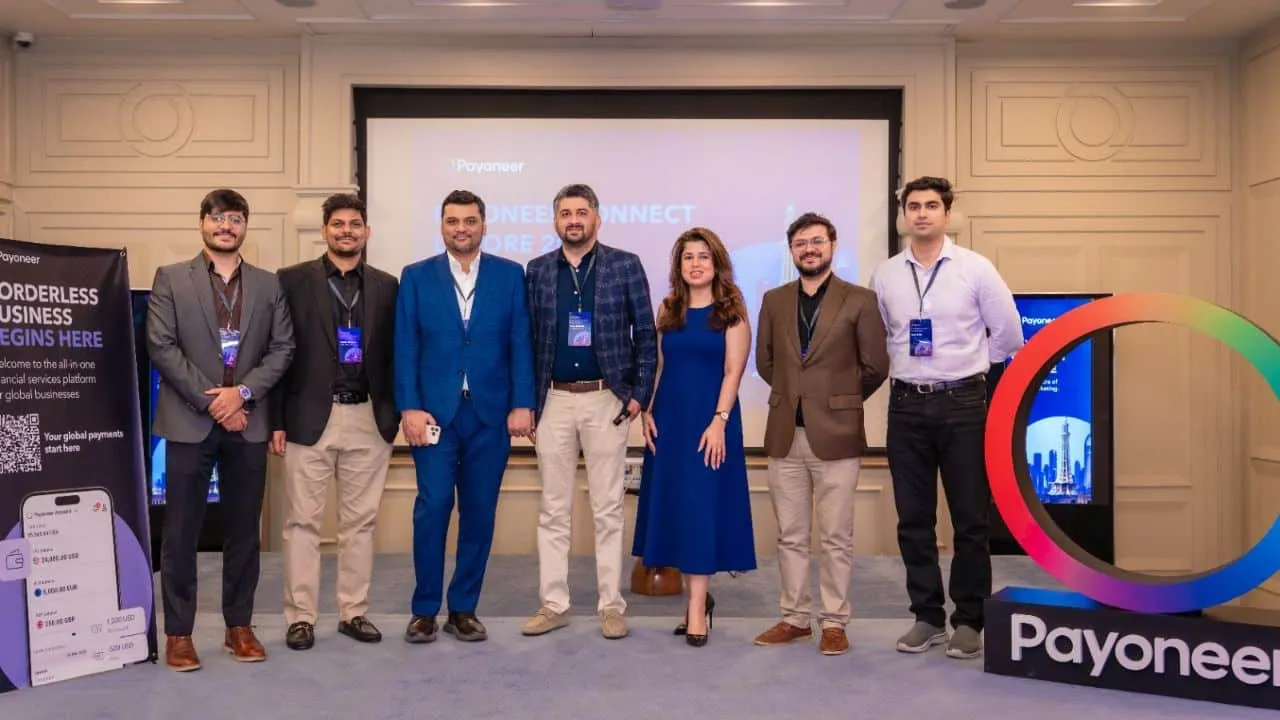
Pakistan recorded a 19 percent year-on-year increase in exports of advertising and market research services during the July to September period of 2026. State Bank of Pakistan data shows that earnings from these specific sectors climbed to $30.7 million, compared to $25.8 million during the same timeframe in the previous year. This financial expansion provided the context for Payoneer Connect Lahore, a gathering where more than 40 marketing agencies assembled to discuss strategies for acquiring international clients and expanding operations globally.
The event, hosted by cross-border financial technology firm Payoneer, adopted the theme 'The Export Era of Global Marketing'. Agency leaders used the platform to network and learn from representatives of the Pakistan Software Houses Association, Google, and artificial intelligence specialists. The discussions focused on how domestic firms can transition from traditional outsourcing models to offering higher-value products and services on the international stage.
Broader Growth Across Professional and Consulting Services
The positive momentum in advertising is part of a larger upward trend across professional services in the country. Wider business services data from the State Bank, a category that encompasses public relations, management consulting, and various technical services, reached $620 million in exports during the same quarter. This broader category represents a 27 percent increase compared to the corresponding period last year, signaling strong external demand for Pakistani professional expertise.
Within this broader category, specific subsectors also posted substantial gains. Exports of consulting and public relations services rose by 22 percent, hitting a total of $81.2 million for the quarter. Industry observers attribute these increases to a growing emphasis on service quality, specialized capabilities, and stronger business connections with overseas markets in North America, Europe, and the Middle East.
Leveraging Artificial Intelligence for Global Expansion
Discussions at the Lahore conference placed heavy emphasis on technological adaptation, particularly the rise of agentic artificial intelligence. A fireside chat featuring Ali Imran Memon, founder and chief executive officer of Kitsune AI, explored whether the local market has reached the limits of standard freelancing and basic outsourcing. The session examined methods for agencies to convert their existing expertise into proprietary artificial intelligence agents and software products instead of relying strictly on billable hours.
The conversation also addressed modern pricing strategies for technology-driven offerings. Panelists and attendees weighed the merits of pricing artificial intelligence services through recurring subscriptions, specific task fees, or outcome-based models. Industry participants noted that artificial intelligence is actively lowering the cost barrier for scaling operations into new international territories, allowing smaller teams to compete globally.
Localization and Google Tools for Cross-Border Growth
Technological enablement formed a core component of the conference agenda, with contributions from major global technology players. The Customer Solutions team from Google demonstrated how modern localization techniques, powered by artificial intelligence tools, can significantly expand cross-border business opportunities for Pakistani companies. By adapting content, marketing messages, and digital storefronts to local nuances abroad, domestic firms can reach foreign consumers more effectively.
These tools help agencies overcome traditional barriers related to language, cultural context, and market research. Industry specialists explained that automated localization reduces the time and expense required to test new international markets. As a result, agencies can pitch to overseas clients with greater confidence in their ability to deliver culturally resonant campaigns.
Policy Advocacy and the 2030 National IT Export Target
Sustaining the current trajectory of digital and marketing services exports requires supportive regulatory frameworks and government cooperation. Samad Saleem, vice chairman of the Pakistan Software Houses Association, addressed this aspect during the conference. He outlined the ongoing policy and advocacy work designed to enable and scale Pakistan's digital services exports in the coming years.
These advocacy efforts align with broader national economic objectives. The government has established a target of reaching $15 billion in information technology and digital services exports by 2030. Industry associations are working closely with public sector authorities to resolve tax issues, improve internet infrastructure, and ease cross-border financial transactions to ensure that marketing and technology agencies can meet this ambitious national goal.