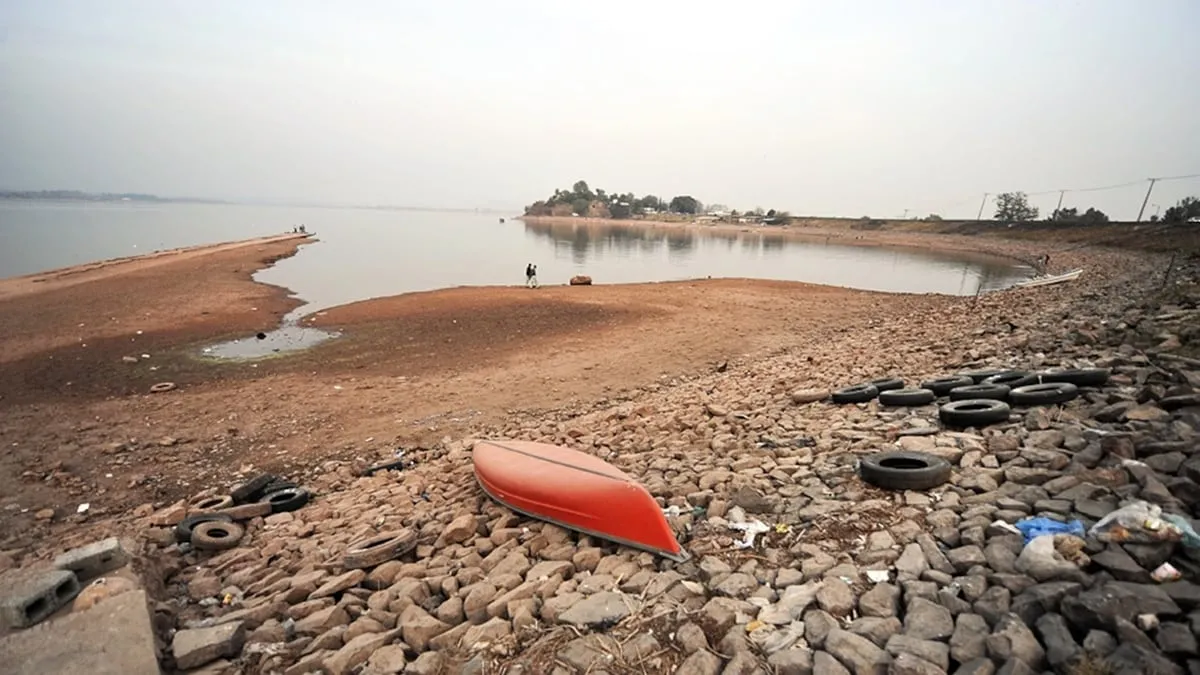
The Pakistan Meteorological Department (PMD) has warned that drought conditions could persist into early 2027 in Sindh, Balochistan and southern Punjab, raising concerns about water shortages and agricultural production.
In its latest drought watch report, PMD said the three regions have experienced prolonged rainfall shortages since July, with normal to below-normal rainfall expected between December 2026 and February 2027.
What the PMD Drought Watch Report Shows
The department's data indicate that Sindh recorded rainfall deficits of 61 percent in July, 22 percent in August, 90 percent in September and a full 100 percent shortfall in October. Rainfall during the first 20 days of November remained 99 percent below normal.
Balochistan also suffered severe shortages, with rainfall falling 41 percent below normal in July, 12 percent in August, 68 percent in September and 80 percent in October. The province recorded a 79 percent deficit during the first 20 days of November.
Why the Drought Threat Matters for Pakistan
Pakistan's agrarian economy depends heavily on seasonal rains, especially in the Indus Basin where the three provinces contribute a large share of wheat, rice and cotton output. Prolonged dry spells reduce soil moisture, lower groundwater recharge and force farmers to rely on costly irrigation.
Winter crops such as wheat and barley are particularly vulnerable because they are sown in November and harvested in March. A deficit in soil moisture at sowing time can cut yields by 15-30 percent, according to the Ministry of National Food Security and Research.
How the Drought Develops: Meteorological Background
Since July 2023, the South Asian monsoon has been weaker than average, a pattern linked to higher sea-surface temperatures in the Arabian Sea and the Indian Ocean. The weakening reduces the amount of moisture carried inland, leading to below-normal precipitation across southern Pakistan.
Climate models from the Pakistan Climate Change Authority project suggest that the frequency of such dry monsoon phases could increase as global temperatures rise, making multi-year droughts more common.
Impact on Water Resources and Communities
Surface water bodies such as the Indus River and its tributaries rely on monsoon runoff. With rainfall deficits exceeding 80 percent in several months, river flows are expected to drop, limiting water for both irrigation canals and municipal supply.
Groundwater extraction is already high in Sindh and Balochistan. The PMD report warns that continued dry conditions could further depress water tables, raising the risk of salinity intrusion and long-term depletion.
Vulnerable communities that depend on rain-fed agriculture, particularly smallholder farmers in the Thar Desert fringe of Sindh and the Kharan region of Balochistan, face heightened food insecurity and loss of livelihood.
Government and Institutional Response
The federal Ministry of Climate Change has previously launched the "National Drought Management Plan" which outlines early warning, water-conservation measures and emergency relief. The PMD's latest warning triggers the activation of the plan's monitoring cell.
Provincial authorities are urged to distribute drought-resilient seed varieties, promote drip-irrigation, and expand community water-storage projects such as check-dams and underground cisterns.
What Residents and Farmers Can Do Now
Farmers are advised to test soil moisture before sowing, consider planting shorter-duration wheat varieties, and explore supplemental irrigation from existing canal networks where water is available.
Households in affected districts should conserve water, repair leaks, and store rainwater where possible. Local NGOs are coordinating distribution of water-purification tablets and low-cost water-storage kits.
What Comes Next: Monitoring and Forecasting
PMD will release monthly updates on rainfall, soil moisture and groundwater levels through its online portal. The next formal drought watch is scheduled for December 2026, covering the critical winter period.
Stakeholders are advised to watch for the release of the "Winter Water Availability Bulletin" in early December, which will detail expected river flows and reservoir stocks.
While the report does not predict an outright famine, it emphasizes that without preventive action, the cumulative effect of reduced water availability could strain food supply chains and increase reliance on imported grains.
Authorities, NGOs and the private sector are therefore expected to coordinate relief measures, prioritize water-saving technologies and seek international assistance if the drought deepens.