Pakistan Minerals Investment Forum 2026 Concludes With Major Copper Finds And 13 Deals
The Pakistan Minerals Investment Forum 2026 concluded in Islamabad last week with a clear national directive. Pakistan now aims to turn its mineral potential into commercially viable projects, stronger partnerships, and lasting economic value.
The Government of Pakistan organised the two-day event on November 12 and 13. Meanwhile, the Special Investment Facilitation Council endorsed the forum, and Oil and Gas Development Company Limited served as its founding partner. Together, they welcomed more than 10,000 visitors from over 60 countries. The audience included government leaders, investors, mining companies, technical experts, service providers, and international institutions. Consequently, Pakistani and international companies signed 13 agreements and memorandums of understanding during the forum.
What Were the Major Mineral Discoveries Announced at PMIF26?
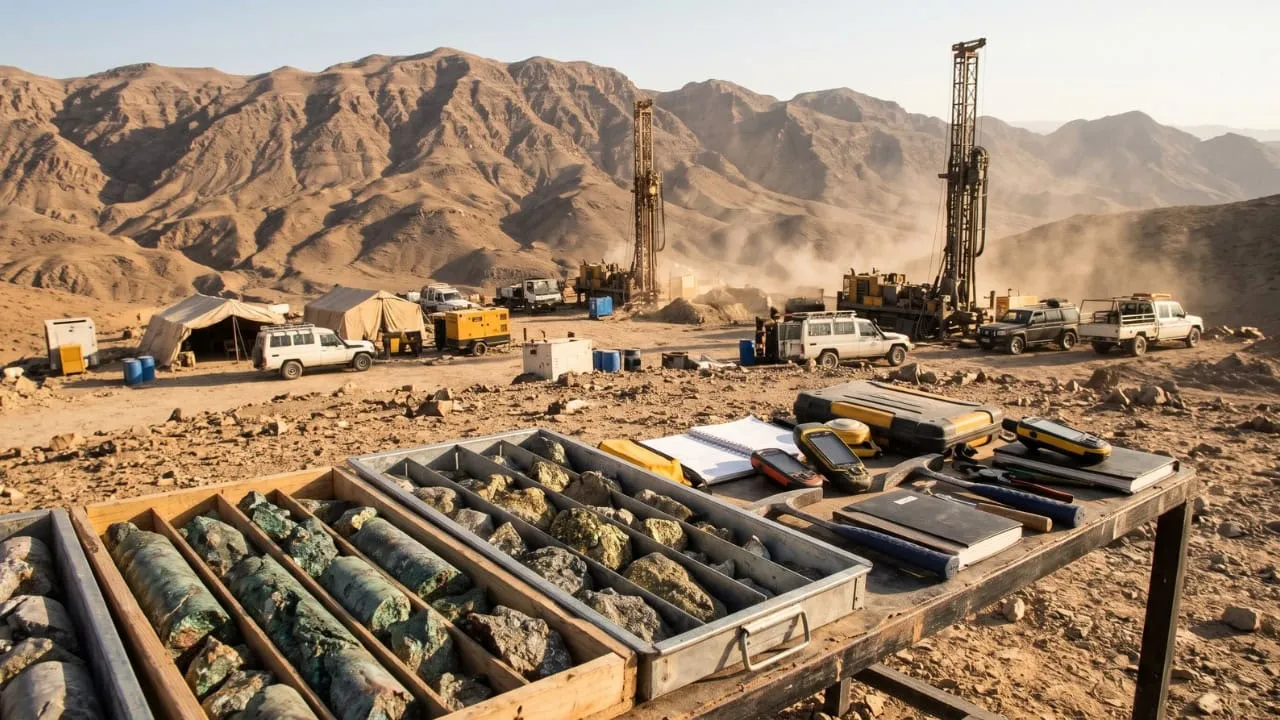
Exploration announcements quickly took centre stage at the event. First, the Frontier Works Organisation reported an estimated 350 million tonnes of copper in the Dasht-i-Kain area of Balochistan's Chagai district. The organisation based this figure on an analysis of roughly half of its drilling data.
In addition, Mari Minerals announced a significant gold and copper discovery in Chagai. Similarly, National Resources Limited reported copper and gold mineralisation across at least eight porphyry discoveries in the same district. Furthermore, National Resources Limited announced a $100 million investment commitment in Pakistan's mineral sector. The company also invited domestic and international investors and service providers to explore emerging opportunities.
Beyond Chagai, Federal Minister for Energy Ali Pervaiz Malik detailed broader national prospects. He highlighted copper and gold reserves in Chagai and western Balochistan. Moreover, he pointed to lithium, tin, and tungsten in Gilgit-Baltistan, alongside antimony and base metals in Khyber Pakhtunkhwa. He also outlined government efforts to strengthen geological mapping, modernise exploration, and improve access to reliable data. To support this goal, the event marked the launch of the National Minerals Data Centre and the Geological Survey of Pakistan GeoPortal.
How Are Government and Military Leaders Ensuring Mining Security?
Throughout the forum, Pakistan's leadership pushed for a shift away from exporting raw minerals. Instead, officials urged stronger domestic processing, refining, and manufacturing capabilities to export refined minerals and finished or semi-finished products.
Addressing attendees, Prime Minister Muhammad Shehbaz Sharif invited global investors to explore Pakistan's mineral wealth. He assured them of full government support and investment protection. The Prime Minister declared that safety is a top priority for all incoming capital.
Your safety is our safety.
Additionally, he called for local processing facilities to create jobs, build technical expertise, and enable technology transfer across the industrial landscape.
Meanwhile, Chief of Army Staff and Chief of Defence Forces Field Marshal Syed Asim Munir pledged security across the entire mining ecosystem. He assured attendees that Pakistan is taking all possible measures to protect mines, miners, investments, industries, projects, and all associated people. Furthermore, Field Marshal Munir described harnessing Pakistan's mineral wealth as a collective national objective. He stressed that Pakistan seeks long-term partnerships that develop the entire value chain and create sustainable economic value. Therefore, he urged the country to move from potential to productivity, from promises to action, and from raw exports to value-added growth.
What Role Do Technology and Policy Reforms Play in Pakistan Mining?
The conference combined strategic and technical sessions with an international exhibition. At the exhibition, Pakistani and foreign companies and technology providers showcased their expertise, technologies, and services while building business connections. At the same time, the technical conference examined geological assessment, mineral exploration, artificial intelligence, processing technologies, and sustainable mining.
Policy and infrastructure also dominated the agenda. International participants shared global industry perspectives on power and water supplies, transport networks, environmental and social standards, predictable policies, and transparent regulations. Alongside this, a government dialogue on investor-ready mining jurisdictions focused on policy reforms, regional cooperation, local content, skills development, and long-term industrial growth.
In his closing remarks, PMIF President and Oil and Gas Development Company Managing Director and Chief Executive Officer Ahmed Hayat Lak highlighted a new national minerals capability development programme. The company launched the initiative with Wood Mackenzie to strengthen professional skills, institutions, and industry standards. Moreover, Lak noted that federal and provincial governments, local firms, and global partners have strengthened coordination to drive sustained growth.
What Are the Next Steps and Goals for the Mineral Sector Toward 2027?
Turning momentum into measurable results now stands as the primary task ahead for state planners and private partners. Officials emphasize that signed memorandums must translate into ground-level operations.
Lak set a strict benchmark for judging the success of the recent gathering. He noted that future evaluations will depend entirely on tangible outcomes rather than initial paperwork.
The true measure of PMIF26 will not be the number of discussions held or agreements signed, but the partnerships advanced, projects developed, and investments ultimately realised. Pakistan's mineral wealth is a gift of nature. Transforming it into lasting prosperity is our collective responsibility.
Finally, Lak invited global participants to return for the next edition in November 2027. The 2026 event placed Pakistan's mineral wealth firmly on the global map and built a platform for collaboration.





