Pakistan Minerals Investment Forum 2026 Opens in Islamabad
Pakistan has brought together participants from more than 60 countries for its Minerals Investment Forum 2026 in Islamabad as the government seeks international partnerships to develop the country's mining sector. Deputy Prime Minister Ishaq Dar announced the international participation while addressing the opening session of the two-day forum on Thursday.
The event brings together international mining companies, investors, financial institutions, policymakers, and industry representatives to explore opportunities in Pakistan's mineral sector. Dar said the participation reflected growing international interest in Pakistan's mineral resources and the government's efforts to establish long-term investment partnerships.
Government officials expect this high-level gathering to bridge the gap between foreign capital and domestic resource holders. By drawing experts from diverse regions, the administration hopes to showcase the untapped potential buried across different provinces. The forum serves as a direct platform for networking, negotiations, and initial agreement signings between global firms and local authorities.
What Minerals Are Available for Foreign Investment?
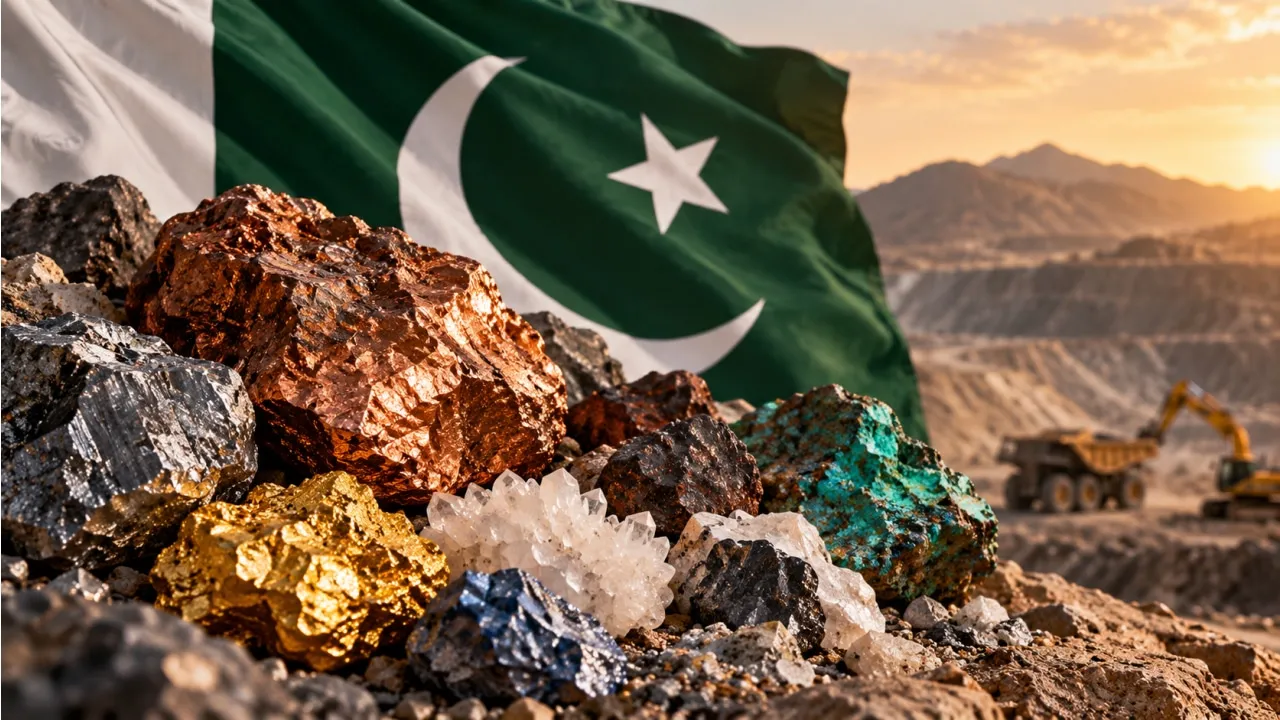
Pakistan is seeking foreign investment across its copper, gold, iron ore, chromite, lead, zinc, marble, gemstones, and other mineral resources. These geological assets remain largely under-developed due to historical constraints in advanced machinery, technical skills, and large-scale capital allocation. Opening these fields to outsiders marks a shift in national economic strategy.
Regions rich in these commodities span multiple provinces, each holding distinct geological profiles. Copper and gold deposits, notably in the western regions, require massive upfront capital and specialized extraction techniques. Meanwhile, marble and gemstone reserves in the northern zones offer opportunities for smaller-scale commercial processing and export enhancement.
The government is also encouraging international companies to bring technology, technical expertise, workforce training, and access to global markets. Bringing in advanced technology helps minimize environmental degradation and maximizes recovery rates during extraction. Workforce training programs ensure that local citizens gain high-paying technical skills, fostering sustainable regional development alongside corporate profits.
International Partnerships and Diplomatic Economic Channels
Dar highlighted economic cooperation with China, the United States, Saudi Arabia, Gulf countries, Turkey, Azerbaijan, Central Asian states, and European partners as potential channels for greater investment and industrial collaboration. Each of these foreign partners brings unique strengths, ranging from heavy industrial machinery manufacturing to vast sovereign investment funds capable of funding multi-billion-dollar infrastructure projects.
China has long maintained a strong presence in regional infrastructure and resource extraction through previous bilateral frameworks. Meanwhile, Gulf nations like Saudi Arabia increasingly look toward South Asia to diversify their economic portfolios away from pure oil dependency. Western and European partners often bring stringent environmental standards and advanced corporate governance practices that benefit modern mining operations.
Diplomatic channels remain active as delegations hold closed-door meetings to discuss specific regulatory frameworks and tax incentives. Building trust between foreign entities and local regulators requires transparent policies and reliable legal protections. Officials use these bilateral discussions to address investor concerns regarding repatriation of profits, security, and bureaucratic hurdles.
The Role of the Special Investment Facilitation Council
The forum is being organised by the federal government in collaboration with the Special Investment Facilitation Council (SIFC), the Ministry of Energy's Petroleum Division, and other relevant institutions. The SIFC operates as a central coordinating body designed to cut through bureaucratic red tape and speed up project approvals for foreign investors.
By streamlining administrative procedures, the council aims to create a single-window operation for mining licenses and regulatory clearances. This institutional backing reassures foreign entities that their capital commitments receive top-tier government support from inception to commercial production. Collaboration between federal and provincial bodies ensures that regional administrative hurdles do not stall vital projects.
The government aims to use the event to connect international companies with provincial administrations and local businesses and turn investment discussions into long-term commercial projects. Transitioning from memorandum signings to operational mines requires sustained cooperation and continuous dialogue between all stakeholders involved in the value chain.
Background and Historical Context of Pakistan Mining
For decades, Pakistan possessed immense geological wealth that contributed a relatively small fraction to the national gross domestic product. Historic challenges included remote geographic locations of mineral deposits, lack of roads, and insufficient electrical grid connectivity. Past attempts to attract foreign mining giants often faced legal disputes and prolonged arbitration processes.
Recent legislative reforms at both federal and provincial levels have sought to modernize mineral governance codes. These updates clarify ownership rights, royalty distributions, and environmental compliance mandates. The current administration builds upon these legal foundations to present a more predictable and investor-friendly landscape for global corporations.
International mining houses closely monitor security measures and infrastructure developments near major mineral belts. Improved transport links, including railway expansions and dedicated freight corridors, remain essential for moving heavy bulk commodities from inland extraction sites to coastal ports for export.
Impact on Local Businesses and Regional Economies
Local businesses in regions such as Balochistan, Khyber Pakhtunkhwa, and Sindh stand to gain through supply chain integration and ancillary service provisions. Mining operations require food services, transport logistics, equipment maintenance, and housing infrastructure, creating secondary economic booms in rural areas.
Provincial governments anticipate higher royalty revenues that can be reinvested into local schools, hospitals, and public utilities. Ensuring community participation and fair compensation for land use helps mitigate local grievances and fosters social harmony around major industrial installations.
Small and medium-sized enterprises in the domestic manufacturing sector can also supply basic tools and construction materials. This domestic sourcing reduces operational costs for foreign mining firms while boosting industrial capabilities within the country.
What Comes Next After the Minerals Investment Forum 2026
Following the conclusion of the two-day forum, technical committees from various participating countries will conduct site visits to specific mineral zones. These field trips allow geologists and corporate executives to inspect core samples, evaluate terrain conditions, and assess local infrastructure firsthand.
The Ministry of Energy and the SIFC will track progress on the memorandums of understanding signed during the conference. Observers will watch for formal joint venture announcements, equity partnerships, and initial drilling permits over the coming months. Success will ultimately be measured by how many discussion tables translate into active mining operations on the ground.





