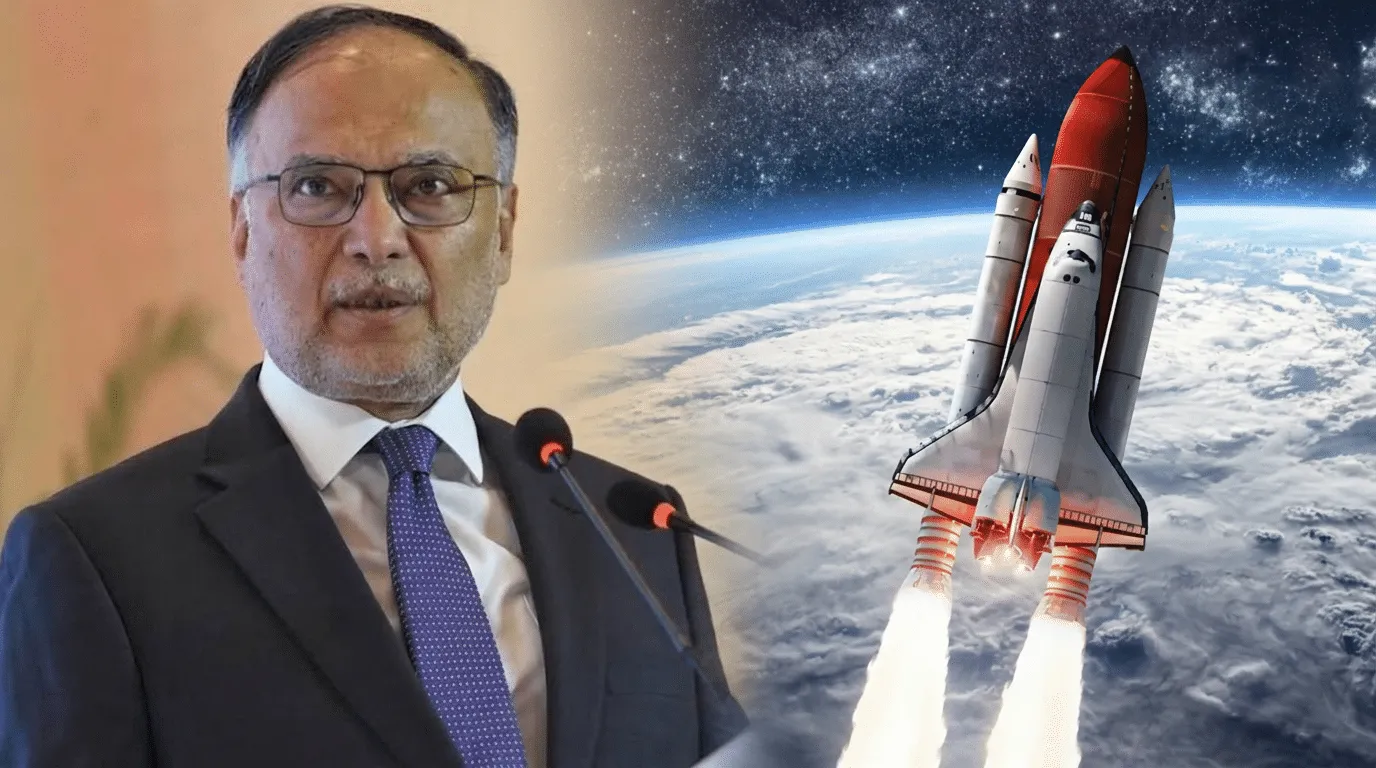
Planning Minister Ahsan Iqbal announced on October 27 that Pakistan is currently preparing to send its first astronaut into space soon. During an international conference in Islamabad hosted alongside the United Nations Office for Outer Space Affairs, Iqbal noted that the country successfully put five satellites into orbit during the previous 18 months.
According to the minister, space technology proves vital in safeguarding vulnerable populations against climate change and natural disasters such as glacial melting, cyclones, and floods.
The Planning Minister stated that early warning systems and satellite data enhance disaster readiness, which lowers financial damages and casualties.
The minister recalled the catastrophic floods of 2022 and 2025, pointing out that Pakistan incurred financial damages surpassing $30 billion even though it accounts for under one percent of worldwide greenhouse gas emissions.
Global partners and lending institutions faced criticism from him for not offering sufficient fresh grant funding for rebuilding efforts. He stated that redirecting earlier sanctioned loans designated for health and education violates climate justice.
Iqbal demanded changes to global financial structures, pressing wealthy nations and lenders to supply grant funding to at-risk countries instead of increasing their debt burden.
Additionally, he emphasized that development planning must integrate satellite data, specifically for building infrastructure like hospitals, bridges, and roads.
The minister advocated for stronger data sharing between state agencies, funding for space capabilities, and expanded prospects in geospatial technologies and space science for youth, particularly women.
Finally, he pushed for regional partnerships to boost disaster readiness and share data concerning climate hazards, mountain ranges, and shared rivers.